
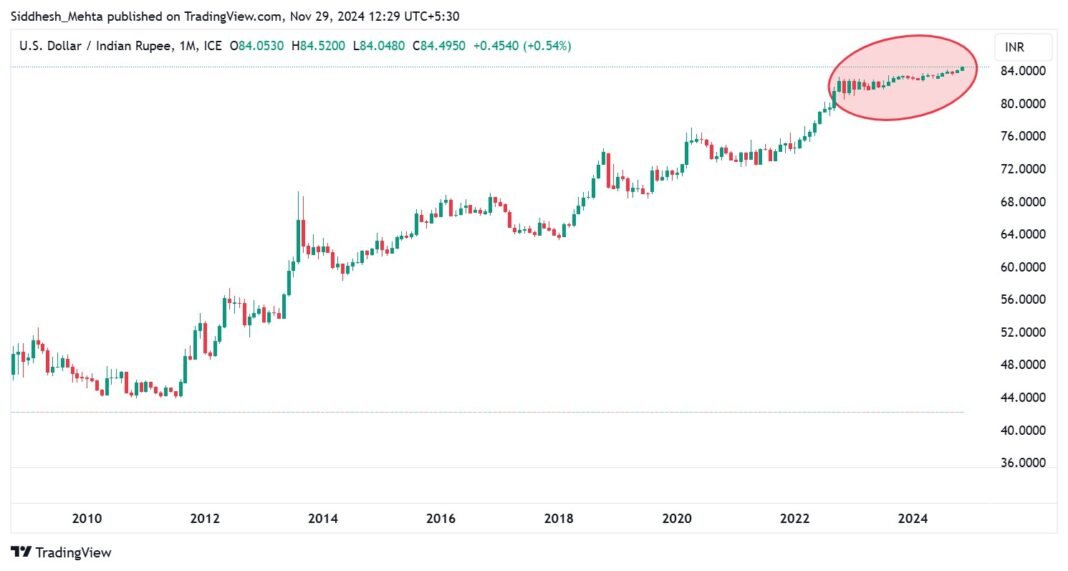


India should let the rupee move rather than burn through reserves to defend it, the International Monetary Fund has said. The IMF India exchange rate advice, delivered on Wednesday, puts the fund at odds with the Reserve Bank of India’s heavy intervention to support the currency during the ongoing oil shock.
“Our advice to countries is to use the exchange rate as the first line of defence amid ongoing shocks,” Krishna Srinivasan, director of the IMF’s Asia and Pacific Department, said at a media briefing in Mumbai. “We would advise India to let the exchange rate move.”
The rupee fell to near record lows earlier this month before rebounding about 2 per cent after the central bank’s steps. The IMF India exchange rate position is that such interventions offer only short-term relief.
What the IMF India exchange rate advice means
Srinivasan argued that foreign-exchange interventions have not been particularly beneficial beyond the near term because of the oil shock. Exchange rates have to be shock absorbers, he said, meaning the currency should be allowed to adjust when commodity prices swing.
The advice matters because India imports most of its crude oil, and a weak rupee makes those imports costlier in domestic terms. But the IMF’s view is that holding the currency steady drains reserves and only delays an adjustment that markets will force eventually.
Ranil Salgado, the IMF’s senior representative for India, Bhutan and Maldives, drew a distinction between intervention and other measures. He said the forex steps India took in June were largely positive because they encouraged capital inflows rather than spending reserves. The wording of the IMF India exchange rate advice is deliberately general: the fund says its counsel to countries facing shocks is to use the exchange rate as the first line of defence.
How the RBI has defended the rupee
The Reserve Bank of India has intervened heavily to support the rupee. It has sold dollars from its reserves, opened a special window to offer dollars to oil companies and imposed reserve requirements for large hedging transactions.
Those steps pulled the currency back from near record lows earlier this month. The central bank has also made it costlier for importers to hedge future dollar payments, a move aimed at cooling demand for the greenback.
In June, India cut taxes on foreign investments in government debt and raised $134 billion through a dollar deposit scheme targeted at the Indian diaspora. The measures were designed to draw money into the country instead of using reserves to fight the market.
The central bank has not said whether it will ease off now. Its public line is that it acts to prevent disorderly moves rather than to defend any particular level of the rupee, and it has kept that line through the current bout of pressure. The RBI’s approach sits uneasily with the IMF India exchange rate advice: the central bank keeps selling dollars while the fund says the currency should absorb the shock. The rupee has been one of Asia’s worst performers this year, losing about 6 per cent against the dollar, which is why the central bank’s defence has been so persistent.
Capital inflows and the IMF India exchange rate view
The fund’s broader point is that countries facing an oil shock should use every tool in the right order. The IMF India exchange rate advice treats a flexible currency as the first buffer, with interest rates and reserves as backstops. That is why the IMF India exchange rate view favours measures that pull capital in, like the June tax cut on foreign debt investment, over direct market intervention.
The RBI has already moved on the second of those tools. It raised the repo rate by 25 basis points earlier this month, its first hike in nearly four years, and shifted its stance to calibrated tightening. Some analysts expect further hikes in December.
For importers and exporters, the debate has practical stakes. A steadily managed rupee keeps planning predictable, but prolonged defence of the currency can thin out reserves and push the central bank toward tighter monetary policy, which raises borrowing costs across the economy.
The IMF India exchange rate advice does not bind the Reserve Bank, which has a record of intervening during periods of sharp volatility. But it adds an international voice to the question of how long India should keep the rupee on a tight leash while oil prices stay high.