
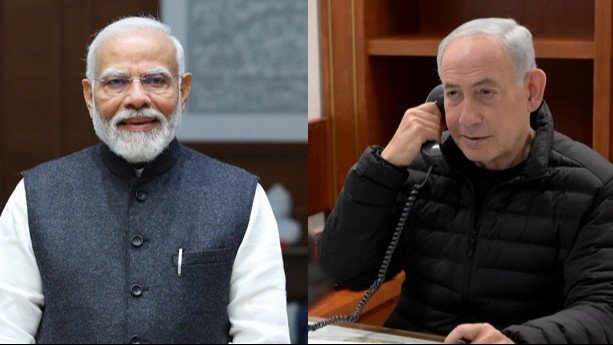


The Modi Netanyahu phone call took place on October 22, with Prime Minister Narendra Modi receiving the call from Israeli Prime Minister Benjamin Netanyahu. The two leaders exchanged views on recent developments in West Asia and underlined what the reports described as the urgent need to restore peace and stability in the region.
The Modi Netanyahu exchange was a telephone conversation rather than an in-person meeting. The reports described Modi as receiving the call, placing the initiative for the conversation with the Israeli side.
Telephone diplomacy of this kind is a regular feature of India’s foreign engagement. The reports gave no indication of how long the Modi Netanyahu call lasted or how frequently the two leaders speak.
The call was reported in the Economic Times breaking-news live blog for October 23, and was also carried by Mathrubhumi English in its school-assembly headlines for the day.
The timing of the call placed it among the diplomatic exchanges of late October. The reports did not describe the call as part of a scheduled sequence or as a response to a particular development.
Modi Netanyahu call on West Asia peace
The central topic of the Modi Netanyahu discussion was West Asia. The two leaders spoke about recent developments in the region and underlined the need to restore peace and stability there.
The reporting did not give a fuller readout of the conversation. It did not list which developments were discussed, or whether the leaders spoke about any specific proposal, timeline or next step.
What the summaries did carry was the tone of the exchange: an emphasis on peace and stability in West Asia, stated by both leaders in the course of the call.
The phrase "peace and stability" recurred in the summaries of the call. The reports used it to describe what both leaders agreed on, and presented it as the main agreed point of the conversation.
The two leaders’ emphasis on restoring peace and stability was the only substantive point the summaries attributed to the conversation itself. Everything else in the reporting concerned the invitation and India’s broader position.
Torch invitation on the Modi Netanyahu call
Netanyahu used the Modi Netanyahu call to extend a ceremonial invitation. He invited Modi to light a torch alongside Indian pilot Smit Machchar on Israel’s Independence Day.
The reports did not say whether Modi accepted the invitation. They carried the invitation as part of the call’s record, alongside the discussion of regional peace.
The summaries did not say when the invitation was issued relative to the policy discussion, or how much of the call it occupied.
The torch-lighting ceremony is a fixture of Israel’s Independence Day observances, and the invitation named a specific Indian pilot to share the honour. Beyond that, the summaries gave no further detail on the ceremony or its arrangements.
Torch-lighting ceremonies on Independence Day honour individuals chosen for their contributions. The summaries did not explain why Smit Machchar was selected or give background on the pilot.
India’s position on Ukraine and West Asia
Alongside the call, India stated that it supports every meaningful effort to bring peace to Ukraine and West Asia. The statement was carried in the same reporting as the Modi Netanyahu conversation.
The position covers both conflicts named in the reports. India framed its backing in terms of efforts that are meaningful, without the reports specifying which initiatives it had in mind.
The phrasing leaves the door open to diplomatic, humanitarian or negotiated routes, but the summaries did not attribute the position to a named official or document beyond the reporting itself.
India’s stated support for peace efforts in both regions was reported as a standalone point. It appeared alongside the account of the Modi Netanyahu call rather than as a quotation from either leader.
The October 22 call added a direct Modi Netanyahu exchange to India’s record of engagement on West Asia. The concrete outcomes reported were the shared stress on peace and stability and the Independence Day torch invitation. The call’s record, as reported, is short: a discussion of West Asia, a shared emphasis on peace and stability, an invitation to a ceremony, and India’s stated position on two conflicts. The reports offered no indication of follow-up calls or meetings.