


HYDERABAD: A three-day global congress on sickle cell disease and thalassemia opens here on Friday, bringing around 700 delegates from 27 countries to the Hyderabad International Convention Centre (HICC) in Madhapur. The event is the 4th edition of the Global Action Network for Sickle Cell and Other Inherited Blood Disorders (GANSID) Congress.
The GANSID Congress 2026 runs from October 23 to 25. Delegates include medical specialists, researchers, healthcare professionals, representatives of patient organisations, policymakers and community advocates. The programme focuses on sickle cell disease, thalassemia and other inherited blood disorders, with the aim of improving diagnosis, treatment and support for patients.
The event was announced at a press conference on Thursday by GANSID chief executive officer Lanre Tunji-Ajayi and Thalassemia and Sickle Cell Society (TSCS), Hyderabad president Chandrakant Agrawal. The Hindu reported the announcement on October 22.
Why sickle cell disease draws a global congress
Sickle cell disease is an inherited condition in which red blood cells become rigid and shaped like sickles, blocking blood flow and causing pain, anaemia and damage to organs. It is one of the most common inherited blood disorders in the world, and India carries a significant share of the global patient load.
Managing the condition requires lifelong care. Patients need regular monitoring, pain management, blood transfusions and, in severe cases, bone marrow transplantation. Early diagnosis through newborn screening can change outcomes, but screening programmes remain patchy across much of the developing world.
A global meeting matters because sickle cell disease research has gathered pace in recent years, with new drugs and gene therapies entering trials and practice. Clinicians in high-burden countries need access to the latest protocols, and patient groups need a seat at the table when treatment guidelines are drawn up.
For most patients, treatment still depends on where they live. Advanced therapies exist, but they remain out of reach for the majority of families in high-burden regions. The congress brings clinicians from 27 countries together to compare what works in managing sickle cell disease where resources are thin.
What the Hyderabad sickle cell disease congress will cover
Over the three days, delegates will discuss sickle cell anaemia, thalassemia and other inherited blood disorders across clinical and community sessions. The gathering brings together specialists and researchers with patient organisation representatives and policymakers, so the discussion spans laboratory science, hospital practice and public health planning.
Patient advocacy has a prominent place on the agenda. Representatives of patient organisations from 27 countries are attending, reflecting a shift in how blood-disorder policy is made, with affected families and community advocates speaking alongside doctors and scientists.
The programme also reflects the growing role of patient organisations in shaping care. With representatives from 27 countries in the room, the congress is expected to hear first-hand accounts of living with sickle cell disease, from delayed diagnosis to the cost of repeated hospital visits. Those voices carry weight when sickle cell disease guidelines are revised, and the congress is designed to give them a formal place in the discussion.
The conference also gives Indian clinicians a platform to present their own experience. India runs some of the largest thalassemia and sickle cell care programmes in the world, and centres in Telangana and neighbouring states treat large numbers of patients every year.
Hyderabad and the sickle cell disease care network
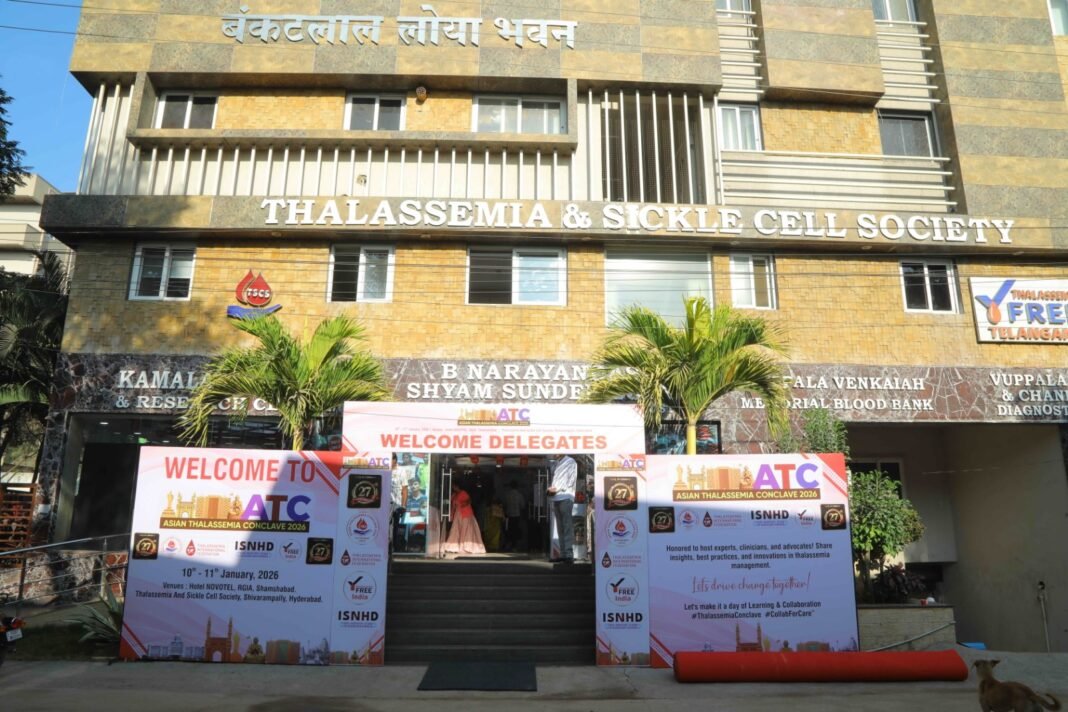
Hyderabad is a fitting host for the congress. The city is home to the Thalassemia and Sickle Cell Society (TSCS), Hyderabad, the local patient organisation whose president, Chandrakant Agrawal, co-announced the event with GANSID’s chief executive.
TSCS runs screening and support programmes for families affected by inherited blood disorders in the region. Its involvement in organising the congress puts Hyderabad’s patient community at the centre of the event rather than on its margins.
The choice of the Hyderabad International Convention Centre in Madhapur gives the congress a large venue for plenary sessions and smaller working meetings. Around 700 delegates are expected through the three days, making it one of the largest gatherings on inherited blood disorders held in India.
The congress is the fourth edition of the GANSID meeting, building on earlier editions that brought the global sickle cell community together. This year’s event is the first to be hosted in Hyderabad.
The 4th GANSID Congress 2026 closes on October 25 at the Hyderabad International Convention Centre in Madhapur.