
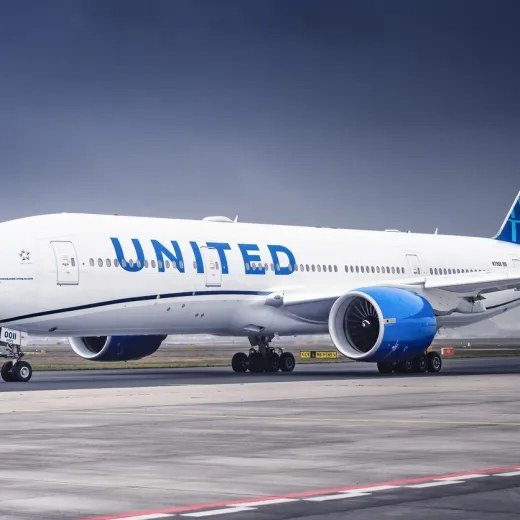


United Airlines has barred personal AI agents from booking its flights, becoming the first major United States carrier to write such a ban into its ticket rules. United Airlines AI agents are now listed as a prohibited ticketing practice in the airline’s contract of carriage, revised on 11 November 2026. The ban covers bookings made on the airline’s website and app and through travel agencies and aggregators.
The new rule, 6.J.6, bans “the use of AI Agents to make, modify or service a Ticket, and/or to purchase any service or product.” A companion change, Rule 5.H, gives United the right to cancel reservations made, modified or serviced by these agents. The definition covers assistants that reach United through a travel agency or another intermediary, and it applies even when a passenger supervises or approves each step the software takes.
United Airlines AI agents and what travellers can still do
United Airlines AI agents can still look up United flights and show prices. Research followed by a purchase the customer makes on their own does not break the rules, according to the Wall Street Journal. Bookings an agent completed before 11 November will stand, and United says travellers should check recent trips were ticketed correctly.
United framed the ban on United Airlines AI agents partly as a security matter. Passing login details to an outside assistant could leave private data exposed, the airline said, and software acting for a customer might set off unintended purchases, account changes or use of MileagePlus miles. Federal rules supply another argument: passengers must confirm personally that their luggage holds no banned items such as explosives, a step the airline says software should not complete for them. United told USA Today the ban is intended to protect customer data and comply with Federal Aviation Administration and Department of Transportation rules. The two agencies did not immediately respond to requests for comment.
United Airlines AI agents and the middleman question
Chief executive Scott Kirby gave a commercial reason for the United Airlines AI agents ban at an event in Chicago. “To be honest, I don’t want to create another middleman,” Kirby said. Henry Harteveldt, a travel analyst at Atmosphere Research Group, described the carrier as unwilling to welcome “yet another, and potentially even more powerful, intermediary” into its sales chain. United says it works with no third-party AI agents today, and that any future integrations need standardised, secure technology with privacy and accountability built in first.
The restriction on United Airlines AI agents is not industry-wide. Delta Air Lines has not followed United and allows AI assistants that can authenticate a passenger’s credentials to complete bookings. Fares from United will remain bookable through Google Flights, Kayak and Hopper, Harteveldt pointed out.
United Airlines AI agents ban and enforcement
United maintains that its systems can trace each booking made by United Airlines AI agents back to its source, though the carrier has not explained how agent activity will be spotted. A contractual ban is not a technical one. Expedia already has a ChatGPT integration that returns flight and hotel options with prices and availability, then sends the customer to Expedia to complete the purchase. If an agent completes a purchase on Expedia, United sees an Expedia booking, not how the booking was made.
Few customers have tried to book United flights with United Airlines AI agents so far, by the carrier’s own account. DoorDash has seen similarly thin volume: on its third-quarter earnings call, chief executive Tony Xu estimated the total from third-party agents at several hundred orders. Online marketplace eBay took a comparable step earlier this year, keeping bots powered by large language models and automated shoppers off the site unless it grants express permission.
Consumer assistants in the same category include OpenAI’s Dots and Meta’s Muse, both pitched as tools that run errands for their users. In practice, travellers now face a handoff: an assistant lines up flight options and the customer pays for the chosen itinerary personally. Airlines have overestimated their grip on distribution before: American Airlines backed away from a plan to deny mileage earning on certain travel agency bookings after customers did not abandon the agencies.
Tickets finished by an agent are open to cancellation under the contract. United has not described how it will detect agent bookings, and the ban covers transactions, not information.