
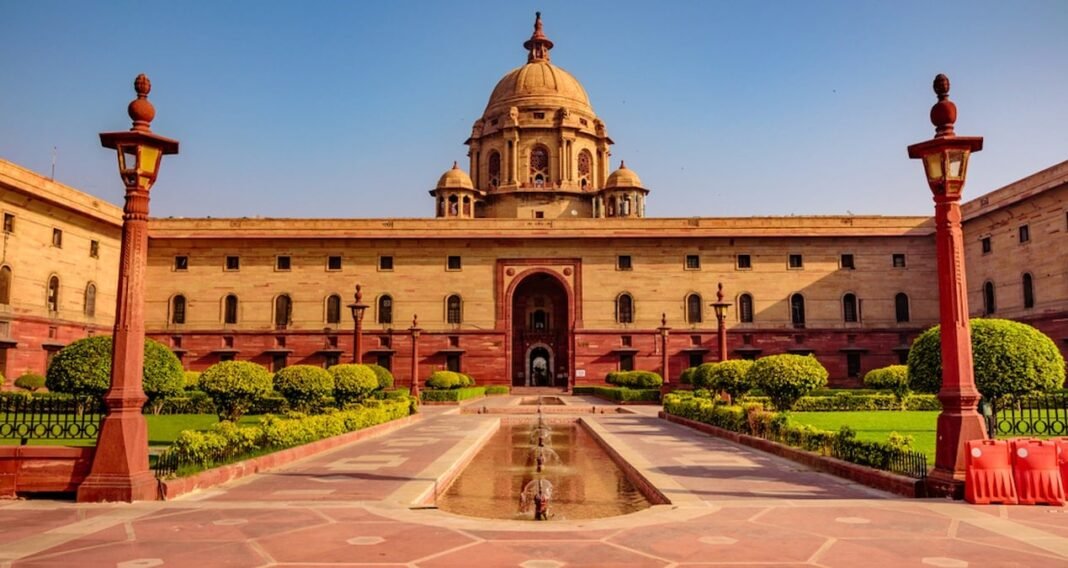


The Union Cabinet, chaired by Prime Minister Narendra Modi, approved the Yuge Yugeen Bharat Museum on 11 November 2026. The decision came from the Cabinet Committee on Economic Affairs, at an estimated cost of 3,230 crore rupees, about 340 million dollars and about 306 million euros. The museum will occupy the century-old North and South Blocks on Raisina Hill in New Delhi, former government offices designed by British architects Edwin Lutyens and Herbert Baker in the 1920s. Its name translates roughly as “India through the ages” and invokes the country’s ancient Sanskrit name, Bharat. The Yuge Yugeen Bharat project will be built in phases from the financial year 2026-27 to 2030-31.
How big the Yuge Yugeen Bharat museum will be
The government says the Yuge Yugeen Bharat museum will have the world’s largest museum display area, with a proposed built-up area of about 178,509 square metres and capacity for about 10 million visitors a year, or one crore. Entry will be timed, and peak days could see up to 30,000 people. The scale sets it apart from other museums in the country, and the visitor capacity shows the government expects large crowds from the start. The built-up area of about 178,509 square metres will hold the galleries, and the timed entry system will manage the flow of visitors through them. The capacity of about 10 million visitors a year works out at one crore, and the timed entry system will spread arrivals across the day. Peak days could see up to 30,000 people, and the entry system will manage those numbers.
From government offices to public galleries
The North and South Blocks are century-old buildings on Raisina Hill in New Delhi, designed by British architects Edwin Lutyens and Herbert Baker in the 1920s. They served as government offices for decades, and the museum plan turns them into public space. Modi wrote on X about the Yuge Yugeen Bharat museum, saying buildings that were centres of governance will now become a place where millions can discover, experience and celebrate the richness of India’s civilisation. The first gallery, themed on “Adornment”, is due to open in the North Block in late 2027.
What the Yuge Yugeen Bharat museum will show
Officials have identified 1.8 million objects for possible display in the Yuge Yugeen Bharat museum, with collection analysis under way. The objects span the history the museum plans to cover, from early times to the present, and the team is working through which pieces will go on show. The first gallery of the Yuge Yugeen Bharat museum, on “Adornment”, will open in late 2027, and later galleries will follow as the phases run from the financial year 2026-27 to 2030-31. The phased plan gives the museum time to prepare its displays, and the opening gallery will be the first part of the public to see. Collection analysis is under way, and the team is working through the 1.8 million objects to decide which pieces will go on show.
The museum was first announced by the Prime Minister on 18 May 2023 during the International Museum Expo. The proposal was appraised by the Public Investment Board on 27 July 2026 before Cabinet approval on 11 November 2026. The gap between the announcement and the approval runs to more than three years, and the appraisal in July 2026 was the last step before the Cabinet took up the plan. The approval now clears the way for work to begin on the phased build. The approval on 11 November 2026 came from the Cabinet Committee on Economic Affairs, chaired by the Prime Minister.
Architect Kulapat Yantrasast is associated with the Yuge Yugeen Bharat project. The museum will occupy the North and South Blocks on Raisina Hill, and its name invokes the country’s ancient Sanskrit name, Bharat. The project will be built in phases from the financial year 2026-27 to 2030-31, with the first gallery due to open in the North Block in late 2027. The buildings were designed by Lutyens and Baker in the 1920s, and they have stood on Raisina Hill for about a century.