
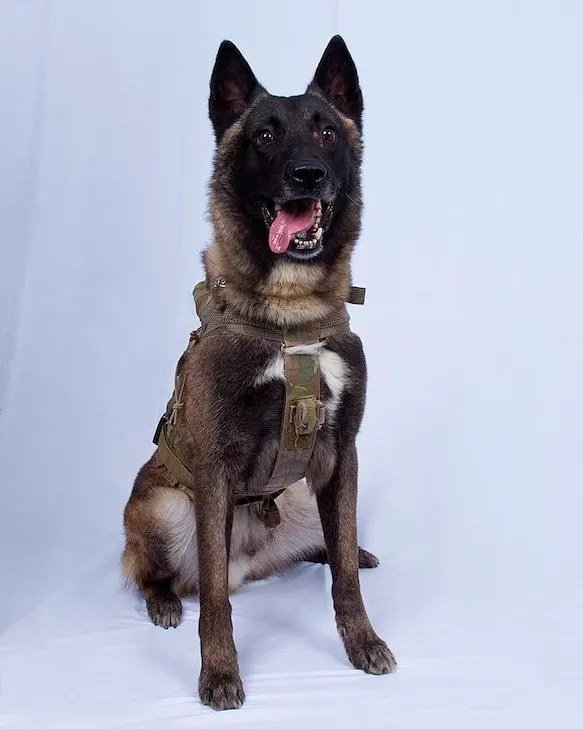


Defense tech startup Warhound announced on Thursday, October 22, 2026, that it had raised $200 million in seed funding at a $1.2 billion valuation to breed and clone elite military working dogs. The company was launched by Ben Lamm, the co-founder of Colossal, and Palmer Luckey, the founder of Anduril. The Warhound military dogs program will license Colossal’s cloning technology and Anduril’s defense systems.
The goal is to rebuild America’s domestic supply of military working dogs using cloning, genetic screening and battlefield technology. According to the company, more than 80 percent of United States military working dogs are acquired from Europe, and that supply is dwindling as international competition for top dogs grows and the rift between America and the European Union widens. The Warhound military dogs effort could reduce American reliance on imported dogs while improving training success rates.
Why the Warhound military dogs supply matters
Lamm described the supply problem in plain terms. “There’s supply chain issues. A lot of the best dogs have been purchased. There’s a dwindling supply (and) we compete with our adversaries,” he told USA Today. Warhound says its work will serve the military, law enforcement and first responders, all of which depend on a steady pipeline of capable animals.
The breeds the Warhound military dogs program expects to raise for the military, police and rescue services include Belgian Malinois, German Shepherds and Labrador Retrievers, Lamm said. Right now, about half of the dogs brought into training do not make it through. The company thinks standardizing genetics and training could cut the washout rate to 10 percent or less.
How the Warhound military dogs program will work
Cloning sits at the center of the plan. Warhound will license biogenetics and animal cloning technology from Colossal Laboratories and Biosciences, the company behind the dire wolf project, and pair it with Anduril Industries’ defense systems. The company said the combination will change how America produces, trains and protects its military working dogs.
Deployed dogs may also get protective body armor, ear and eye coverings, and integration with military technology such as EagleEye, Anduril’s in-development artificial intelligence powered military helmet with a high resolution 3D heads-up display. Anduril is also developing battlefield augmented reality glasses with Meta. The first Warhound military dogs are expected to be born in the first quarter of 2027, with demonstrations of the technology planned for next year.
“Man’s best friend deserves man’s best tech,” Luckey said in a statement. The idea for Warhound came from conversations between Lamm and Luckey at a Moonshots Summit event hosted by entrepreneur Peter Diamandis, founder and chairman of the XPRIZE Foundation.
Who is behind the Warhound military dogs startup
Backers of the Warhound military dogs startup include In-Q-Tel, Sequoia Capital, ARK Invest, Franklin Templeton, Bob Nelsen, Breyer Capital, CAZ Investments, USIT, Neogenesis, Builders VC, Lux Capital and others. Lamm holds an equity share in Warhound and will serve on its board. Luckey does not have an equity share in the company.
Warhound’s chief executive is David Spirk, who served as the chief data officer for United States Special Operations Command and later the Defense Department before joining Palantir Technologies in July 2022 as a senior counselor. “Our long-term goal is simple: healthier dogs, better-prepared teams, and more service members and first responders coming home safely,” Spirk said in a statement.
The American Humane Society, which previously monitored the process used to produce the dire wolves, will certify the Warhound military dogs training programs. It will also support reuniting retired military working dogs with their former handlers and the adoption protocols for the animals. “We owe these dogs a commitment to their well-being that matches their service to us,” said Robin Ganzert, the society’s president and chief executive.
Luckey is also among the co-directors, along with SpaceX chief executive Elon Musk and former House Speaker Newt Gingrich, of Project Meridian, an effort to study technology needed for the future of warfare that Defense Secretary Pete Hegseth announced last month. Musk and Luckey’s roles could raise conflict of interest questions, since both own stakes in companies that do business with the Defense Department.