
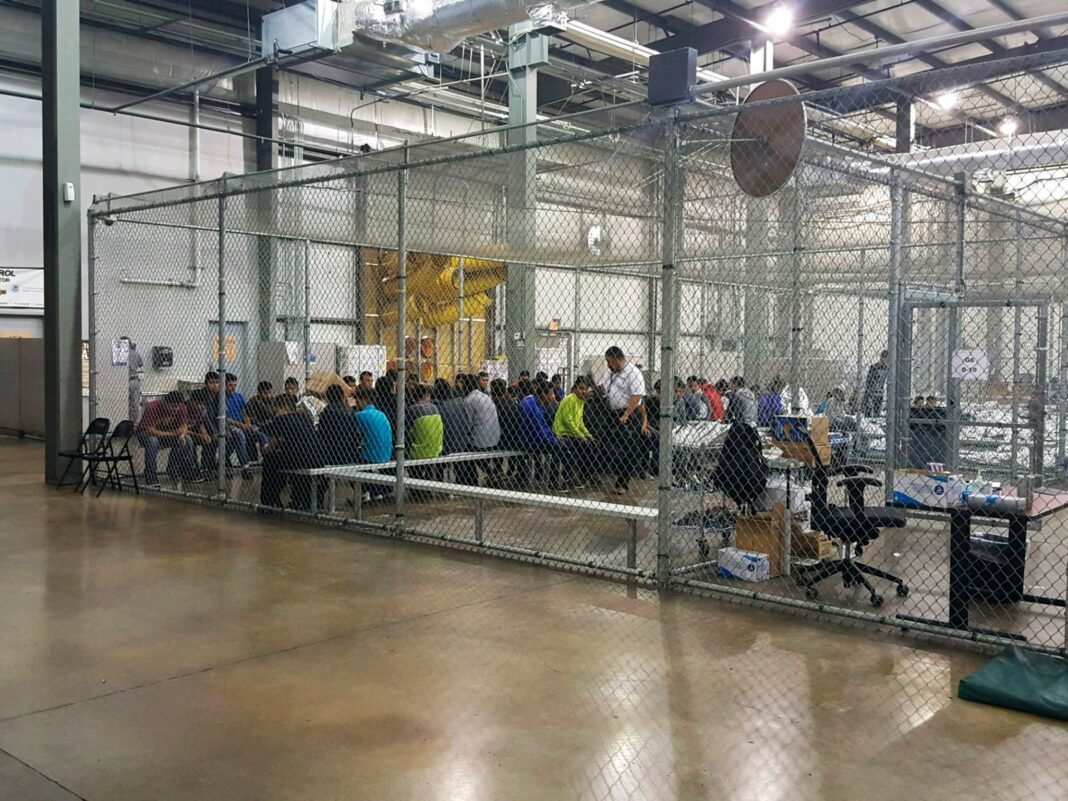


A U.S. appeals court ruled Friday that detained immigrants have no constitutional right to bond hearings, a migrant bond hearings decision that backs the Trump administration’s mandatory-detention reading of immigration law.
The Fifth Circuit reversed course in a 10-7 decision, concluding that detainees are not constitutionally entitled to proceedings beyond what Congress has provided. The tally reflects a vote of the full court.
The migrant bond hearings ruling is a significant win for the administration as it carries out its mass deportation agenda. DHS general counsel James Percival welcomed the decision as a “big win.”
Advocates condemned the ruling. The National Immigration Project said it opened the door to indefinite detention. The dissent, written by Judge Dana Douglas, warned of unchecked executive detention power.
A bond hearing gives a detained immigrant a chance to ask an immigration judge for release, often on payment of a bond, while the removal case proceeds. Under the administration’s reading, certain immigrants must be detained without any chance of release on bond.
Migrant bond hearings: the Fifth Circuit reversal
The 10-7 vote shows how divided the court was. The majority held that the Constitution does not require migrant bond hearings for detained immigrants beyond the procedures Congress wrote into law.
The majority’s view is that Congress, not the Constitution, sets the procedures for detention. If Congress provided no bond hearing, courts cannot add one.
The decision reversed the circuit’s earlier course, aligning the Fifth Circuit with the administration’s position that detention without a bond hearing is lawful.
The migrant bond hearings question has generated a surge of lawsuits as ICE carries out the mass deportation agenda. The surge reflects how many detention cases are moving through the courts at once, each one testing the same legal boundary. Each case tests how far the government can go in detaining people without judicial review of their custody.
Reaction to the migrant bond hearings decision
The administration welcomed the outcome. Percival’s “big win” comment reflects how much the White House wanted this ruling. Detention without migrant bond hearings gives immigration authorities broader power to hold people through the removal process.
Immigrant advocates condemned the decision. The National Immigration Project said the ruling opened the door to indefinite detention, a charge that goes to the heart of the dispute: whether the government can hold people for months or years without a judge reviewing their custody.
Removal cases can take months or years to resolve. Without bond hearings, there is no regular judicial check on continued custody, which is the practical fear behind the advocates’ warning.
Judge Dana Douglas wrote the dissent. She warned of unchecked executive detention power, arguing the majority had given the government too free a hand. Her dissent frames the case as a test of whether courts will police the boundaries of executive detention.
The 10-7 margin shows the full court was closely divided, with seven judges siding with the dissent’s view of executive power.
For detainees, the practical effect is straightforward: custody decisions stay with immigration authorities rather than going before a judge for bond.
Migrant bond hearings case moves toward the Supreme Court
The legal fight is not over. The Supreme Court this month agreed to take up the related statutory question, meaning the justices could soon decide how far mandatory detention extends under the immigration laws Congress wrote.
The constitutional question the Fifth Circuit decided and the statutory question the Supreme Court will hear are related but distinct. The appeals court ruled on what the Constitution requires. The justices will rule on what the statute means.
The ruling does not end all challenges to detention practices. It decides only the constitutional question; the Supreme Court will hear the statutory one.
Until the Supreme Court decides, the Fifth Circuit’s ruling governs in its territory. The migrant bond hearings debate will continue in courtrooms across the country, and the justices’ eventual decision could settle it nationally. Until then, detained immigrants in the circuit’s territory face detention without the bond hearing the dissenters said the Constitution requires.