
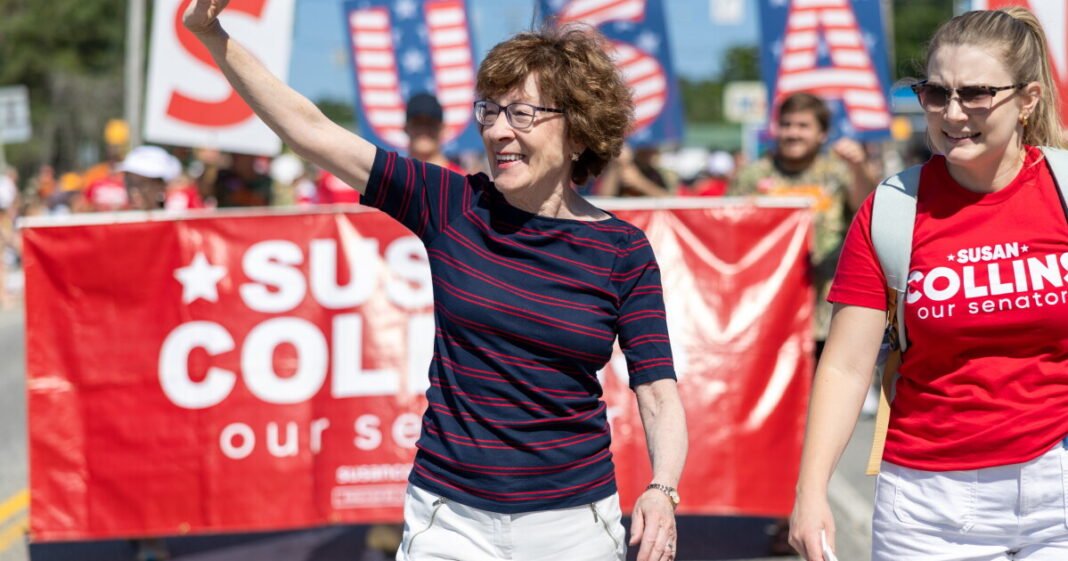


The latest Trump tariffs rollback arrived Friday, when President Donald Trump signed an order removing 50% duties on some Canadian agricultural and forestry products. The move is aimed at helping Maine Senator Susan Collins and other Republicans in northern states ahead of the Nov 3 midterm elections.
The exempted products include plywood sheets, some paper products, certain machinery and refrigeration equipment, packing crates, and fresh and dried seaweed. Collins said the relief would aid Maine’s blueberry, potato, apple and seaweed producers, industries that have felt the pinch of the trade fight.
The changes take effect Oct 30, four days before the election. The timing leaves little doubt about the political calculation behind the Trump tariffs rollback.
Which Trump tariffs are being removed
The order lifts the 50% duties on a narrow list of Canadian goods tied to farming, forestry and food production. Plywood sheets and packing crates matter to Maine’s lumber and agricultural exporters. The seaweed exemption is small in dollar terms but politically visible in coastal Maine, where seaweed farming has grown.
Collins has been under pressure from producers in her state since Trump applied 50% tariffs on about $20 billion of Canadian goods in late August, after trade talks broke down. Maine’s economy is closely tied to Canada, and the tariffs hit products that cross the border in both directions.
The senator welcomed the relief, framing it as a win for the blueberry, potato, apple and seaweed growers who form a core part of her rural base. Those producers had warned that the duties were raising costs and squeezing margins heading into the harvest season.
New Trump tariffs land on other Canadian goods
The same order that removed some Trump tariffs added others. New 50% tariffs were placed on a list of Canadian goods including carpet, paints, waste, shampoos, cocoa powder and wooden coffins. The additions show the administration is reshaping the tariff wall rather than tearing it down.
The mixed approach lets the White House claim it is helping northern-state producers while keeping pressure on Ottawa. The new duties hit consumer and industrial goods that are easier to source elsewhere, at least in the administration’s telling.
For Canadian exporters, the net effect is a reshuffled set of penalties. Some products get relief days before the US election. Others get hit with the same 50% rate that was lifted elsewhere. The Oct 30 effective date applies to the whole package.
The pattern is consistent: relief where the politics demand it, pressure everywhere else. The Trump tariffs on Canada remain among the steepest the administration has imposed on any trading partner. The $20 billion figure covers a wide range of goods, and the August breakdown in talks left little room for a broader deal before the election.
The midterm stakes behind the Trump tariffs move
Collins is in a tight race against Democrat Troy Jackson, who has made the Canada trade war a central campaign issue. Jackson has argued that the Trump tariffs hurt Maine workers and farmers, and polling in the state has shown the trade fight cutting against the incumbent.
The Trump tariffs rollback gives Collins something concrete to show voters in the final days of the campaign. A tariff exemption that helps blueberry and potato growers is the kind of retail politics that plays well in rural Maine. The White House clearly hopes it moves votes.
The move is aimed at Republicans in northern states more broadly, but Maine is the sharpest case. No other Republican senator faces a challenger who has built his campaign so directly around the Canada trade war. Jackson has hammered Collins on the issue for months, and the late-October exemption reads as a response.
Trump’s broader tariff strategy remains intact. The 50% duties on roughly $20 billion of Canadian goods, imposed in late August after talks collapsed, mostly stay in place. The order trims at the edges for political reasons while keeping the core of the trade pressure.
The election is Nov 3. The tariff changes take effect Oct 30. Whether four days of relief is enough to help Collins and her fellow northern-state Republicans is a question voters will answer at the ballot box.