
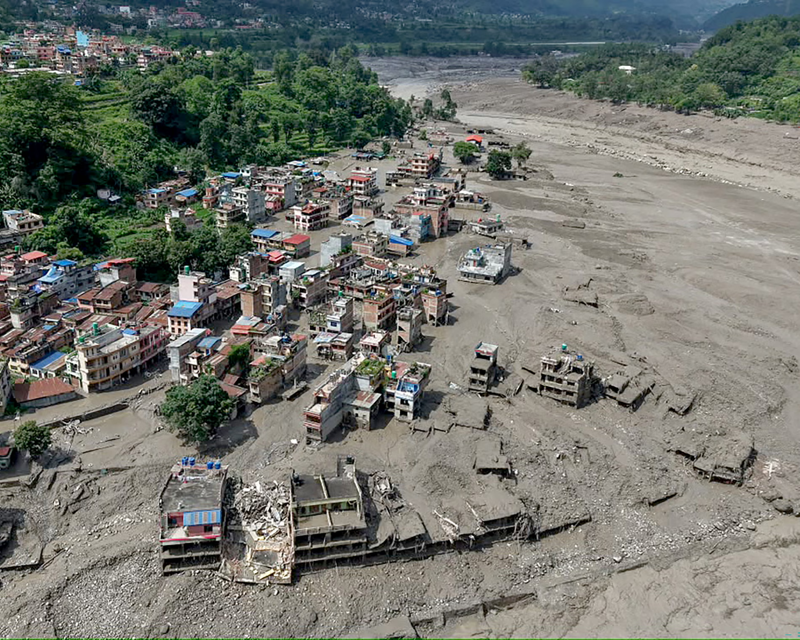


The COP31 Nepal appeal asks wealthy nations for billions to help survivors of the deadly August floods, but the United Nations fund set up for such disasters has promised only about $20 million so far. The gap between what Nepal needs and what has been offered is at the centre of the talks in Antalya.
Villagers in Nuwakot, where the August floods washed away whole villages and left thousands dead or missing, are still waiting to rebuild. Families who prayed for generations at a local temple now gather around the mound of dirt where it once stood, unsure if it will ever be rebuilt. Farmers who once grew rice to feed their families now sit in makeshift shelters, wondering if they will own land again.
COP31 Nepal and the loss and damage fund
The COP31 Nepal appeal focuses on the UN Fund for Responding to Loss and Damage, set up in 2022 to support vulnerable developing nations hit by climate change. The COP31 Nepal case has become an early test of a fund that has so far fallen far short of expectations. For Nepal, the fund has pledged about $20 million, only a fraction of the estimated $2.5 billion in losses from the August disaster. The COP31 Nepal delegation says the first response is far from enough, and Khanal has said rebuilding after the disaster would cost about one-tenth of Nepal's economy.
CarbonCopy reported the board agreed the allocation on 22 October, with $20 million for recovery and $1.6 million for oversight, the fund's first provisional allocation for a specific disaster. The money still needs a formal funding proposal and final board approval, with no payout date announced. Manjeet Dhakal, a member of Nepal's delegation and lead adviser to least developed countries, welcomed the first response but said "the scale of the resources needs to increase."
COP31 Nepal seeks a mountain agenda
Nepal and other mountain countries are pressing negotiators at COP31 to make the dangers facing their communities a lasting priority, and the COP31 Nepal team has made the mountain issue its main demand. While Nepal and Bhutan sought a dedicated negotiating agenda item on warming in mountain regions at the start of the summit, their proposal did not make the cut. Khanal said the COP31 Nepal team wants a dedicated program on mountains and climate change so mountain risks are reflected in international climate action, including funding decisions.
"After the disaster, we received an outpouring of sympathy. This is the time to put sympathy into the system," Khanal said when speaking at the climate talks last week. Glaciers and snow in the Hindu Kush Himalaya feed rivers that nearly 2 billion people depend on for water, farming and power, according to ICIMOD, the Kathmandu-based mountain research centre.
Warming can destabilise mountain slopes as glaciers retreat, and floods carrying rock, ice and debris can cross borders within minutes, leaving little time to warn people downstream. "There is no negotiating with the melting point of ice," said Pam Pearson, director of the International Cryosphere Climate Initiative. "Every time there's a disaster in the Himalayas, we tend to call it a wake-up call," said Pema Gyamtsho, director general of ICIMOD. "The question before us is: What will it take for us to wake up and take action?"
COP31 Nepal and the gap in climate finance
Along the Trishuli River, power lines, solar panels, cars and homes remain partly buried in mud, while broken bridges cut communities off from neighbouring towns. Survivors sleep in makeshift metal shelters and rely on donations for drinking water and food. "God knows how long we will have to stay here," 45-year-old Lakchin Bahadhur Tamang, a hydropower plant worker, told The Associated Press. "I fear that once these aid organizations and helping hands leave, we will be left helpless, without even enough drinking water."
Countries have pledged more than $820 million to the fund, while it faces 176 requests from developing nations totalling about $2.8 billion. The COP31 Nepal request is among those the fund's board members will consider when they meet in December. The Stockholm Environment Institute estimated that by 2030 lower-income countries would need between $400 billion and $1.6 trillion per year in loss and damage finance.
At COP31, one of the most constant refrains of protesters has been "climate justice now," calling for help for Nepal, and the COP31 Nepal appeal has become a focal point for that demand. For survivors, the gap between what has been offered and what is needed is huge. Standing between destroyed buildings, 41-year-old Dhurba Bhandari, a small store owner, said his country had contributed very little to global carbon emissions yet had been devastated. "The international community must take responsibility and help people who have been displaced, as well as support reconstruction," he said.