
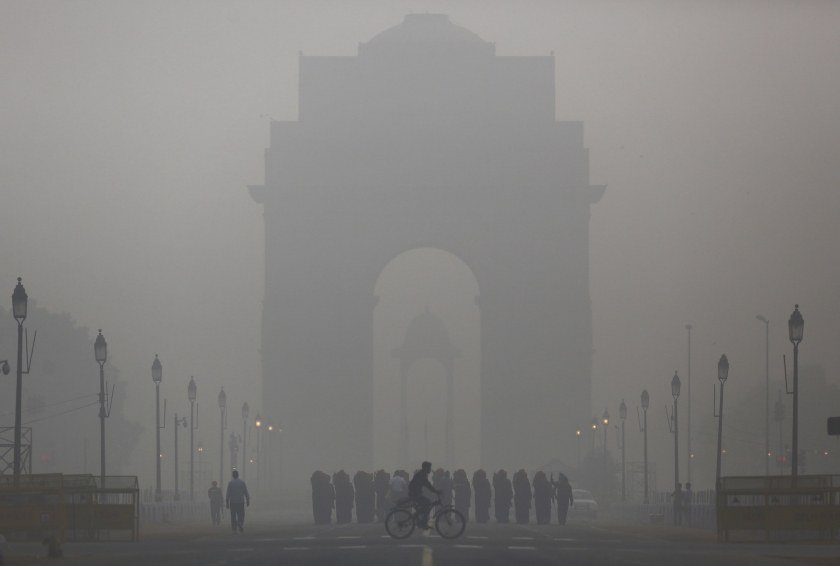


India scored just 2 out of 32 in the Global Climate and Health Alliance’s 2026 Healthy NDC Scorecard, after its latest Nationally Determined Contribution to the United Nations omitted any mention of air pollution or air quality. The assessment examined 117 national plans covering 132 countries. India’s climate plan, submitted on 24 April 2026, does not mention air pollution, despite estimates linking the pollution burden to approximately 2 million deaths in India in 2023.
The climate plan commits to reducing emissions intensity of GDP by 47 percent from 2005 levels by 2035, achieving 60 percent non-fossil power capacity, and expanding forest and tree cover to absorb an additional 3.5 to 4 billion tonnes of carbon dioxide. It does not, however, explicitly integrate health co-benefits or air pollution reduction targets. That gap is the reason for the low score, according to the scorecard.
India ranked joint-bottom with Japan and New Zealand. Nepal and Sri Lanka scored 19, Bangladesh scored 13 and Pakistan scored 12, while Colombia led with 29.
What the climate scorecard measured
The scorecard assesses written commitments, not implementation. It asks whether a country’s plan mentions health, and seeks targets that would improve health, and links emissions cuts to cleaner air and to adaptation. A climate plan can therefore score poorly on paper even if the country runs separate programmes that address the same problems. The report acknowledges that point, and notes that India has separate clean air and health programmes outside the NDC.
That distinction cuts both ways. Separate programmes can deliver real gains, and a written plan is not the whole of a country’s effort. But the NDC is the document other governments, funders and researchers read first when they judge a country’s direction. When health is absent from that document, the health gains from emissions cuts are not stated as goals.
The scorecard’s method also explains why a country can rank low while still taking action on the ground. The assessment looks at what the plan says, and it scores what it finds there. India may have clean air work under way, but if that work is not written into the NDC, it earns no points in this assessment.
Why the climate pledge gap matters for health
Air pollution is not a side issue for health in India. The estimate of approximately 2 million deaths in 2023 linked to the pollution burden gives the scale of the problem that the plan leaves unnamed. Emissions cuts and cleaner air are closely tied: many of the same sources that produce greenhouse gases also produce particles and gases that harm lungs, hearts and kidneys.
Writing air quality into a climate plan would make that link explicit. It would allow a government to set a target for cleaner air alongside a target for lower emissions intensity, and to show how one helps the other. It would also give health officials a stated basis for asking that air quality be considered when energy, transport and industry decisions are made. Without that language, health officials must rely on separate programmes that sit outside the main plan.
The report calls attention to the need to integrate emissions reduction, air quality management, health protection and adaptation. Those four strands are usually handled by different ministries and different budgets. A climate plan that names all four together gives departments a shared frame for decisions that affect each other, such as power plant standards, vehicle rules and urban planning.
What India could change in its next climate pledge
The findings strengthen the case for a health centred approach to India’s next commitments, according to the report. A future submission could name air pollution, set an air quality target, and state the health gains expected from emissions cuts.
The report also places renewed emphasis on finance and coordinated action ahead of COP31. Cleaner air and lower emissions both need investment, in power, transport, industry and household energy. A plan that states health goals can help make the case for that finance, because it shows what the money would buy in terms of lives and illness avoided, not only in tonnes of emissions cut.
India’s current climate plan already sets clear numbers for emissions intensity, non-fossil capacity and forest cover. The scorecard does not dispute those numbers. It asks why health, and air pollution in particular, is missing from the same document, when the death toll linked to dirty air runs to approximately 2 million in a single year. The next submission will show whether that gap is closed, or whether health remains outside the written pledge while separate programmes carry the work alone.