
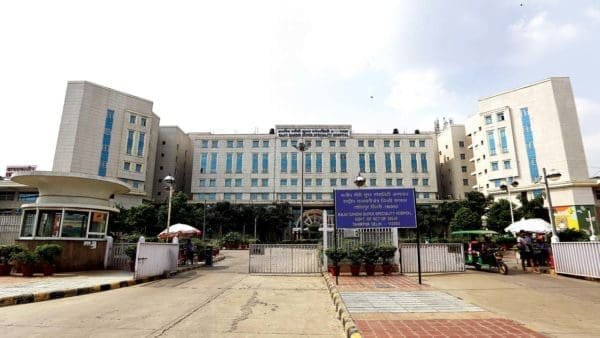


Delhi medical hub plans received a fresh push on 3 November, when Chief Minister Rekha Gupta said the government and private sectors must work together to turn the national capital into a medical hub. Gupta spoke after inaugurating an IVF centre at Sant Parmanand Hospital in Civil Lines, Delhi. She said the government was working to ensure that anyone coming to Delhi could get proper treatment and healthcare facilities.
“If we truly want to make Delhi a medical hub, both the government and private sectors will have to come forward,” Gupta said. “According to WHO parameters, at least five medical beds should be available for every 1,000 people. Our country is still behind this benchmark, and I believe Delhi currently has around two beds per 1,000 people.”
Gupta said reaching five beds per 1,000 people would need coordinated effort from both sectors. A Delhi government release on the event put the combined availability of beds through the government and private sectors at about 2.5 per 1,000 people, with the government providing about two beds per 1,000 people. Gupta described the Delhi medical hub goal as the Prime Minister’s dream and said the Delhi government was working in that direction.
The Delhi medical hub argument rests on patient flow as much as bed numbers. People travel to Delhi from other states for treatment, which puts pressure on hospitals in the capital beyond the needs of its own residents. Gupta said the city must be able to offer proper treatment to anyone who arrives, and that the Delhi medical hub plan has to cover both capacity and quality of care.
Delhi medical hub and the Sant Parmanand IVF centre
The new centre at Sant Parmanand Hospital will provide reproductive medicine services, including in-vitro fertilisation and intracytoplasmic sperm injection. Specialist fertility doctors and embryologists will assist patients with examinations, treatment and counselling. The centre aims to give couples facing infertility access to modern facilities, expert consultation and advanced treatment.
Gupta praised the hospital for its long service in Delhi. She said its journey began in 1937, with a major milestone reached in 1977 when the hospital was established, and that it was now approaching more than 100 years of service. She said the hospital had served lakhs of people and saved countless lives over the years.
Recalling the Covid-19 pandemic, Gupta said not a single doctor, employee or member of the management at Sant Parmanand Hospital turned away from their responsibility. She added that the hospital did not deny treatment to patients because they could not afford it, and congratulated the institution on that commitment.
Delhi medical hub expansion beyond one hospital
The Delhi medical hub push covers wider capacity measures as well. Gupta said the government is increasing undergraduate medical seats from 595 to 820 and postgraduate seats from 553 to 762, and recruiting doctors and nurses to strengthen services. She also pointed to preventive care, with Ayushman Arogya Mandirs being set up near residential areas.
Staffing sits at the centre of the Delhi medical hub plan, because new beds need doctors, nurses and technicians to run them. The government said recruitment is under way alongside the seat increases, and that preventive services through neighbourhood Ayushman Arogya Mandirs should catch illness earlier, before patients need hospital beds at all.
On financial protection, Gupta said the government has raised the annual health cover under the Ayushman Bharat scheme to 10 lakh rupees, adding 5 lakh rupees to the Centre’s existing cover of 5 lakh rupees. More than 8.94 lakh Ayushman cards have been approved, while over 3.09 lakh senior citizens aged above 70 have been enrolled under the Ayushman Vay Vandana scheme.
The government said 415 Ayushman Arogya Mandirs and 29 Jan Aushadhi Kendras have started in Delhi. Over one crore ABHA IDs have been generated, and a Digital Health Management System has been rolled out across 38 government hospitals. Digital records under the Delhi medical hub plan let hospitals share patient information across facilities instead of starting each visit from scratch.
The measures also include 56 types of free tests for newborns, 10,000 free cancer screenings and free HPV vaccination for girls aged between nine and 14 years. Those programmes sit on the preventive side of the Delhi medical hub plan, catching disease early in clinics and schools rather than in hospital wards.