
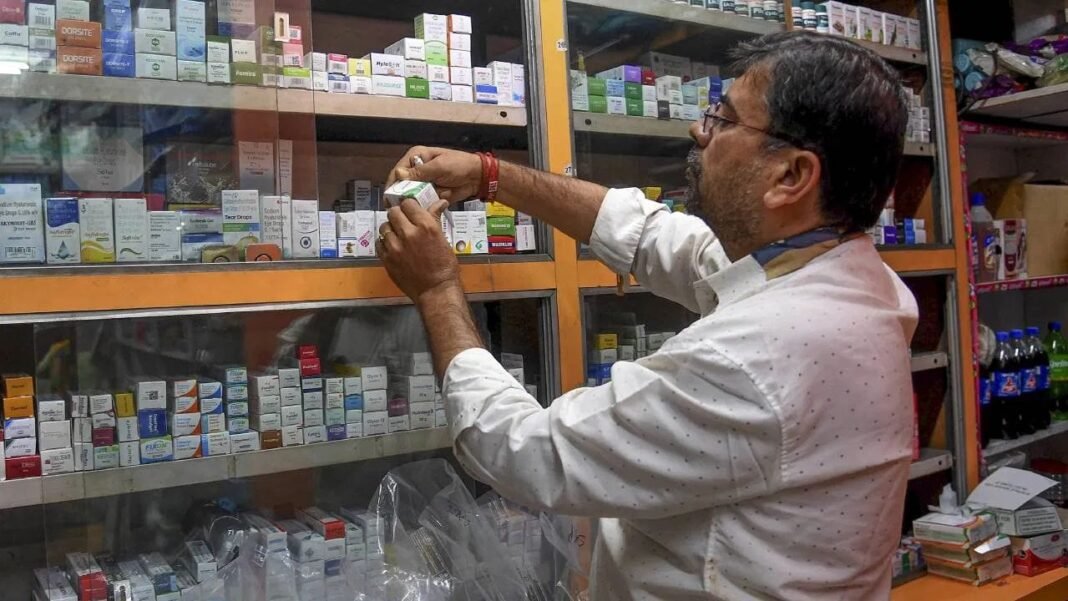


Affordable medicines and digital health have given India a healthcare model that developing economies can copy, according to a new report covered by IANS on 3 November. The report, from Morocco-based publication Assahifa, said India is emerging as a global healthcare partner through affordable medicines, large-scale public health programmes, digital innovation and traditional medicine research.
“By sharing technology, strengthening pharmaceutical supply chains, and developing local capabilities, India can help countries across the Global South build more inclusive, affordable, and resilient healthcare systems,” the report said. It argued that India’s domestic efforts to expand access to medical services now extend beyond national borders through technology transfer, institutional expertise, pharmaceutical manufacturing and public health programme implementation.
The report identified India’s pharmaceutical sector as a central part of that contribution. Pharmaceutical exports rose to 31 billion US dollars in FY26 from 2 billion US dollars in FY21, with Indian medicines reaching over 190 countries. India supplies about one-fifth of the world’s generic medicines by volume and produces around 60,000 generic brands across 60 therapeutic categories.
Affordable medicines through public programmes
Public programmes carry much of the domestic story. Over 1.87 lakh Ayushman Arogya Mandirs support the delivery of primary healthcare services, while the Ayushman Bharat Pradhan Mantri Jan Arogya Yojana has reached 600 million beneficiaries. The programme has supported over 130 million treatments, with total expenditure of over 2 trillion rupees.
The Pradhan Mantri Bhartiya Janaushadhi Pariyojana has set up more than 20,000 Jan Aushadhi Kendras across 776 out of 784 districts, giving patients a low cost source of generic medicines close to home. The report said affordable medicines depend on availability as well as price, and that decentralised distribution networks and local partnerships can improve access in remote communities while reducing the financial burden on households.
The 1.87 lakh Ayushman Arogya Mandirs work as the front door of the system, delivering primary care, screening and referrals in villages and towns. Affordable medicines reach patients through those centres as well as through Jan Aushadhi Kendras, giving the model two distribution routes: one through public clinics and one through low cost pharmacies.
Affordable medicines and India’s global supply role
Indian manufacturers also contribute nearly 60 per cent of global vaccine demand at a stage of the supply chain. During the Covid-19 pandemic, India supplied hundreds of millions of vaccine doses to dozens of countries through the Vaccine Maitri initiative, showing how its manufacturing capacity could support public health during emergencies.
The industry is moving towards higher-value production, including injectables, biosimilars and complex pharmaceutical formulations, while still supplying highly regulated markets such as the United States and Europe. Digital platforms form the other half of the model. The CoWIN platform processed over 2 billion vaccination records during the pandemic, and the e-Sanjeevani telemedicine platform has passed 500 million remote clinical consultations, connecting rural patients with specialist doctors.
Affordable medicines and the gaps the report leaves open
The report also points to work still to be done. It notes traditional medicine research as part of India’s healthcare contribution, alongside modern pharmaceuticals and digital tools, and it presents technology transfer as a way for other countries to build their own manufacturing capacity rather than relying on imports alone.
Supply chains are one weak point. Analysts cited in coverage of the report said India needs to diversify its supply lines for active pharmaceutical ingredients, particularly imports from China, to preserve resilience. Affordable medicines depend on steady supplies of those ingredients, and a disruption at that stage would reach patients even if finished formulations are made in India.
The numbers behind the model are large, but they describe access more than outcomes. The report counts beneficiaries, treatments, consultations and kendras, and it treats those counts as evidence that affordable medicines and digital health can travel to other developing economies. It presents that mix of public programmes, private manufacturing and digital platforms as the part other countries can study and adapt.