
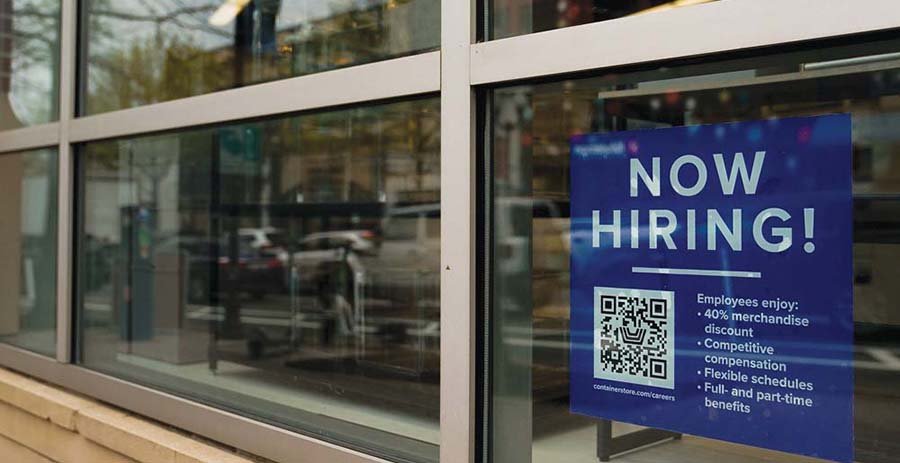


United States job openings rose by 333,000 to 7.52 million in September 2026, the Bureau of Labor Statistics reported on Tuesday, 3 November 2026, and job openings beat the forecasts analysts had set. The Dow Jones consensus outlook was 7.15 million, and the September total cleared it by about 370,000. The job openings rate rose to 4.5 percent, up 0.2 percentage point from the prior month.
The report, from the Job Openings and Labor Turnover Survey, arrived three days before the October nonfarm payrolls report, due on Friday. Wall Street consensus for that report is an increase of 59,000 jobs after September added 29,000, with the unemployment rate holding at 4.2 percent. The September openings figure was the highest since May, according to CNBC reporting on the release.
Job openings by industry in September
Job openings rose in manufacturing by 54,000, in state and local government excluding education by 104,000, and in professional and business services by 106,000. Construction openings rose by 36,000 to 298,000. The Bureau of Labor Statistics said openings were little changed in its headline summary, even as the total rose, because its own statistical test treats the change as not significant. That caution matters for reading one month of data.
Hires climbed 131,000 to 5.4 million in September, while total separations were little changed at 5.3 million. Layoffs and discharges fell 127,000 to 1.64 million, the lowest level since March 2025. Quits rose to 3.36 million, up 321,000 from August and the highest since March 2025. A rise in quits usually signals workers feel able to leave one job for another, while a fall in layoffs signals employers are holding on to staff.
The August openings total was revised up by 111,000 to 7.19 million. Revisions are routine in this survey, and the September figures are preliminary and seasonally adjusted, so later releases may change the picture. Private sector openings rose by 236,000 and government openings rose by 98,000, almost all at state and local level, according to Reuters reporting.
Job openings and factory orders on the same day
Factory orders gave the same day a second strong reading. Orders for manufactured goods rose 1.8 percent in September, after a 0.3 percent increase in August, beating the 1.3 percent estimate. Durable goods orders were finalized at a 1.9 percent increase. The factory orders gain was the largest in five months.
Treasury yields rose after the data. The 10 year yield rose 4 basis points to 4.95 percent on Tuesday, as traders increased bets on further Federal Reserve rate rises. That market reaction showed how strong labor and factory data can cut both ways. Good news for hiring can mean higher interest rates for longer, and higher rates can weigh on shares and housing.
The Federal Reserve held its benchmark rate in a range of 3.75 percent to 4.00 percent at its October meeting, with two officials favoring a quarter point increase. Market pricing after the October meeting put the chance of another rate increase before year end at roughly 75 percent, according to First Merchants Bank. The September job openings data will feed into that debate, even though the Federal Reserve next meets on 8 and 9 December.
Job openings ahead of Friday payrolls
Small business data released on the same day pointed in the same direction. Gusto reported small businesses added an estimated 38,000 net new jobs in October, the ninth straight month of growth in its payroll sample of about 100,000 firms. Average hourly earnings in that sample rose 3.9 percent from a year earlier to $37.50, while starting pay for newly hired workers rose 3.0 percent to about $25.90 an hour.
Paychex reported a steadier picture for firms with fewer than 50 employees. Its national jobs index gained 0.06 percentage points in October to 99.21, essentially unchanged from the prior month, quarter, and year. Hourly earnings growth in that survey was 2.88 percent in October, below 3 percent for the 26th straight month, while weekly hours worked growth was positive at 0.11 percent for an eighth straight month.
The gap between openings and hiring remains the point to watch. Openings rose 333,000, but hires rose 131,000, and manufacturing hires fell by 34,000 to 313,000 even as manufacturing openings rose. Companies are posting roles faster than they are filling them, and Friday payrolls report will show whether September openings turned into October jobs at a wider scale.