
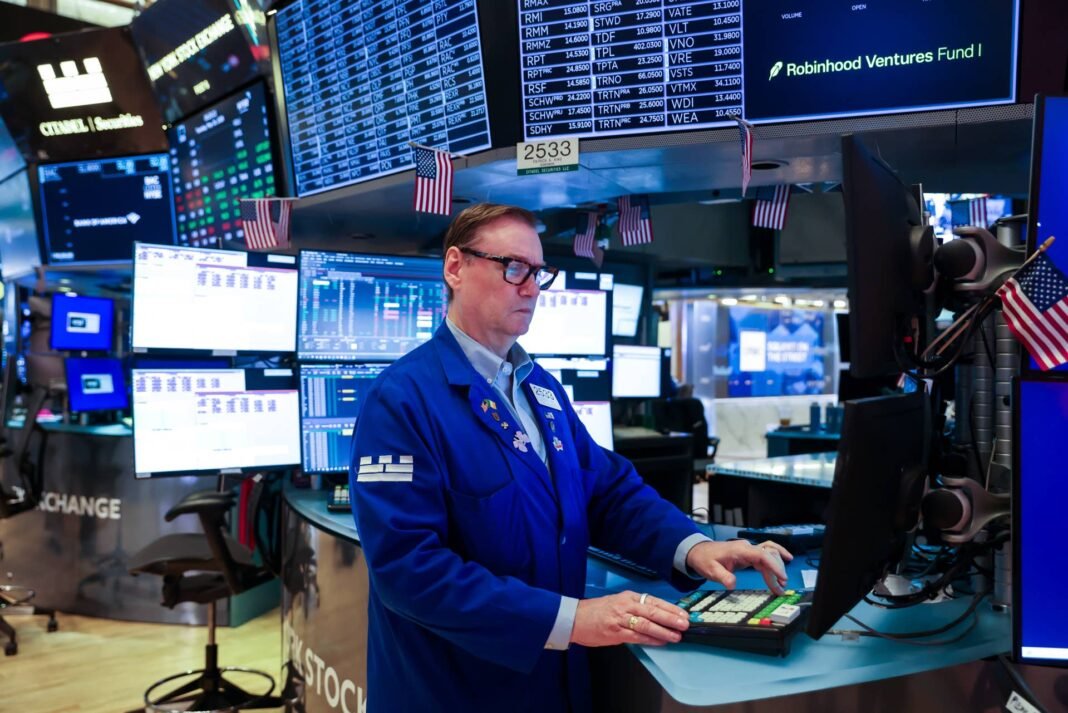


United States stock futures fell sharply overnight as Democrats scored victories in the midterm elections, and stock futures trading pointed to a lower open on Wednesday, 4 November 2026. Futures tied to the S and P 500 fell 1.3 percent, while Nasdaq-100 futures dropped 2.2 percent and futures tied to the Dow Jones Industrial Average slid 0.8 percent.
The Fox News Decision Desk projected Democrats will control the House of Representatives and gain control of the Senate after victories in races across the country. Invezz reported Dow futures down 440 points, S and P 500 futures down 102 points, and Nasdaq-100 futures down 660 points in overnight trading. The moves came after a mixed session on Tuesday, when the S and P 500 rose 0.36 percent to 7,568.92, the Nasdaq rose 0.83 percent to 25,372.01, and the Dow fell 0.38 percent to 51,786.72.
Stock futures and the Washington shift
The results added to uncertainty on Wall Street as investors weighed what a shift in the balance of power in Washington could mean for taxes, government spending, artificial intelligence, Big Tech, defense, health care, banking, and cryptocurrency regulation. Futures often move first when election results arrive outside market hours, and the overnight drop showed traders repricing that outlook before the opening bell.
"Markets appear to be pricing in the possibility of a stronger-than-expected Democratic showing, which could reduce expectations for further fiscal stimulus," Charu Chanana, chief investment strategist at Saxo in Singapore, told Reuters. Chanana said investors may be concerned that Democratic control of Congress could bring greater regulatory scrutiny of AI and Big Tech, particularly as investors question high valuations and rising AI related spending.
Prediction markets had pointed in the same direction before results were final. More than $1.48 billion was wagered on the midterm elections in prediction markets, according to the Fox Business report, and traders had increasingly pointed to Democratic control of both chambers as results rolled in.
Stock futures, yields and the dollar
Bond and currency markets moved in a different direction from stock futures overnight. The benchmark 10 year Treasury yield fell 6 basis points to 4.906 percent. The United States dollar also weakened. The euro and the British pound both gained against the dollar, while the dollar index fell 0.32 percent.
"However, lower Treasury yields could eventually provide some relief, so the initial selloff may not necessarily be sustained," Chanana said. Lower yields reduce borrowing costs for companies and households, and they can support stock valuations when they fall far enough. That link is one reason traders watched the bond market as closely as stock futures in the overnight session.
Stock futures also reflected nerves that had built up before voting day. The Nasdaq had fallen 5.3 percent in October, its worst month since March 2025, according to Finimize, and investors had shifted money from technology shares toward other sectors. The equal weight version of the S and P 500, which gives each company the same weight, rose about 5 percent over the past month, while the standard size weighted index fell 2 percent over the same period.
Stock futures and markets overseas
Markets overseas also moved lower. Japan Nikkei fell 3 percent, South Korea KOSPI dropped 1.6 percent, and a broad index of Asia Pacific stocks outside Japan declined 0.5 percent. The declines showed the election result was read beyond the United States, as traders in Asia weighed the same questions about spending, regulation, and trade policy.
History gives a calmer backdrop to the overnight stock futures move. Shifts in congressional control have not derailed stocks in past cycles. The S and P 500 rose through year end in five of eight midterm cycles since 1930 when the president party lost the House, according to Ned Davis Research. That record does not predict this year, but it shows overnight falls after elections have often faded before year end.
Traders also face a busy economic calendar on Wednesday. Reports on ADP employment, the trade balance, and ISM services are due during the day, and company results are due from firms including Uber, McDonald, and CVS Health before the open, with Qualcomm, Arm Holdings, and Snap due after the close. Those releases will test whether the stock futures drop was mainly about politics or about wider worries over earnings and interest rates.
The overnight stock futures fall, the drop in Treasury yields, and the weaker dollar together told one story. Investors moved money out of shares, into bonds, and away from the dollar as the election result took shape. Whether that move holds through the regular session will depend on the economic data, the company results, and how far the new balance of power in Congress shapes tax and spending plans in the weeks ahead.