
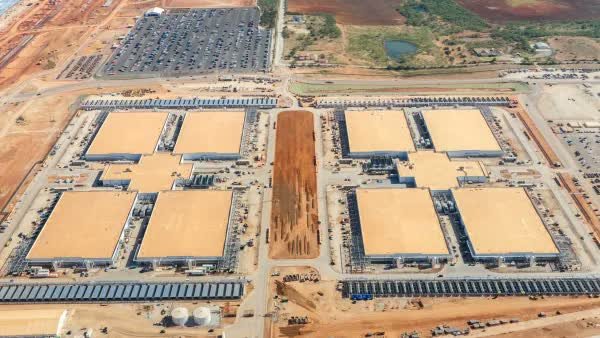


The 2026 midterm elections delivered a sharp rebuke to Big Tech. The industry spent hundreds of millions of dollars to shape the results, and its preferred candidates lost in race after race. Democrats won control of both the House and the Senate on Tuesday, and many of their winning candidates had campaigned against artificial intelligence data centers and the billionaires behind them. Local ballot measures to limit data centers passed across the country, and Politico’s account of the night calls Elon Musk, the cycle’s biggest spender, one of its biggest losers.
Big Tech spending failed to deliver
Musk, the most visible face of Big Tech’s election spending, spent about $446 million on the cycle, according to Politico, the most a non-candidate has ever spent on an election. More than $200 million of it went to Texas races. His preferred candidates were swamped almost everywhere, including Ken Paxton in the Texas Senate race and Vivek Ramaswamy in the Ohio governor’s race. Musk responded on X on Wednesday morning by writing that data centers in space were looking pretty appealing right now. The joke landed as his plans for a buildout of data centers across Texas came under doubt.
Musk was not the only Big Tech donor whose money missed. Venture capitalists Marc Andreessen and Ben Horowitz gave $116 million, mainly to Republican campaigns, and OpenAI president Greg Brockman and his wife gave $50 million, mostly to Republicans. Crypto and artificial intelligence companies spent about $250 million in the midterms, according to the newsletter Citation Needed. Of the twelve competitive races decided so far, the side their super PACs backed lost nine, with $74.7 million spent on the losing side against $28.3 million on the winners.
Big Tech and the data center backlash
Texas delivered the clearest verdict. Democrat Gina Hinojosa defeated three-term Republican governor Greg Abbott, and Democrat James Talarico defeated Paxton to take the state’s Senate seat. Talarico’s win gave Texas its first Democratic senator in nearly four decades. For Big Tech, the results put the state’s booming data center sector in doubt, since a quarter of the tech industry’s new data centers are planned for Texas, according to industry estimates. Governor Abbott had already paused permits for new data centers pending an audit before the vote, as even Republican voters turned against the projects over power bills and too few jobs.
Voters also acted directly on data centers. In at least 29 jurisdictions across the country, voters approved bans or limits on the facilities, according to the Washington Post. A voter poll conducted for the major television networks found that 56 percent of midterm voters said artificial intelligence and data centers were a major factor in their vote. The measures showed that Big Tech could not buy its way past local opposition, even where industry-aligned groups outspent the people organising against the projects. In Ohio, Sherrod Brown won a Senate seat despite more than $64 million of crypto money spent against him, the most the industry has ever spent on a single race.
California’s Proposition 40, a 5 percent wealth tax on billionaires, drew about $340 million in opposition spending from a coalition that included Sergey Brin, Eric Schmidt and John Doerr. The measure was trailing on election night. The spending showed how far the industry would go to defend its wealth, and how little it bought.
Big Tech faces a new Congress
Control of the House gives Democrats the power to investigate and issue subpoenas, and they plan to use it on tech. Representative Greg Casar of Texas said artificial intelligence company chief executives would face hearings under oath. Hearings have rarely produced new laws in the past, so the larger effect may be political. Democrats ran on the link between Big Tech, the White House and rising costs, and hearings help them keep that message alive until the 2028 presidential race.
The industry still has President Donald Trump on its side, and his veto may limit how far Democrats can go. Trump’s order blocking states from writing their own artificial intelligence rules still stands, and Democrats lack the votes to override a veto. The industry is also split, with groups backed by Andreessen and Brockman spending the primaries fighting an Anthropic-linked group that supports stricter rules. The election showed that the politics of artificial intelligence have changed, and the industry’s money did not change them back.