
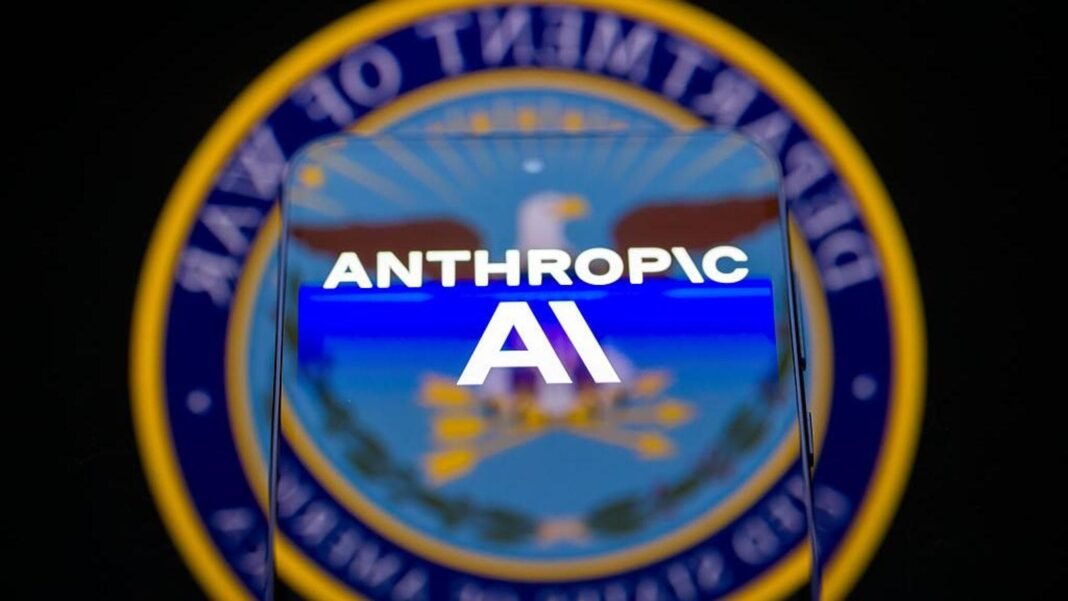


The Pentagon has given Anthropic until the end of the week to accept its terms for military use of the company’s artificial intelligence, or face the consequences. Senior Pentagon leaders, including Secretary Pete Hegseth, met company executives on Tuesday to settle a standoff over how far the armed forces can go in using the Claude language model. ABC News reported the ultimatum, which puts the company’s public safety principles on a collision course with its largest government customer.
Anthropic and the Pentagon at odds
The dispute has been building for weeks. Anthropic presents itself as the most safety-focused of the major artificial intelligence companies, and it has resisted letting its tools be used for mass surveillance or for weapons systems that could pick targets without a human in the loop. The Pentagon sees those limits as needless restrictions on a system it has already built into some of its workflows. The department has warned it will cut ties if the company does not bend.
Hegseth led the meeting himself, a sign of how far the dispute has risen inside the department. He gave Anthropic chief executive Dario Amodei until Friday to agree to the Pentagon’s conditions. The department has not said in public what those conditions are in full, or what penalties it would impose if the company refuses. The deadline leaves Amodei days to choose between the terms and the principles the company has advertised since its founding.
Anthropic holds its line on Claude
Claude is the product at the centre of the row. The Pentagon has already folded the model into some of its operations, and the department signed contracts worth up to $200 million with Anthropic, Google and OpenAI to bring commercial artificial intelligence into defence work. The money shows how much the military now depends on private firms for its most advanced tools. It also shows how much leverage a single company gains when its software sits inside classified systems.
The standoff reaches beyond one company. On Monday, the department finalised a deal to allow Elon Musk’s xAI chatbot inside the same classified systems, a move that gives the Pentagon another supplier if Anthropic walks away. The timing was hard to miss. It arrived a day before Hegseth’s meeting, and it weakens the company’s hand in the talks.
The dispute is the sharpest public clash yet between a leading AI developer and the Pentagon, but it is not the first time the two sides have disagreed. The department has spent the past two years bringing commercial models into defence work, from office tasks to intelligence analysis, and each deal has carried its own limits on use. The companies set those limits in their own policies, and the Pentagon has so far accepted them in exchange for access to the models. Hegseth’s ultimatum breaks that pattern. It treats the limits as a problem to be removed rather than a condition to be lived with, and it sets a deadline for the company to agree, or face the loss of the deal.
Anthropic weighs a Friday deadline
The choice facing Anthropic is stark. Accepting the Pentagon’s terms would mean letting Claude be used in ways the company has said it will not allow, including surveillance at scale and weapons that act without human approval. Refusing would risk a contract worth tens of millions of dollars and a public break with the department that runs the largest military in the world. Either way, the decision will be read as a statement of what the company’s safety pledges are worth.
The dispute also tests a wider question for the industry. Private companies now build the tools that governments use to fight wars, gather intelligence and run their bureaucracies, and those companies set rules for how their products can be used. When a government customer disagrees with the rules, there is no settled way to resolve it. The Pentagon’s deadline gives that question a date: Friday.