
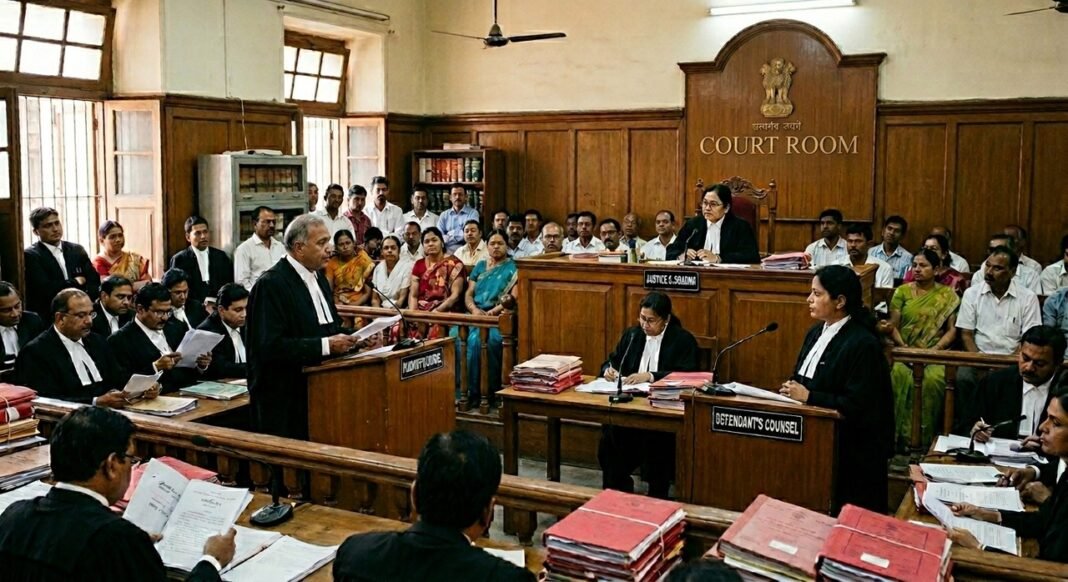


India has fewer than 30 forensic psychiatrists for a population of about 1.5 billion people, according to data shared at the International Forensic Psychiatry Conference (IFPC) 2026 in Bengaluru and reported by Deccan Herald on 6 November. The figure lays bare a gap at the point where mental health meets the law.
Forensic psychiatrists are the doctors courts turn to when a case turns on a person’s mind: whether an accused person is fit to stand trial, whether mental illness affected criminal responsibility, and what care a person in custody needs. With so few of them, assessments wait, trials stall and accused people spend longer in custody before their mental state is even examined.
The conference ran from 2 to 5 November at the NIMHANS Convention Centre in Bengaluru. It was co-hosted by the Royal Australian and New Zealand College of Psychiatrists’ Faculty of Forensic Psychiatry and NIMHANS, under the theme “Bridging the Gap”. Delegates from India and Australia discussed the space between courts and clinics, custody and care, and punishment and rehabilitation.
Forensic psychiatrists and the courts
Courts in India rely on psychiatric assessments at several points in a criminal case. Under the Bharatiya Nagarik Suraksha Sanhita, 2023, judges can order an examination when there is reason to think an accused person may be of unsound mind, and the court must decide whether the person can follow the trial and instruct a lawyer. The Mental Healthcare Act, 2017, gives people with mental illness rights to care and sets limits on how they can be held and treated.
Each of those steps needs a doctor who can examine the person, write a report the court can rely on and, at times, give evidence. In practice, that work often falls to general psychiatrists with little or no training in the field, because forensic psychiatrists are so scarce. Reports can take months, and the delay keeps people in jail while their fitness to stand trial stays undecided.
The shortage is sharpest in the places that need forensic psychiatrists most. India has no dedicated forensic psychiatric hospitals, so people found unfit to stand trial or acquitted on grounds of mental illness are held in general hospitals or prisons that are not set up for their care. State mental hospitals number about 50, and many have no full forensic unit.
Why India has so few forensic psychiatrists
Forensic psychiatry has no separate specialisation of its own in India, and training in the subject is thin. The Indian Psychiatric Society has a specialty section for the field, but teaching and supervised practice remain limited, and most psychiatry trainees get little exposure to court work. NIMHANS runs a DM course in forensic psychiatry, with two seats in the sponsored category, a small intake for a country of India’s size.
The gap sits inside a wider shortage. India has about 0.75 psychiatrists per 100,000 people, against the World Health Organization’s recommended 3 per 100,000. The National Mental Health Survey of 2015-16 put the treatment gap for mental disorders at 84.5 per cent, which means most people who need care do not receive it.
The conference heard that the fix needs more than training places for forensic psychiatrists. Courts and hospitals need shared standards for reports, regular peer review of expert evidence and training for judges and prosecutors in how to read a psychiatric assessment. Without those, even a larger workforce of forensic psychiatrists would struggle to give courts what they need.
What the conference set out to change
The meeting’s theme points to the work ahead: building links between the two countries’ systems and between India’s own courts, hospitals and prisons. Delegates discussed models from Australia, where forensic services are more developed, and what parts of them could fit Indian law and Indian institutions.
For now, the number is the measure of the gap. Fewer than 30 forensic psychiatrists for 1.5 billion people means most courts in India have no specialist to call on, and most accused people with mental illness are assessed, if they are assessed at all, by doctors without specialist training in the field. The conference put that figure on the record. What follows will show whether it moves.