
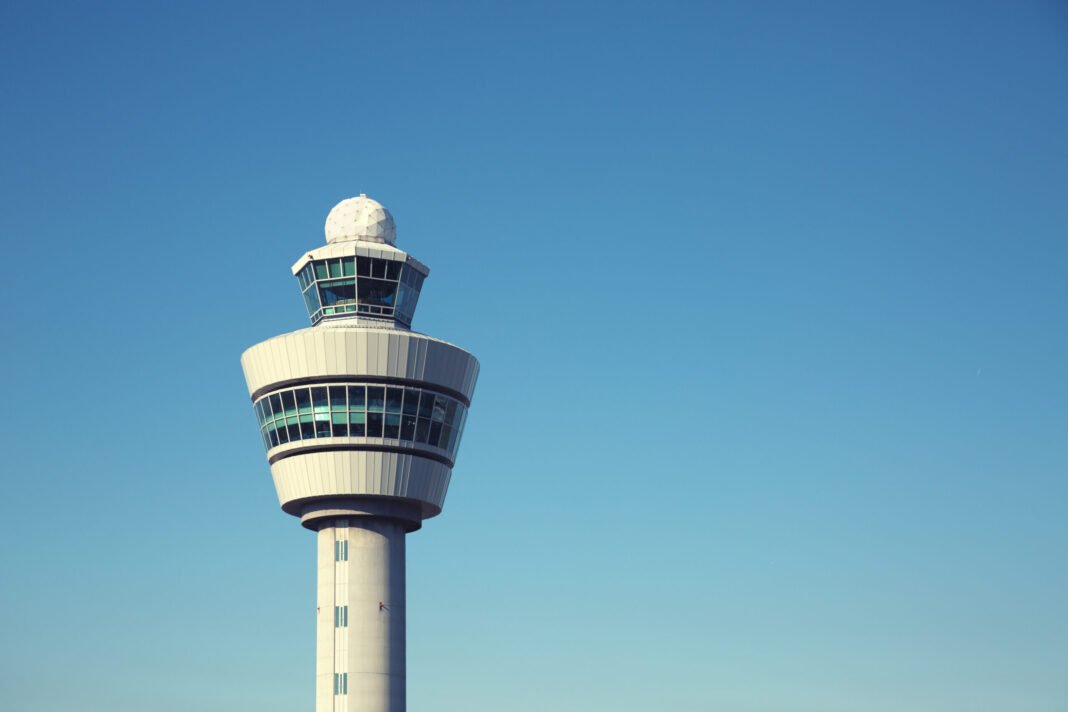


The Federal Aviation Administration said on Friday that the first digital air traffic control tower systems in the United States are now in operation at two small airports, one in Florida and one in Alaska. The systems are running at Bartow Executive Airport in Florida and Kenai Municipal Airport in Alaska, and the agency said five more airports without towers will get the same equipment. FAA Administrator Bryan Bedford announced the move as part of a wider effort to replace equipment the agency describes as decades old.
A digital air traffic control tower does not put a controller in a glass cab above the runway. Instead, cameras and sensors watch the airfield and send the picture to screens in a control room, where controllers get a continuous 360-degree view of runways, taxiways and the airspace around the airport. The controllers still issue instructions and manage traffic. The FAA said the setup gives them a better view of the airport than a conventional tower at a small field, and it can serve airports that never had a tower at all. The agency said the setup gives controllers a better view without replacing them.
Digital air traffic control tower plan for five more airports
The five airports next in line are Winter Haven Regional Airport and Venice Municipal Airport in Florida, Montgomery County Airpark in Maryland, Johnston Regional Airport in North Carolina and Durango-La Plata County Airport in Colorado. Each digital air traffic control tower in the group will serve an airport that has no tower today, and the FAA did not give a date for each installation. The work is funded through the Working Families Tax Cut Act, which set aside 50 million dollars for digital towers at qualifying airports without towers.
The digital air traffic control tower at Bartow began operating in September, two months before the FAA announcement. The system cost 6.1 million dollars, paid for by the Florida Department of Transportation. Cameras sit on a 76-foot tower about 600 feet from the control room, where 15 screens arranged in an arc show the full view of the airfield. The FAA issued its first system design approval for the equipment in September, covering single-runway airports in Class D airspace. The system, called smartVISION, comes from Frequentis, an Austrian company.
Digital air traffic control tower testing took years
Frequentis was one of several companies whose equipment the FAA tested over years at the William J. Hughes Technical Center in Atlantic City, New Jersey. Similar camera-based technology had already been used in the United States at Leesburg Executive Airport in Virginia, where a remote tower began providing air traffic control services in 2018. London City Airport became the first major international airport controlled entirely by a remote digital tower in 2021. The FAA hired Frequentis USA without competition for the first phase of the digital air traffic control tower in Kenai, and Kenai was chosen as Alaska’s first demonstration site partly because of its mix of traffic and surfaces.
The digital air traffic control tower program is one part of a larger modernization effort at the FAA. Congress approved 12.5 billion dollars over five years in June 2025 to support air traffic control reforms, and the administration is seeking another 30 billion dollars. The Guardian reported that the effort also targets copper telecommunications lines, floppy disks and paper strips still used to track aircraft. In September the agency rolled out an artificial intelligence tool called Strategic Management of Airspace, Routes and Trajectories. About 600 of the more than 5,000 public airports in the United States have control towers.
What comes next for the digital air traffic control tower
The FAA has not said when the digital air traffic control tower equipment will reach larger or busier airports, and it has not given dates for the five airports already named. The November announcement carried no project-level cost comparison for Bartow or Kenai, Airways noted. Bedford is scheduled to appear before the House transportation and infrastructure committee next week, where lawmakers are expected to ask about the cost and pace of the wider overhaul.