
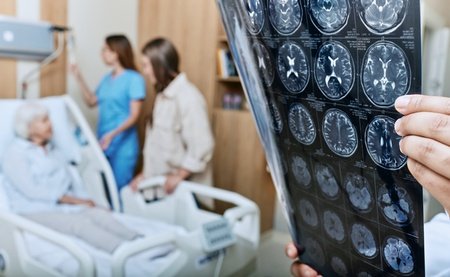


Younger adult strokes took a public face last week when Senator Chris Murphy, 53, was taken to hospital after a stroke at his son’s hockey game on 31 October. Murphy, a Democrat from Connecticut, noticed numbness in his arm and was taken to a local hospital, where doctors found a stroke. He was then moved to Johns Hopkins Hospital in Baltimore, where doctors described a small hemorrhagic stroke, a bleed in the thalamus.
His chief of staff, Allison Herwitt, said Murphy was awake and alert and responding well to treatment, and his office was optimistic he would make a full recovery. Murphy has since left Johns Hopkins for rehabilitation, where he is expected to spend several weeks. Dr. Jose Suarez, chief of neurosciences critical care at Johns Hopkins, described the stroke as small and was optimistic about the senator’s outlook.
Murphy is 53, an age at which a stroke still surprises people. Stroke rates remain far higher among older adults, but the rate of younger adult strokes has moved in the opposite direction. A study in the journal Neurology in September found that the stroke rate among adults ages 20 to 54 nearly doubled over 27 years, rising from 33.9 cases per 100,000 people in 1993-94 to 62.2 per 100,000 in 2020. Over the same period, stroke rates among older adults fell.
Figures from the Centers for Disease Control and Prevention point the same way. Comparing 2011-13 with 2020-22, the CDC found that stroke prevalence rose 14.6 percent among people ages 18 to 44 and 15.7 percent among people ages 45 to 64. Overall prevalence rose 8 percent. The CDC figures on younger adult strokes come from a national telephone survey of people’s own stroke history, and response rates were below 50 percent.
Younger adult strokes in numbers
There is no single explanation for the rise in younger adult strokes, but the risk factors behind stroke are more common among younger people. High blood pressure and obesity are up in younger age groups, as are diabetes, atrial fibrillation and sleep apnea. A study in Florida found that from 2014 to 2022, young patients ages 18 to 55 who had the most common form of stroke increasingly had vascular risk factors such as hypertension, coronary artery disease, diabetes or sleep apnea.
Substance use has also grown among younger stroke patients. In the Cincinnati area study, substance use among stroke patients ages 20 to 54 rose from about 5 percent in 1993 to about 40 percent in 2020, mostly marijuana. The same study found that high blood pressure, diabetes and atrial fibrillation became more common among younger patients, and that younger adult strokes now make up a larger share of cases than a generation ago.
Younger adult strokes and risk factors
Strokes remain common across the United States: more than 795,000 people have one each year, and in 2014, 38 percent of people in hospital for stroke were younger than 65, according to the CDC. The numbers on younger adult strokes show that age alone does not rule out a stroke, and doctors say symptoms in younger people are often written off as a migraine or a pinched nerve.
The warning signs are the same at any age. Health officials list sudden numbness or weakness in the face, arm or leg, trouble speaking or understanding speech, trouble seeing, dizziness or loss of balance, and a sudden severe headache. Doctors say anyone who notices these signs should call 911 at once. For ischemic strokes, caused by a blocked blood vessel, emergency rooms can give a clot-busting drug within 4.5 hours of symptoms starting.
What to watch for
Murphy’s case also shows how fast treatment can follow when symptoms are acted on: he noticed the numbness in his arm during the game and was taken for care the same day. His office has not said what caused the stroke or how long rehabilitation will take, and it has not given a date for his return to the Senate. The rise in younger adult strokes means more families are facing the same questions.
Health professionals say the best protection is to know the risk factors and act on them early. That means quitting smoking, eating a balanced diet, staying active, and keeping blood pressure, diabetes and cholesterol under control. Regular visits to a primary care doctor can reveal risk factors early. High blood pressure can be present without symptoms, and it raises stroke risk sharply. Dr. Elizabeth Rosen, a neurologist at Tufts Medical Center, has said some people feel completely healthy even with hypertension. Dr. Aaron Shoskes, a neurologist at the University of Utah, has said early intervention makes a big difference once the numbers are known, and that applies to younger adult strokes as much as to any other kind.