
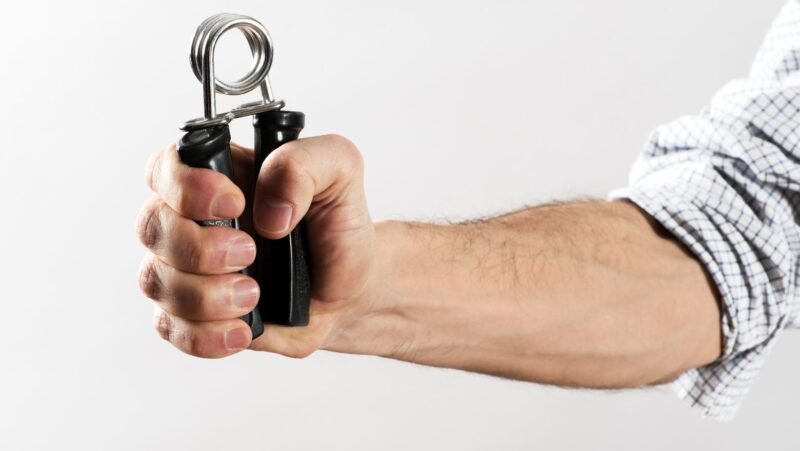


Grip strength is a test that takes seconds, costs little and needs only a small hand-held device, yet it tracks with outcomes that matter most in health. The Economist asked this month whether grip strength is a useful indicator of health, and the research behind the question now gives a clear answer: a weak grip lines up with higher risks of heart disease, dementia and early death, while a strong grip lines up with lower risks. The link is an association, not proof that squeezing harder adds years to a life.
The largest study on the subject was published in The Lancet in 2015. The Prospective Urban Rural Epidemiology study, known as PURE, measured grip strength in nearly 140,000 adults aged 35 to 70 in 17 countries and followed them for a median of four years. For every 5 kilogram drop in grip strength, the risk of dying during follow-up rose by about 16 percent, from cardiovascular disease by 17 percent, and from other causes by 17 percent as well.
The PURE researchers found grip strength was a stronger predictor of death from any cause, and of cardiovascular death, than systolic blood pressure, the number every doctor measures first. They found no link between grip strength and diabetes, admission to hospital for pneumonia or chronic obstructive pulmonary disease, a fall injury, or fracture. The study’s authors described the measurement as a simple and inexpensive way to sort patients by risk.
Grip strength and the big studies
A systematic review and meta-analysis in the British Journal of Sports Medicine in March 2026 pulled the evidence together. The review covered 155 cohort studies, with 94 included in the meta-analysis. Adults with the highest handgrip strength had a lower risk of several long-term conditions than those with the lowest, including cardiovascular disease, type 2 diabetes, disability, depression, cognitive decline, dementia and Parkinson’s disease. A 5 kilogram increase in grip strength was tied to a lower risk of most of these conditions.
The review’s authors warned that the quality of the evidence ranged from very low to moderate, so the results should be read with care. The studies were observational, so they can show that strong hands go with good health without proving that one causes the other. The reading tracks with muscle mass, physical activity, nutrition, coordination and nervous system function, so a low reading can reflect many problems at once.
A study published in JAMA Network Open this year followed more than 5,000 women between the ages of 63 and 99 for eight years. It measured how hard the women could squeeze a hand grip device and how fast they could stand up from a chair five times in a row. Every additional 7 kilograms of grip strength was linked to a 12 percent lower risk of death during the follow-up period.
Grip strength in the clinic
In clinics, the test uses a dynamometer, a device the patient squeezes as hard as possible, usually several times with each hand. The European Working Group on Sarcopenia in Older People uses a reading below 27 kilograms for men and below 16 kilograms for women to flag low muscle strength, which points to probable sarcopenia, the loss of muscle that comes with age. Peak median grip is about 51 kilograms for men ages 29 to 39 and about 31 kilograms for women ages 26 to 42.
An international group of muscle and nutrition specialists has called on doctors to track muscle health as they track blood pressure. Dr. Nicolaas Deutz, a professor at Texas A&M University who co-wrote the review, said muscle health estimation could be as important as measuring somebody’s blood pressure. The review argues that muscle loss is common, treatable and often missed until it causes a fall or a long hospital stay.
The test is also easy to act on. Resistance training builds the strength the test measures, and the chair-stand test, which counts how many times a person can rise from a chair in 30 seconds without using their arms, gives a second measure of leg strength. Doctors say the numbers should be read in context: grip depends on sex, body size, hand dominance and the device used, and no formula turns a grip reading into a biological age in years.
None of this makes a handshake a diagnosis: a low reading prompts a doctor to look further, not a verdict on its own. But the evidence runs from a 140,000-person study across 17 countries to a 155-study review, and it points the same way: hands that stay strong go with bodies that stay healthier for longer. The Economist’s question has an answer: yes, with the caution that a single number never tells the whole story.