
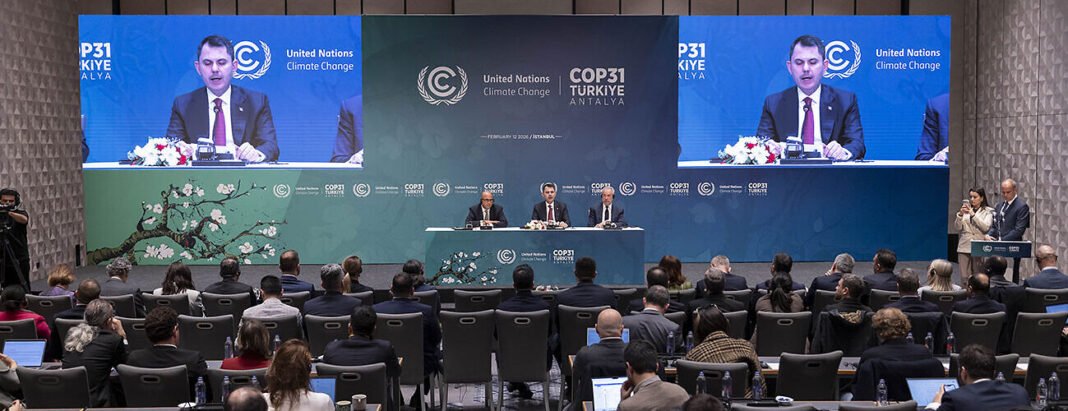


World leaders and delegates opened the COP31 climate talks in Antalya, Turkey, on Monday, with the United Nations warning that global action on climate change is moving far too slowly. The conference runs from November 9 to 20 and brings together negotiators from almost 200 countries.
UN climate chief Simon Stiell told the opening session at COP31 that progress was nowhere near fast or fair enough, and he urged governments to move from setting targets to delivering results. He said the meeting had to do more than send signals to governments and markets, and he named adaptation finance, renewable energy, power grids and methane cuts as the work that could not wait.
COP31 opens with a warning from the UN
Stiell said earlier climate conferences had set targets and shifted political decisions and financial markets, but the pace of putting those promises into practice stayed inadequate. The UN Climate Change secretariat reported before the meeting that 127 new national climate plans had been filed by 154 parties to the Paris Agreement between January 2024 and August 2026.
Even so, the plans on the table would cut global emissions by only about 6 percent by 2035 compared with 2019 levels. Full delivery of every pledge would take the cut to about 9 percent, still far short of what scientists say is needed to hold warming to the goals of the Paris Agreement.
What is on the table in Antalya
The negotiating agenda at COP31 is narrower than at any other major climate conference since the Paris Agreement was struck a decade ago. Delegates will work on finance to help poorer countries adapt to higher temperatures, on faster growth in renewable energy and electrification, and on cutting methane emissions.
Turkey, which holds the presidency of the talks, is pushing a drive to raise electrification rates around the world, replacing fossil fuels in transport, industry and heating. The conference slogan is “Where Dialogue Becomes Global Action,” and the hosts say the meeting should be judged on delivery rather than new promises.
COP31 and the 1.5-degree goal
The UN warned last month that the world can no longer keep warming below 1.5 degrees Celsius above pre-industrial levels, the threshold set out in the Paris Agreement. Murat Kurum, the Turkish environment minister who holds the COP31 presidency, said this is the first COP at which it is clear beyond reasonable doubt that the world will pass that mark.
Climate scientists say warming is likely to pass 1.5 degrees, and the talks opened after a year of extreme weather, including deadly heatwaves in Europe and a glacial flood in Nepal in August that killed more than 1,400 people. The war in Iran has also closed the Strait of Hormuz, pushing up fuel prices; a Bloomberg index of oil and gas futures has risen about 67 percent in the past 12 months.
Who is in the room
About 60,000 diplomats, officials and campaigners are expected at COP31 in Antalya over the two weeks, alongside smaller groups of world leaders and business chiefs. Those expected include Turkish President Recep Tayyip Erdogan, Brazilian President Luiz Inacio Lula da Silva and Finnish President Alexander Stubb, along with European Commission President Ursula von der Leyen and the head of the International Energy Agency, Fatih Birol.
The United States is absent from COP31. It is the world’s second-largest polluter after China, and President Donald Trump has withdrawn the country from the Paris Agreement and rolled back federal environmental rules. A large delegation of US members of Congress, state governors and city mayors is still heading to Antalya to argue that American climate action continues at state and city level.
The talks follow a breakdown at COP30 in Belem, Brazil, last November, where disagreements over finance kept a proposed plan to halt deforestation out of the final agreement. That failure fed calls to reform the way the talks work, including the rule that decisions need consensus, which lets a small number of governments block progress as COP31 opened.
Negotiators have until November 20 to agree on what COP31 will deliver. The test, in Stiell’s words from the opening session, is whether the meeting can turn a decade of promises into work that shows up in emissions, in grids and in money for the countries facing the worst of the warming.