
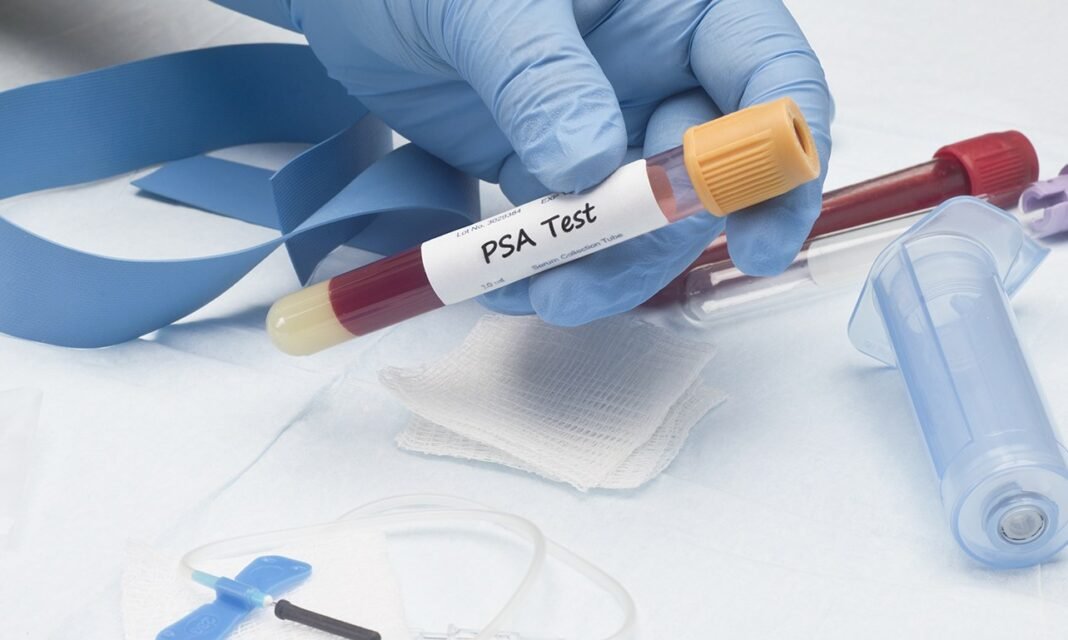


The American Cancer Society now recommends routine prostate cancer screening for most men, in the first change to its guidance since 2010. Under the new guideline, published Thursday in CA: A Cancer Journal for Clinicians, men at average risk should have a prostate-specific antigen (PSA) blood test every two years from ages 50 to 69. The advice replaces a 2010 position that left the choice to a talk between each man and his doctor.
The shift rests on trial data gathered since 2010. The society said the evidence now shows that regular prostate cancer screening saves lives, and that better imaging and follow-up care can limit the harm from finding and treating cancers that would never have caused trouble. Treatment for prostate cancer can bring erectile dysfunction and urinary incontinence, so wider testing is paired with watchful care for low-risk disease.
Men at higher risk start earlier and test more often. Black men, who have higher rates of prostate cancer, should have a PSA test each year from age 45. Non-Black men should also test each year from 45 when a close relative was found to have prostate cancer before age 65, or when more than one close relative has had the disease. A non-Black man with one close relative found to have the disease at 65 or older should start at 45 and test every two years.
Who should get prostate cancer screening, and when
The guideline sets age limits as well. For men ages 70 to 74, the choice to keep up prostate cancer screening should be a personal one, made with a doctor, since the balance of benefit and harm is less clear in that age group. Men who choose to keep testing in that range should test every two years. Testing is not recommended for men age 75 and older, or for any man with a life expectancy of less than 10 years, since the benefit falls as age rises.
A high result from prostate cancer screening does not lead straight to a biopsy. A PSA level of 3 nanograms per millilitre or higher counts as high for men under 70, and 6.5 or higher counts as high for men 70 and up. The guideline says the test should be repeated within two weeks to three months to confirm the result, since PSA levels can move up and down. When a repeat test stays high, most men should have a prostate MRI or a validated biomarker test before any talk of a biopsy. A biopsy comes into play only when suspicion of cancer is high, such as a very high PSA result.
Why prostate cancer screening advice changed
The society said the change reflects the latest evidence on prostate cancer screening and advances in how results guide care. The aim stays the same: find life-threatening cancers earlier, while limiting tests and treatment a man does not need. For men found to have low-risk prostate cancer, the guideline says active surveillance should be the first course of action. Many prostate cancers grow so slowly that they never cause harm in a man’s lifetime, and the society said careful watch is safer for those men than treatment at once.
What the new prostate cancer screening rules mean in practice
“By catching aggressive cancers with a simple PSA blood test, you open the door to highly effective treatments that protect your future,” Dr. Shanthi Sivendran, interim chief patient officer for the American Cancer Society, said in a statement. “Meanwhile, lower-risk findings can be safely managed through careful, active surveillance.” Dr. William Dahut, the society’s chief scientific officer, told the society’s Cancer Connections team that men can stop the testing process at any point and work with their doctors and families on what suits them best.
The change puts the society at odds with other guidance in the United States. The US Preventive Services Task Force, a federal panel, still holds its 2018 advice, which leaves periodic PSA testing for men ages 55 to 69 as a personal choice and advises against testing for men 70 and older. The task force is working on an update of its own, and the American Academy of Family Physicians does not recommend PSA testing for prostate cancer at all. The society’s guidance does not by itself change what insurers must cover for prostate cancer screening, and the task force position still governs coverage without cost sharing under federal law.
Prostate cancer screening matters because prostate cancer is one of the most common cancers in men and the second leading cause of cancer death in men in the United States, the society said. Nearly 334,000 men are expected to be found to have prostate cancer in 2026, and more than 36,320 are expected to die from the disease.