
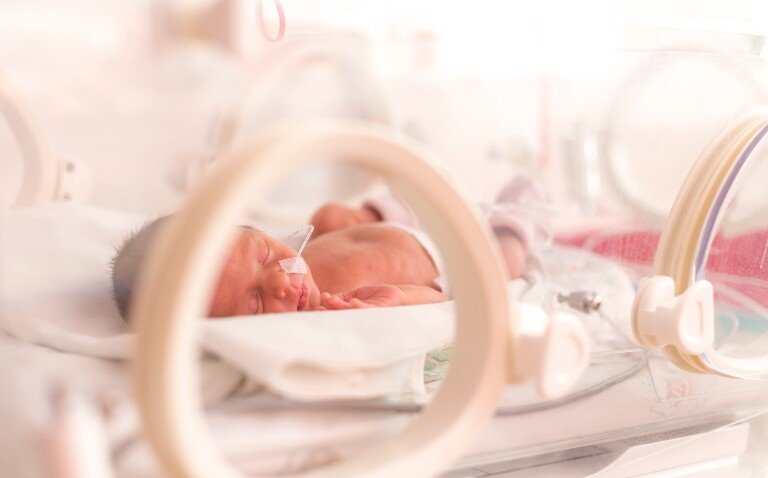


Vaccines and antibody shots against respiratory syncytial virus (RSV) are cutting hospital stays linked to the virus, according to data reported by Nature on 12 November. In Denmark, infant hospital admissions fell sharply after the country began vaccinating pregnant people against RSV on 1 October 2025, and researchers say RSV vaccines are working far better in real life than many had dared to hope.
RSV usually causes mild symptoms, but it can lead to severe disease and death in infants and older adults. The World Health Organization estimates that each year the virus hospitalizes about 3.6 million children under five and kills about 100,000 of them, with 97 percent of those deaths in low- and middle-income countries. In the United States, the CDC estimates that between 10,000 and 25,000 people have died in each of the past two winters, mostly in older age groups.
RSV vaccines cut infant hospital stays in Denmark
Denmark gave pregnant people a vaccine against RSV, and the antibodies it induced crossed the placenta to shield babies for about the first six months of life, when they face the highest risk. Newborns at high risk of severe disease, including premature infants whose mothers had not been vaccinated, were given injections of monoclonal antibodies. The Danish rollout of RSV vaccines was studied by Caroline Klint Johannesen, an epidemiologist at Nordsjaellands Hospital in Hilleroed, who looked at the Danish health records for last winter and found that infant hospital admissions had dropped steeply. A colleague looking at the same records remarked that something had to be wrong with the data, since so few people were in hospital with RSV.
Johannesen and colleagues published their findings in The Lancet Regional Health Europe. The study is one of several new papers that track how RSV vaccines perform outside trial settings. In Scotland, a national study found that the maternal RSV vaccine was 82 percent effective against hospital stays for severe lower respiratory tract infection in infants up to 90 days old, and that vaccination averted 219 such hospital stays. The vaccine was given from 28 weeks of pregnancy, and protection held even for infants born early.
How RSV vaccines and antibody shots work
Until recently there was no way to prevent RSV. That changed in 2022, when European regulators approved nirsevimab, a long-acting monoclonal antibody against the virus. Since then a second antibody and three RSV vaccines have been developed for use in adults, one of which suits pregnant people. Buddy Creech, a paediatrician at Vanderbilt University in Nashville, Tennessee, called the change remarkable, saying medicine had gone from no way to prevent RSV to an abundance of options. Dozens of countries across Europe, Asia and North and South America have now launched immunisation programmes.
The protection from RSV vaccines reaches babies in two ways. The antibody nirsevimab has shown about 75 to 80 percent effectiveness against RSV-linked hospital stays in infants, according to researchers at Fred Hutchinson Cancer Center. The maternal vaccine, Pfizer’s Abrysvo, is given during weeks 32 to 36 of pregnancy, and the antibodies it passes to the baby protect for about six months. The American Academy of Pediatrics recommends the antibody shot for all infants under eight months old born during or entering their first RSV season, unless they are protected by a maternal vaccination. The CDC recommends nirsevimab or clesrovimab for babies under eight months whose mothers did not receive the maternal vaccine.
RSV vaccines still need to reach poorer countries
The gains from RSV vaccines so far sit mostly in richer countries, and Nature reported that protection must expand to lower-income countries, which are hit harder. Testing for RSV has long been sparse, and there are no global figures for RSV-linked deaths in adults, though hospital stays and deaths rise with age after 60, above all in people with chronic heart and lung conditions. Viruses can evolve to escape antibodies, and one RSV antibody failed in trials after a resistant strain appeared, but researchers who studied more than 60,000 RSV genome sequences found that resistance to current treatments has appeared only at times and stays rare.
For parents, the advice from United States health bodies is plain: infants under eight months should receive either the protection passed on by a vaccinated mother or an antibody shot of their own before their first RSV season. The Danish records suggest that where those tools reach babies in time, hospital wards empty fast.