


Exercise has moved from a tip for feeling better to a core part of cancer care, Stanford Medicine reported on 12 November. A large randomised trial of colon cancer patients showed last year that people who exercised after treatment had a better chance of surviving and a lower chance of the disease coming back. The result has pushed physical activity into the spotlight beside surgery, chemotherapy and other standard treatments, and the link between exercise and cancer survival is now backed by trial evidence rather than observation alone.
Scientists have long known that regular exercise lowers the risk of developing many types of cancer. The new trial, known as CHALLENGE and led by researchers at the University of Alberta and Queen’s University in Canada, tested the idea in a strict way, assigning colon cancer patients at random to an exercise programme or to usual care. Studies of exercise and cancer that simply watch people over time had pointed the same way for years, and similar gains in survival have been seen for breast cancer and prostate cancer, but the trial gave doctors the kind of proof they had lacked.
Exercise and cancer survival: what the trial showed
Research on exercise and cancer has moved from treating activity as a way to lift quality of life to building it into ongoing care with the aim of improving survival, said Allison Betof, an associate professor of medicine in oncology at Stanford Medicine whose doctoral research focused on exercise oncology. More randomised trials are still needed for cancers other than colon cancer, she said, but for a step already known to be safe and to improve quality of life, it makes sense to offer it to patients as soon as possible.
Other work on exercise and cancer suggests that activity helps treatments work better. In 2015, Betof led a study in mice with breast cancer which found that animals that exercised grew more blood vessels around their tumours and carried more oxygen in them, both linked to better outcomes. The animals that worked out had slower tumour growth, and when given chemotherapy they responded better to the drugs. Other work has found similar effects for surgery, radiation and immunotherapy, and researchers have seen that cancer-fighting immune cells are more active in the blood and around tumours in people who exercise.
Exercise and cancer symptoms: easing fatigue and pain
Studies of exercise and cancer symptoms show that fatigue is one of the most common symptoms of cancer and a frequent side effect of treatment, and movement is the best defence against it. A 2017 meta-analysis found that regular exercise beat all other methods for fighting cancer-linked fatigue, including medicines and supplements. Anjali Sibley, a clinical associate professor of oncology at Stanford Medicine, said exercise is one of the most effective ways to treat cancer-related fatigue. Studies also show that activity lifts mood, eases joint pain that can follow hormone therapy for breast cancer, and improves quality of life.
Guidance on exercise and cancer care advises patients and survivors to exercise at moderate intensity for at least 150 minutes a week, or intensely for at least 75 minutes, and to add strength or resistance training at least twice a week. Betof said the total minutes per week matter more than intensity, and a walk is far better than doing nothing for want of a full gym session. Patients can do different amounts of exercise from day to day and from week to week, Sibley said, and those ups and downs should be built into a plan agreed with their care providers.
Exercise and cancer rehab: finding the right help
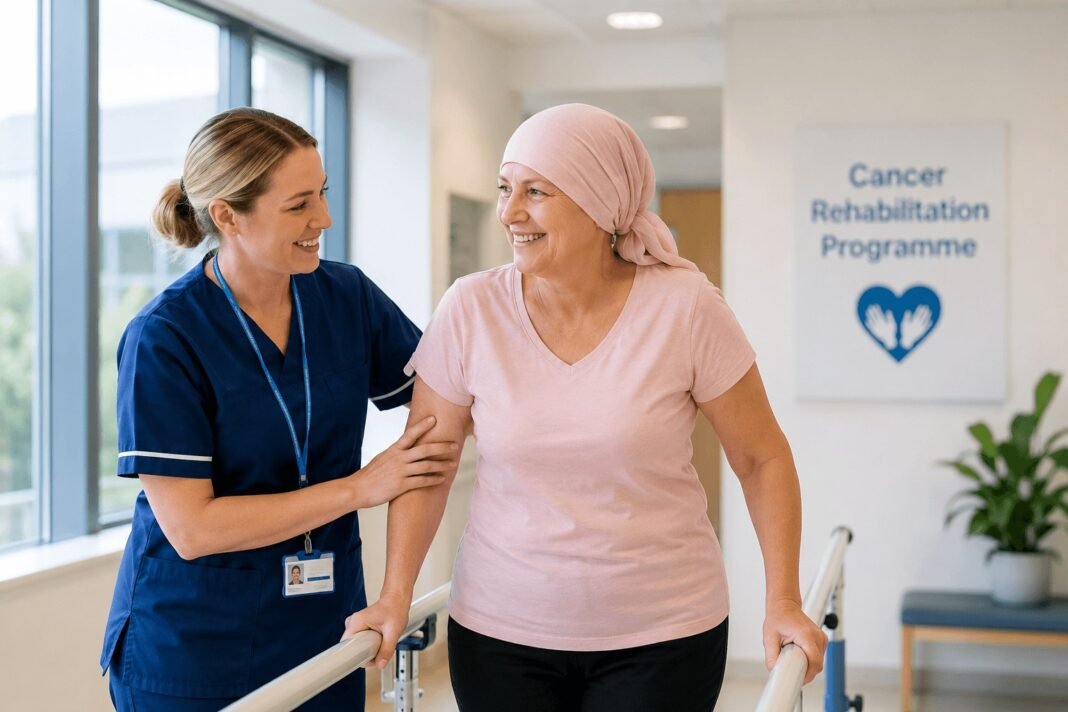
Advice on exercise and cancer rehab starts with a warning: people with cancer may want to avoid a crowded gym, since treatment can lower immunity and leave skin sore from radiation, bones weak from tumours, or movement limited after surgery. Alyssa Mixon, a physical medicine and rehabilitation physician at Stanford Medicine, recently joined from the University of Virginia to launch Stanford Health Care’s first cancer rehab programme, where therapists and doctors build workout plans around each patient’s limits. For those without a local programme, the cancer-support charity Livestrong runs exercise sessions for patients and survivors through YMCAs across the United States and online, and some of Stanford Health Care’s free cancer wellness classes are available by video.
Mixon said it is never too early or too late to send a patient to cancer rehab once a diagnosis is made, since many patients know exercise matters but are unsure what they should do. A few decades ago, the standard advice was to rest as much as possible during treatment. Mixon summed up the change in the words she uses with patients: “Now, we emphasize that movement is medicine.”