
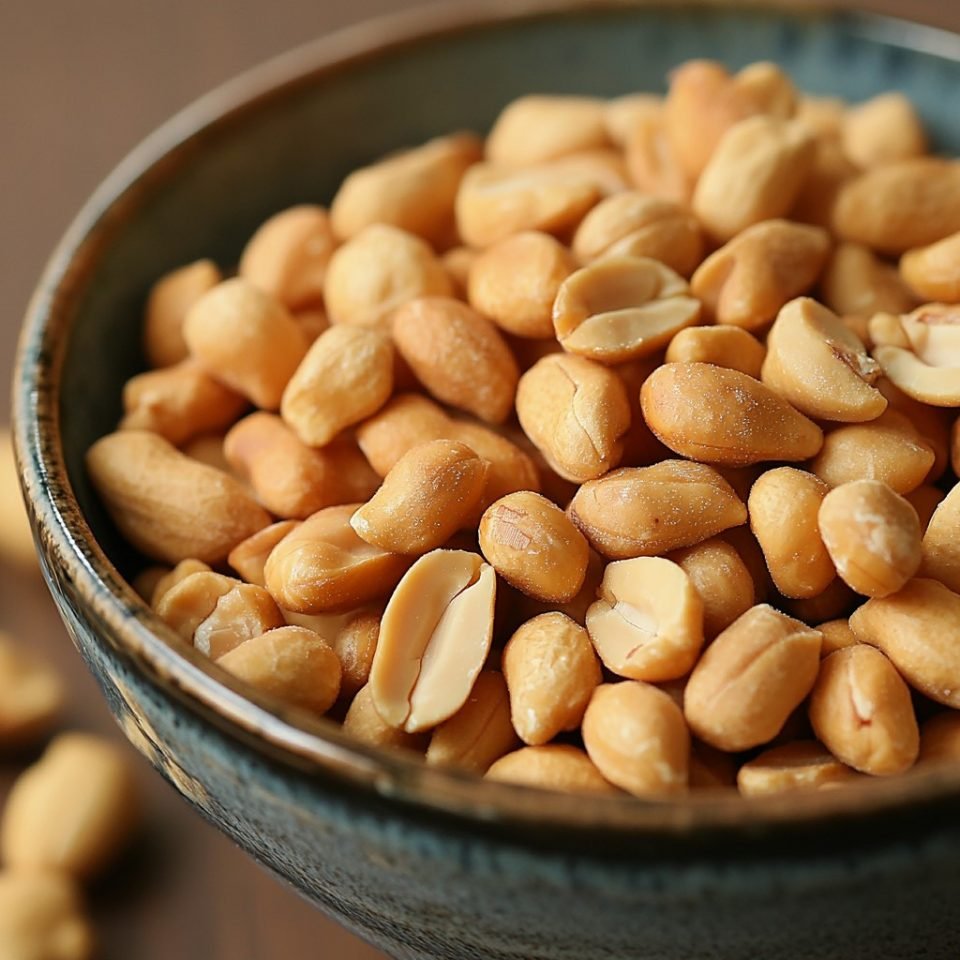


Eating a daily serving of peanuts may support brain health in older adults, according to a small study from the Netherlands that measured blood flow and insulin response in the brain. The research, published in the journal Food and Function in September, found that 60 grams of unsalted, skin-roasted peanuts a day for 16 weeks improved how memory-related regions of the brain responded to insulin.
The study involved 31 healthy adults between the ages of 60 and 75, recruited by researchers at the NUTRIM Institute at Maastricht University Medical Center. In one period of the study, participants ate 60 grams of peanuts a day, about two servings, while researchers used MRI scans to measure blood flow and other aspects of brain health. At the end of the 16 weeks, overall blood flow in the brain had risen by about 4 percent.
The scans also showed improved insulin responsiveness in memory-related regions, including the hippocampus, a part of the brain involved in forming memories. Insulin does more than regulate blood sugar: in the brain it contributes to several processes tied to thinking and memory. Peter Joris, the study’s author and an associate professor in the department of nutrition and movement sciences at Maastricht, said the findings point to a simple food having a measurable effect on brain health in later life.
How peanuts affected brain health in the study
The trial was small and tightly controlled. All 31 participants were healthy older adults, and the study tested only unsalted, skin-roasted peanuts at one daily amount, 60 grams. The researchers did not test salted or flavored peanuts, peanut butter, or other nuts. The trial lasted only a few months, so it cannot show whether the benefits last over time or affect the long-term risk of dementia.
The research was funded by the Peanut Institute Foundation, which the study reported had no role in its design, analysis or publication decisions. That funding note matters because food studies paid for by industry groups draw extra scrutiny, and the authors disclosed it in the published paper.
Peanuts are inexpensive and widely available, which is part of why the study drew attention. They are rich in healthy fats, protein, fiber and micronutrients, and earlier research has tied nut consumption to slower cognitive decline and better brain health over time. The Maastricht study is one of the first to measure the effect on the brain directly with scans, rather than relying on diet questionnaires or memory tests alone.
Brain health limits of a small study
Kellyann Niotis, a preventive neurologist based in New York, told Fox News Digital that the study is interesting because researchers are increasingly recognizing that insulin plays an important role in brain health, not just blood sugar regulation. She cautioned against reading too much into the result. ‘I would not interpret these findings as evidence that peanuts prevent Alzheimer’s. And it’s unlikely that one food will ever have that much power,’ she said.
Niotis added that the small size of the study leaves open whether the changes it found would produce measurable improvements in everyday memory or long-term brain health. The researchers did not determine whether the changes could prevent cognitive decline or Alzheimer’s disease. They measured blood flow and insulin response, which are markers of brain health, not outcomes.
What the researchers measured
The team used MRI scans to track blood flow across the brain and to test how memory regions responded to insulin before and after the 16-week peanut period. Blood flow rose by about 4 percent overall, and the hippocampus showed a stronger insulin response. The study did not report changes in memory test scores, and the authors did not claim any.
For now, the finding is narrow: a daily portion of unsalted peanuts changed two markers of brain function in 31 healthy older adults over four months. Larger and longer studies would be needed to show whether that change means better memory or a lower risk of dementia. The researchers have not announced a follow-up trial.