


The Philadelphia 76ers touched down in Charlotte well past midnight, in the middle of an NBA back-to-back that was their seventh game in 12 days, a league-high pace. Hours earlier they had played the defending champion New York Knicks in a 7:30 p.m. national television game in Philadelphia. Then came a bus, a team plane, a flight of nearly 500 miles, and a hotel bed at 2 a.m. at the earliest, with another game waiting the next day. Yahoo Sports writer Tom Haberstroh, who is covering the 76ers from the sideline for NBC Sports Philadelphia this season, calls that night the worst of its kind, and his answer is direct: ban the back-to-back and cut the regular season to 65 games.
Haberstroh lays out the plan in a column titled Must-See 65. Every team would play 65 games. The NBA back-to-back would disappear from the schedule, and the league would sell the shorter season as appointment viewing. The number is not random. The league and the players union already agreed that 65 games makes a season count for major awards, so the threshold already defines how the league judges its players.
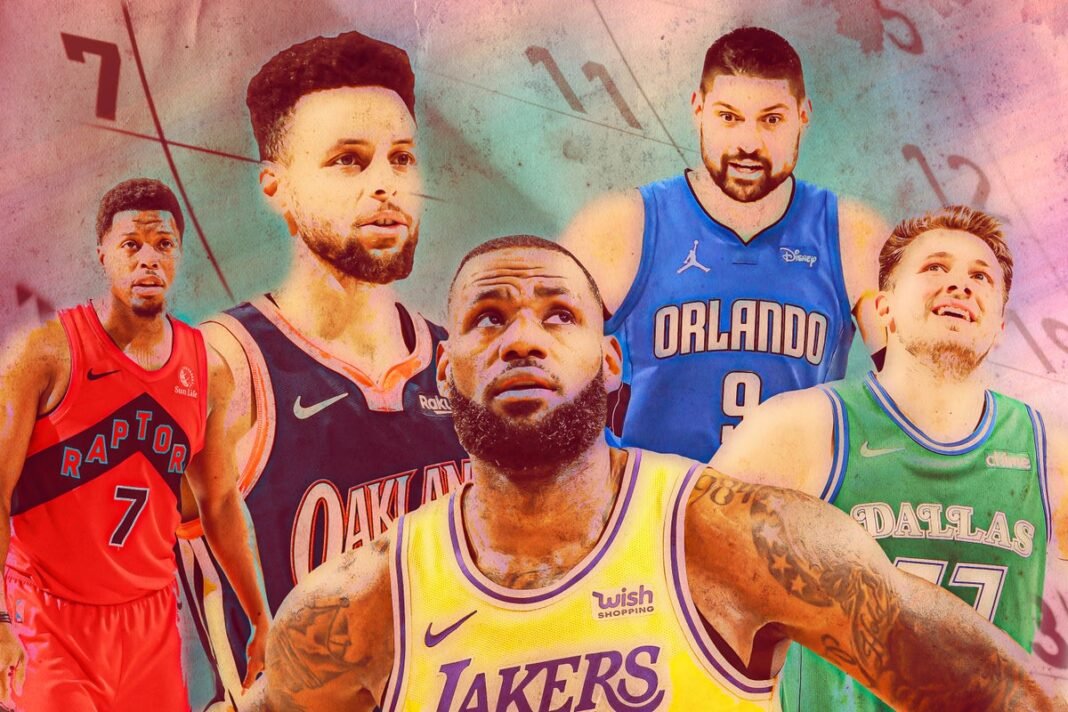
The case starts with who is missing. LeBron James and Joel Embiid were both ruled out with injuries on the second night of an NBA back-to-back, James with sciatica and Embiid with plantar fasciitis, and the stands still held their jerseys. Stephen Curry is out for multiple weeks with an oblique injury. Luka Doncic, Paul George, Pascal Siakam and Kyrie Irving have each sat out a game with no rest this season. Anthony Edwards, once a loud critic of load management, was shut down the same week Adidas put out a commercial captioned “65 games one way or another.”
How the NBA back-to-back grind wears down stars
Of the 426 back-to-backs on the NBA schedule, the 76ers trip to Charlotte was the second-shortest turnaround with travel: 22-and-a-half hours, with an overnight flight in between. Haberstroh has covered the league for more than a decade, but he had not lived a back-to-back like this until he joined the 76ers broadcast. The numbers behind the NBA back-to-back complaint are mixed. Stars have played in 73.5 percent of games on the second night of a back-to-back this season, a lower rate than the regular-season norm, while they have suited up for more than 90 percent of NBA Cup games. The link between the schedule and injuries is murky, Haberstroh writes, but a shorter schedule is the clearest way to get stars on the floor.
The league has tried to police rest without changing the calendar. In 2023 it rolled out a Player Participation Policy, and it commissioned a 57-page study on load management. Teams still face an average of 14.2 NBA back-to-backs this season, and some play as many as 16. Under the policy, teams generally cannot sit two designated stars in the same game without an approved exception, and players must appear in at least 65 games to qualify for major awards.
What the NBA back-to-back ban would change
A 65-game season would cut 17 games from every team’s schedule. Haberstroh argues the trade is worth it: fewer games with missing stars, more nights when the best players are on the floor, and a product fans can trust. He points to the NBA Cup, where stars have shown up at a higher rate. The plan also leans on the award threshold. If 65 games already defines a full season for awards, Haberstroh writes, the league should make 65 games the season itself.
The idea has support beyond Haberstroh. Stephen A. Smith said this week that the priority should be eliminating as many back-to-back games as possible, after NBA Commissioner Adam Silver floated the idea of shortening games to 40 minutes. Smith rejected the shorter game and pointed at the NBA back-to-back instead. Golden State coach Steve Kerr has made the same point, telling fans to check the schedule before buying tickets because Curry and other veterans will sit out some back-to-backs.
Why the NBA back-to-back debate comes down to money
The most common rebuttal to an NBA back-to-back ban is money. Critics say owners and players will never agree to give up that much revenue, and Haberstroh concedes the point is real. He argues owners have a cushion: each stands to collect a reported $650 million or more in upcoming expansion fees. The players would feel it too, since salaries are tied to league revenue. The math is the reason the idea has stayed a column rather than a proposal.
For now the schedule stays at 82 games. The 426 back-to-backs on this season’s calendar will be played as scheduled, and the next time a star sits out the second night, the argument for 65 games will be waiting.