
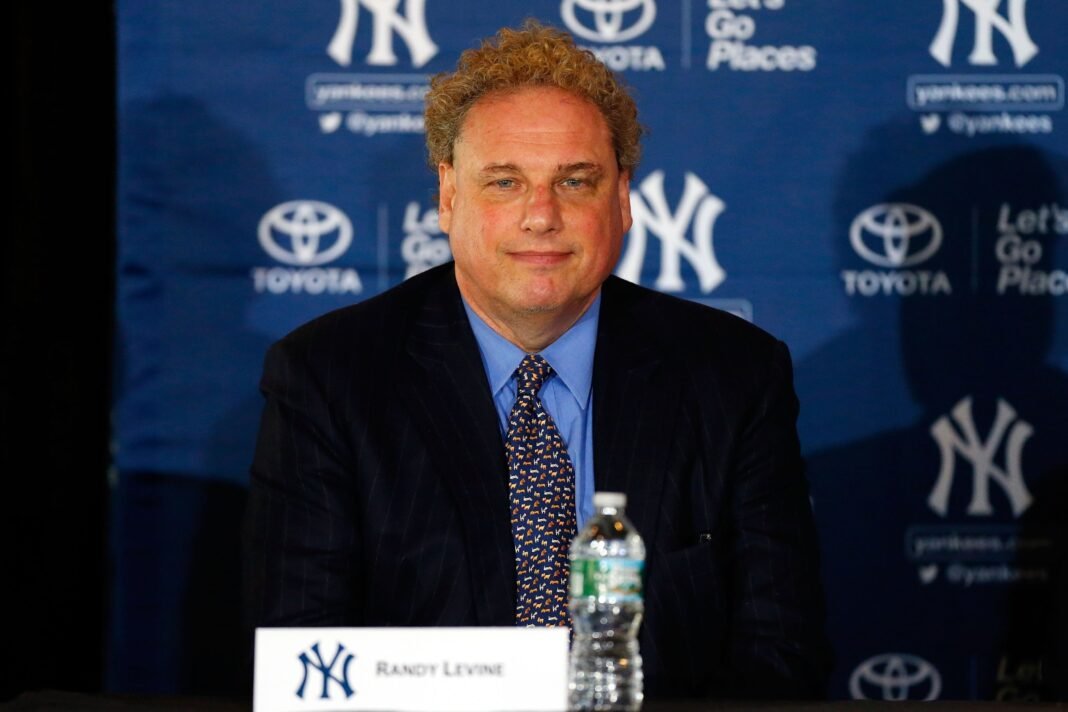


New York Yankees president Randy Levine has a warning for Congress: pass the Protect College Sports Act before the current term ends, or the chance will be gone. “If this bill isn’t passed, there will never be a bill that’s passed,” Levine said in an interview with CNBC’s Michael Ozanian. As vice-chair of President Donald Trump’s Roundtable on Fixing College Sports, Levine has become the most visible baseball executive in the fight over the future of college athletics.
The bill is the Protect College Sports Act of 2026, a bipartisan measure introduced on June 2, 2026, by Senators Ted Cruz of Texas and Maria Cantwell of Washington. It would set a single nationwide set of rules for college athletics, replacing the patchwork of state laws that has governed name, image and likeness deals and the transfer portal. The Senate passed the measure with 77 votes. Randy Levine is now pressing the House to take it up.
The money in the bill is specific. It would create a $22 million pool for schools to retain their own players, with an additional $5 million for women’s and non-revenue sports. Supporters present it as a way to keep rosters stable and give smaller programs a share of the money. Critics say it does not go far enough. Derrick Johnson, president and chief executive of the NAACP, said the bill “does little actually to protect the student-athletes who make this multi-billion-dollar industry possible.”
Why Randy Levine says Congress must act now
Levine’s warning rests on what he says the biggest conferences could do next. He fears the 34 universities in the Big Ten and SEC could withdraw their football programs from the NCAA, and he warned the two leagues could form a “super conference” that operates like a minor league. The threat gives his deadline its edge: without a federal law, Levine argues, the richest schools will write their own rules.
The roundtable behind the push was set up by Trump in February, when he appointed Levine as a vice-chair. The group was formed to bring order to the sport as name, image and likeness deals and the transfer portal changed how it works. Randy Levine has spent the months since making the case in public, including an appearance on the Craig Carton Show, where he discussed his role in shaping the bill and what it means for NIL and transfer rules.
What Randy Levine wants the bill to do
The bill’s supporters describe it as a reset. One set of federal rules would replace state laws that differ from place to place, and schools would have a defined pool of money to keep players. The $22 million figure is the centerpiece, with the extra $5 million aimed at women’s and non-revenue sports. The design answers the complaint that the current system favors the schools with the deepest pockets, though the NAACP’s criticism shows the bill has not won over every group that speaks for athletes.
Randy Levine has also pushed back on collective bargaining for college athletes. In September he contacted ProFootballTalk to dispute claims about bargaining, arguing that federal labor law prevents collective bargaining for public university employees. The exchange ended abruptly after the site challenged his talking point about professional athletes returning to college. The episode shows how much of the debate now plays out in public, with Levine answering critics directly.
Randy Levine and the MLB labor deadline
The college sports fight is not the only deadline on Levine’s calendar. Randy Levine also sits on Major League Baseball’s labor committee, and the league’s collective bargaining agreement expires on December 1, with 18 days remaining when he spoke to CNBC. Levine said he remains confident that MLB and the players association can strike a deal at the eleventh hour, even as both sides prepare for a possible work stoppage.
The two fights share a theme. In each, Randy Levine is arguing that a deal is possible if the sides move before the clock runs out. The House has not yet scheduled a vote on the college sports bill, and the baseball talks continue behind closed doors. Levine’s message in both cases is the same: the window is open now, and it will not stay open.