


Y’all Street is suddenly a nervous place. Panic is spreading through the Texas finance corridor after the 2026 midterm elections, as business leaders weigh what Democratic victories mean for the tax breaks, light regulation and cheap energy that drew banks and trading firms south.
The Financial Times reported on Wednesday that executives fear Democratic control of the state’s executive branch could threaten investment in Texas. The report, headlined “Panic strikes Y’all Street as Texas business confronts blue wave”, captures a mood that has built since the election results came in.
The Y’all Street reaction shows how quickly the mood changed. Democrats took control of both chambers of Congress in the midterms, and in Texas they won the governor’s office, with Democrat Gina Hinojosa set to lead the state. For a business community that has spent a decade selling Texas as the low-tax, low-regulation alternative to New York, the change of government is a shock.
Y’all Street and the midterm result
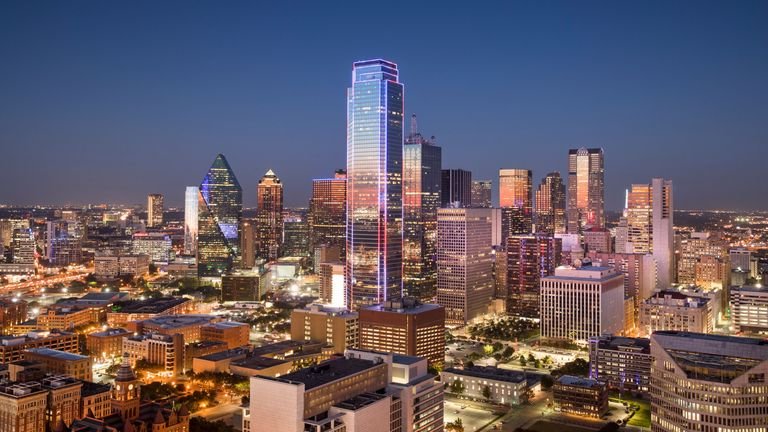
The corridor at the centre of the story runs through Dallas-Fort Worth, with Austin and Houston playing supporting roles. It roughly spans downtown Dallas, Victory Park and Uptown, according to local accounts of the area. Over the past few years, the area has pulled in back-office operations, trading desks and whole campuses from Wall Street banks, and the nickname stuck, a Texas answer to the financial capital in Manhattan.
The Y’all Street story reached a milestone in July, when the Texas Stock Exchange began live trading in Dallas. The exchange, founded by market executive James H Lee and backed by $120 million in initial capital from institutions including BlackRock, Citadel Securities and Charles Schwab, completed its phased rollout on 31 July, with full production trading across all National Market System symbols.
The exchange plans to begin accepting direct corporate listings and exchange-traded products in the fourth quarter of 2026. Texas lawmakers amended the state constitution to protect securities exchanges, and voters approved Proposition 6 in November 2025, with 54.87 per cent in favour, barring future state taxes or fees aimed at exchanges or stock transfers. The exchange is the first fully integrated national securities exchange built and headquartered in Texas.
Y’all Street growth in Dallas
The banks came first. Goldman Sachs is building a campus in Dallas for more than 5,000 employees, its largest in the United States outside New York, at a cost reported at $500 million. JPMorgan Chase and Wells Fargo have opened large campuses of their own. Texas Capital Bank has described the area as the largest concentration of financial services workers in the country outside New York.
The jobs numbers back the claim. Finance jobs in Dallas have grown by 23.2 per cent since February 2020, against a 6 per cent rise in New York City over the same period. As of June, the sector, covering finance, insurance and real estate, employed 317,000 people in Dallas, according to figures from the Federal Reserve Bank of Dallas.
The Y’all Street pitch has been straightforward: no state income tax, a courts system businesses see as friendly, and a regulatory approach that rewards building. Governor Greg Abbott marked the stock exchange launch by declaring that Texas had asserted its place as the financial capital of America.
What business leaders fear
The Y’all Street worry now is that the political ground has shifted under that pitch. A Democratic governor and a Democratic Congress could mean closer scrutiny of the tax and regulatory mix that made Texas attractive, and executives are asking whether the flow of firms and capital south will slow.
The Y’all Street mood may yet settle. Musk offered a calmer view on Wednesday, telling the DealBook Summit that Hinojosa was “going to be quite moderate” and that “things will be fine in Texas”. His remarks were aimed at the same business audience the Financial Times described as panicking, and they landed as a counterweight to the gloom.
The Y’all Street boom was built on a bet that Texas would stay cheap, open and predictable for finance. The election has put that bet to its first real test. The exchange is trading, the campuses are rising and the jobs are still there, but the confidence that carried firms south now has to survive a government its builders did not expect.