
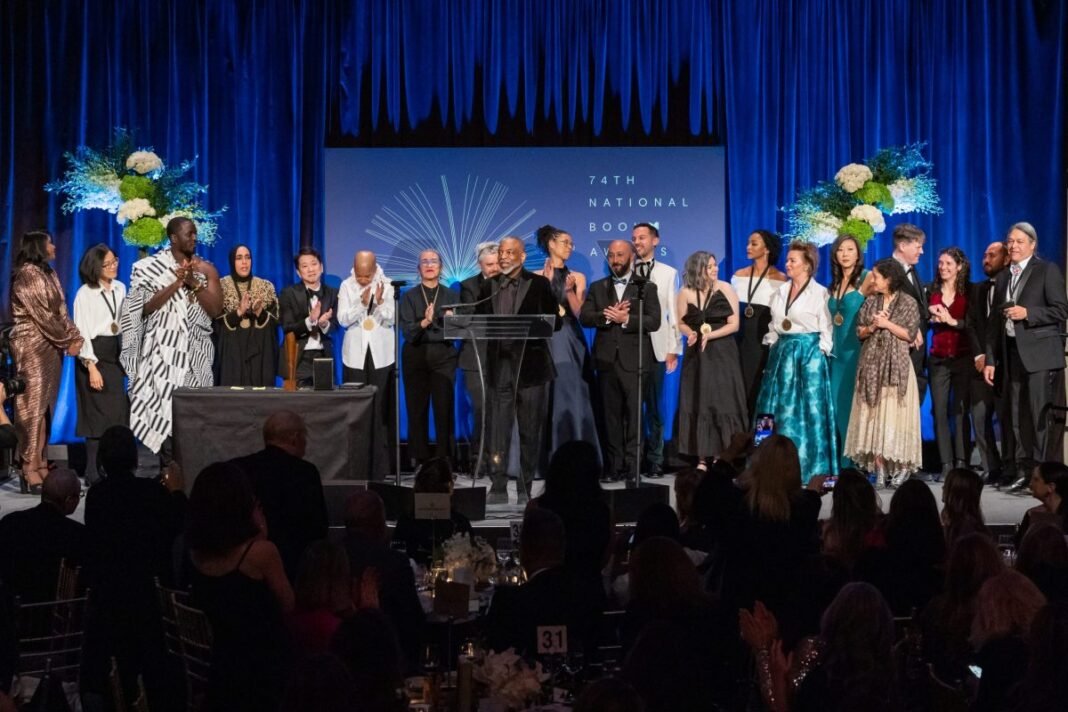


National Book Award winner Abdelrahman ElGendy was not in the room when his name was called on Wednesday night. The Egyptian writer won the nonfiction prize for his prison memoir Huna, but United States consular officials had denied him a visa to attend the ceremony in New York, and his editor accepted the award in his place.
The 77th National Book Awards were announced at a gala at Cipriani Wall Street in Manhattan. ElGendy won for Huna: A Memoir of Revolution, Prison, and Becoming, published by Hogarth, which draws on more than six years he spent as a political prisoner in Egypt.
His editor, Helen Thomaides, read his prepared remarks to the audience. ElGendy dedicated the award to Palestinians and political prisoners, and he wrote that he had once dreamed from his prison cell of writing the book, and then of the book winning an award.
National Book Award winner left the US in 2025
ElGendy, 30, left the United States in April 2025 because he feared he would be deported to Egypt, where he had been a political prisoner. He now lives in the United Kingdom. He applied for a visitor visa to return for the ceremony and set out his case in a personal essay in The New Yorker on 13 November, describing the documents he had prepared, including proof of his invitation, his European residence and his coming book engagements.
The application was denied. ElGendy wrote that he had shown consular officials a lease for his home in Europe and evidence that he would leave the United States after a short visit, but the visa was refused all the same.
National Book Award ceremony and the second visa case
ElGendy was one of two National Book Award finalists who could not enter the country because of visa problems. The other was Syrian writer Samar Yazbek, a finalist in Translated Literature for Your Presence Is a Danger to Your Life: Voices of Survival and Witness in Gaza, translated by Leri Price. Neither writer could attend the ceremony in person.
Hannah Lillith Assadi won the fiction prize at the same National Book Awards ceremony, and the evening’s other winners were announced alongside her. The National Book Foundation, which administers the awards, also spoke out against the visa decisions.
The National Book Awards are among the most prestigious literary prizes in the United States, and the nonfiction prize is one of five awarded each year. ElGendy’s win puts his memoir beside a long line of nonfiction winners, and his absence from the room was noted in the reporting of the night.
National Book Award eligibility questions answered
The win also raised questions about eligibility. The rules for four of the five National Book Award categories, including nonfiction, require authors to be American citizens, permanent residents or to have their primary, long-term home in the United States when the awards cycle begins. This year’s cycle began on 1 December 2025, eight months after ElGendy left the country.
The New York Times raised the question of whether his departure affected his eligibility. The National Book Foundation said it had no concerns about the eligibility of his title, and Hogarth said the foundation had accepted its appeal and deemed ElGendy eligible under the current criteria. A spokeswoman for the foundation, Ale Romero, said in an email that the publisher had confirmed the position.
The other nonfiction finalists and semifinalists posted a joint statement on social media opposing the immigration policy behind the refusal, and they linked the decision to his writing. The statement was posted shortly after ElGendy’s essay appeared in The New Yorker.
The US State Department declined to discuss the individual applications and defended the administration’s enforcement of immigration and visa rules. The specific reasons for both refusals have not been made public, and the foundation’s objection was reported alongside the results.
ElGendy’s memoir was published in 2026, and it was named a finalist for the National Book Award for Nonfiction before the ceremony. The book recounts his years in prison in Egypt and his release, and it is the work that brought him to the attention of American readers.