
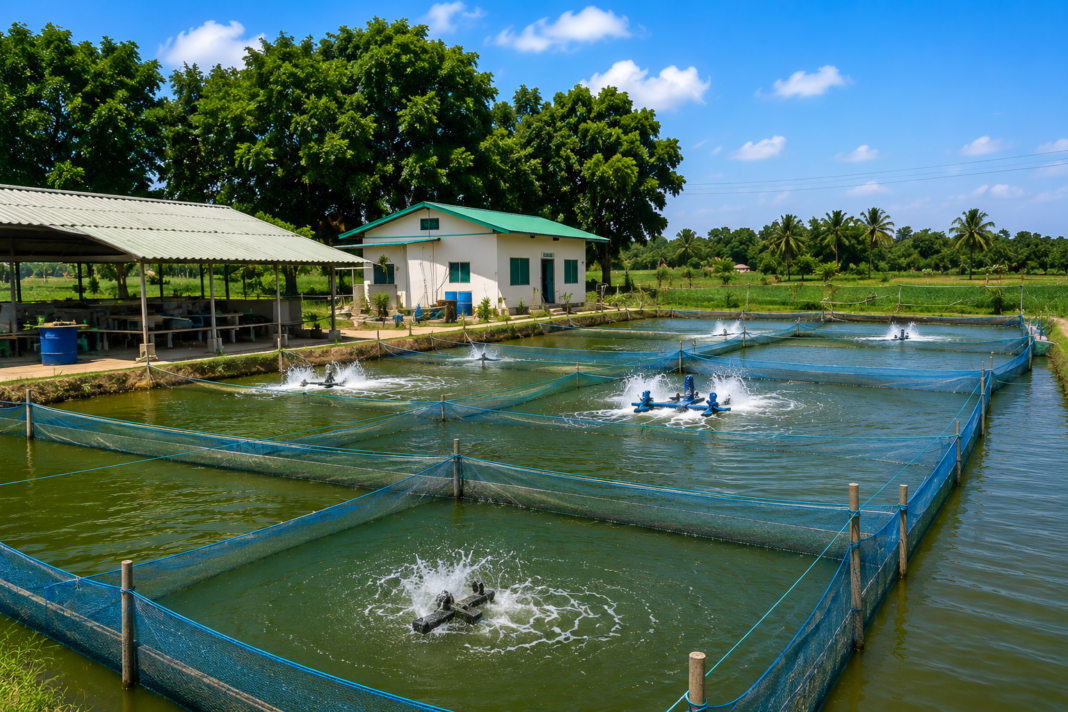


India’s fish farms face a double threat from climate change and drug resistance, and the answer is not more antibiotics. A report published by Down To Earth during World AMR Awareness Week says warming waters raise the risk of disease in farmed fish and shrimp, while the drugs used to treat them lose power as resistance spreads.
The week runs from 18 to 24 November 2026. World AMR Awareness Week puts fish farms in the spotlight. The report, written by Gadadhar Dash, head and principal investigator of the National Surveillance Programme for Aquatic Animal Diseases at the West Bengal University of Animal and Fishery Sciences, argues that farms must shift from treating infections to preventing them through better surveillance, biosecurity and water management.
How warming water feeds resistance
Warm water stresses aquatic animals on fish farms and suits opportunistic pathogens. Vibrio species are among the resistant bacteria most often reported in aquaculture. A 2020 study in Nature Communications, covering 460 studies and 11,274 bacterial isolates from aquaculture systems in 40 countries, found a strong link between drug resistance in farmed fish and both temperature and climate vulnerability, with infected animals dying at higher rates in warmer water.
Water quality in Indian aquaculture is under strain from rising temperatures, shrinking river flows and longer dry spells. The strain makes disease outbreaks harder to control. India now uses more antibiotics per tonne of farmed fish and shrimp than most countries in Asia, the report says. For fish farms drawing water from the sea, estuaries, rivers and groundwater-fed ponds, that strain is now routine.
Fish farms and the limits of treatment
Diagnostic capacity, above all for molecular testing, stays limited and expensive on many fish farms, so outbreaks are often treated without a diagnosis. Antibiotics used in ponds do not stay there. Residues and resistant bacteria can pass into surrounding water through effluent, sediment and connected waterways, and resistance can then move between farm systems and the wider environment.
Genomic studies of Vibrio cholerae along India’s coast have found the same resistance patterns in environmental samples and in samples from patients. Tetracycline resistance genes in isolates from pond outbreaks match those in clinical isolates, pointing to a route from water to patient. Antibiotic residues have also been found in the Yamuna and the Gomti rivers at two to five times the level the Union environment ministry treats as safe, and the load grows as the rivers shrink in the dry season.
Rules, bans and the gaps in them
Responsibility for aquaculture and drug use is split between the Coastal Aquaculture Authority, the Marine Products Export Development Authority, the Food Safety and Standards Authority of India and the Central Drugs Standard Control Organisation. India has banned several drugs in aquaculture and food-producing animals, including chloramphenicol, nitrofurans, neomycin, nalidixic acid, sulphamethoxazole and dapsone, along with fluoroquinolones, glycopeptides and some nitroimidazoles, through the Coastal Aquaculture Authority’s notified list and a May 2025 amendment by the Union commerce ministry. The split leaves fish farms answering to more than one regulator at once.
Tetracycline, oxytetracycline, trimethoprim and oxolinic acid are allowed with residue limits of 0.1, 0.1, 0.05 and 0.3 parts per million. The Indian Council of Agricultural Research backs two programmes that track drug use and resistance in fisheries, and their work fed into the Aquaculture Formulary, a set of national standards for fish health management published by the Central Institute of Brackishwater Aquaculture. Both programmes give fish farms data on which drugs are used and where resistance is found.
Fish farms, exports and what comes next
The stakes reach beyond health. India’s shrimp industry is a large contributor to seafood exports, so resistance in farmed fish and shrimp is a food security and trade issue as well as a health issue. Government data for 2025-26 recorded seven Indian shrimp consignments turned back by the European Union and 12 by the United States because banned antibiotics were found. At a November 2026 review of the national surveillance programme, export agencies called for closer links with the programme to protect market access.
The report says aquaculture still sits outside many national action plans on drug resistance, even where human, animal and environmental health are meant to be dealt with together. It calls for routine monitoring for resistance genes, stronger biosecurity, better water management, vaccination where it works and tested alternatives such as phytobiotics, with diagnostics and veterinary support made affordable for farmers. Many farmers still reach for antibiotics because they are familiar, readily available and seem to offer a quick response, the report says. Asking fish farms to change without affordable diagnostics, veterinary support and practical alternatives is unlikely to work. In a warming world, antibiotics cannot be the first defence against every outbreak.