
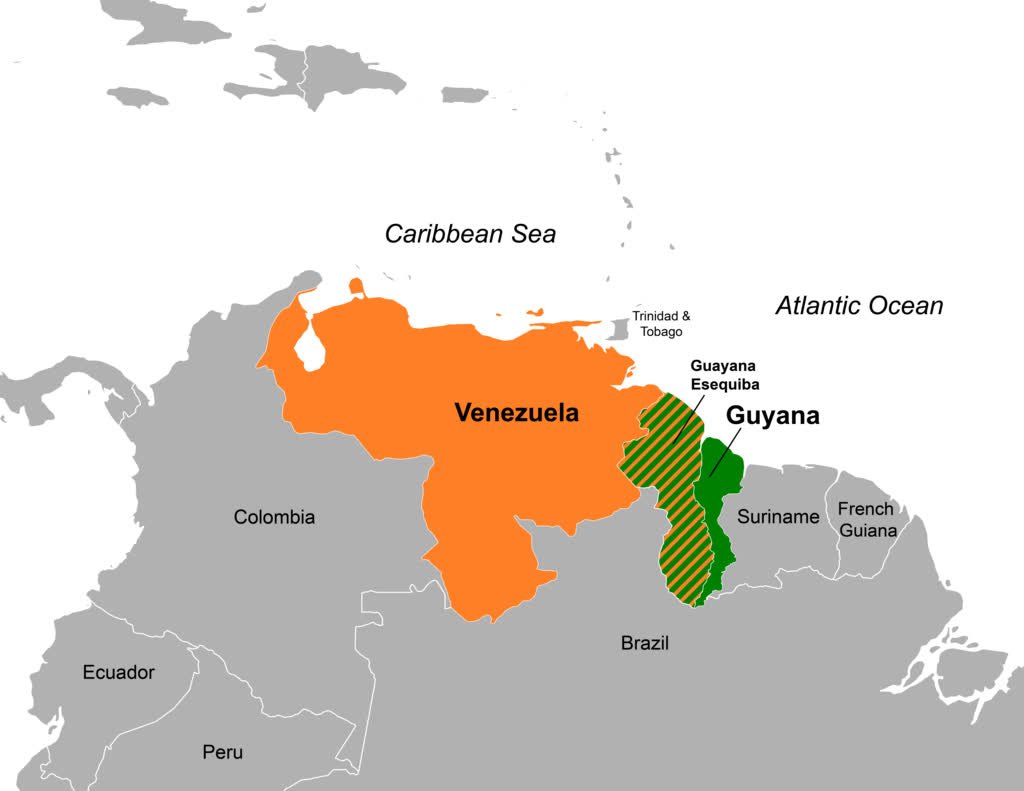


A Trump administration official suggested to Guyana in recent months that it consider ceding some of its territory to Venezuela, a comment that shocked officials from the small oil-producing nation and forced Washington to reassure them that United States policy on the border had not changed. Three people familiar with the matter told Reuters about the suggestion, which concerned the Essequibo, a region that makes up the western two thirds of Guyana. The report was published on 19 November, and it named the official as Jeremy Lewin, the State Department policy chief. Lewin left the department at the end of October.
What was said about the Essequibo
Lewin told Guyanese Foreign Secretary Robert Persaud during a September meeting in Washington that he could help broker territorial talks with acting Venezuelan President Delcy Rodriguez, one of the people familiar with the matter said. Two other people said Lewin floated the possibility of Venezuela taking partial control of the Essequibo, which is rich in gold, diamonds and bauxite. The region has been at the centre of the dispute for decades. Venezuela has long claimed the region, but the United States and essentially every other country in the world recognise it as Guyanese in practice. Guyana has consistently maintained that the status of the Essequibo is not open to negotiation.
Lewin confirmed in an interview with Reuters that he held preliminary talks with the Guyanese and the Venezuelans about the territorial dispute. He said the conversations were fully directed and authorised by the White House, and that they followed a letter from Rodriguez to President Donald Trump on 11 May, in which she sought American support for a rapprochement with Guyana. Rodriguez described the dispute as a historic territorial controversy, and she asked Trump to help create conditions for direct talks. Lewin said the White House asked him to conduct preliminary and confidential conversations with the Guyanese and the Venezuelans to better understand the issue for the administration. Reuters said it could not independently confirm the authenticity of the letter, which Lewin provided to the news agency. Rodriguez also raised the issue directly with Lewin during a meeting in Caracas in July, he said.
The dispute over the Essequibo has run for decades. Venezuela has long claimed the region, while Guyana has held it in practice and the United States has treated it as Guyanese. The suggestion from Lewin therefore touched a raw nerve in Georgetown, where officials have long said the border is settled. Lewin left the State Department at the end of October, and the Reuters report was published after his departure. The Essequibo covers about two thirds of Guyana, and its gold, diamonds and bauxite help explain why the claim has lasted so long. The report was written by Sarah Kinosian, Gram Slattery and Humeyra Pamuk.
How Washington responded on the Essequibo
The White House referred questions to the State Department, without addressing whether it had directed any talks over the future of the Essequibo or whether it had received any letter from Rodriguez. A State Department official said the department received different policy proposals from outside parties, but maintained that its position on the Venezuela-Guyana boundary had not changed. Accounts differed on precisely what Lewin proposed, and there is no indication that Washington formally adopted a plan to transfer Guyanese territory to Venezuela. Guyanese officials sought urgent clarification from Washington after the September meeting, and they were told the American position had not changed. Guyana has maintained that the status of the region is not open to negotiation, and its officials repeated that position after the report.
Lewin became the State Department’s director of policy planning in August, after working in Elon Musk’s Department of Government Efficiency. He was a prominent Trump appointee, and his departure from the department at the end of October came before the Reuters report was published. The Essequibo dispute has run for decades, and Venezuela’s claim covers about two thirds of Guyana’s entire landmass. The suggestion that Guyana give up part of the region stunned officials in Georgetown, and the government has since restated that the Essequibo is non-negotiable.