


Myanmar committed genocide against the Rohingya, the International Court of Justice ruled on Thursday, in the first judgment of its kind in the court’s 80-year history. The court found by nine votes to six that Myanmar’s armed forces carried out a campaign of killing, sexual violence and forced displacement against the Rohingya in northern Rakhine State in 2016 and 2017, with the intent to destroy a substantial part of the group.
The court’s president, Judge Yuji Iwasawa, read the verdict over almost three hours in The Hague. The 191-page judgment said killing babies and children and burning villages could not be seen as a legitimate part of a military operation. It said mass rape against women and girls caused physical and psychological harm.
Rohingya survivors cheered as they left the courtroom. Sayedul Karim, one of those present, said he felt blessed and optimistic, and that he would return home once the restitution measures in the judgment were in place. In the camps of Cox’s Bazar in Bangladesh, hundreds of thousands more celebrated the news.
The case was brought by The Gambia, a West African state acting with the backing of the 57-member Organisation of Islamic Cooperation. It filed the case in November 2019, accusing Myanmar of breaching the 1948 Genocide Convention in its treatment of the Rohingya. In January 2020 the court ordered Myanmar to take emergency measures to prevent genocide.
Rohingya case took seven years to reach judgment
The court found that Myanmar’s security forces killed thousands of civilians in Rakhine State, carried out widespread sexual violence and committed acts of extreme violence against children. It found villages had been systematically destroyed, with permanent structures built in their place and other people resettled there. Senior officials spread hate speech that portrayed the community as subhuman and a violent threat.
The violence followed attacks by the Arakan Rohingya Salvation Army on police posts in August 2017. Myanmar’s armed forces, known as the Tatmadaw, then launched a sweeping operation. Survivors said soldiers shot men dead, raped women, threw babies into fires and razed villages. A United Nations mission concluded in 2019 that the Tatmadaw had committed genocidal acts.
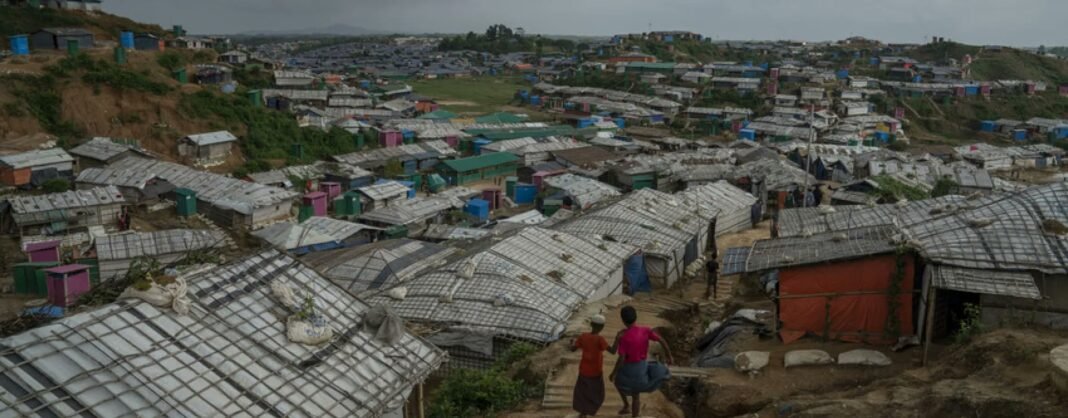
More than 730,000 people fled to Bangladesh after the 2017 offensive, and about 10,000 were killed in the early stages of the operation. Around 1.2 million now live in crowded camps in Cox’s Bazar, while about 520,000 remain in Myanmar under restrictions. A citizenship law passed in 1982 left most of the group stateless.
Rohingya reparations and the question of return
Myanmar must now provide reparations to the Rohingya, the court ordered, including compensation where return is not possible. The measures include helping refugees return home safely and voluntarily, reuniting families, returning damaged property, finding the disappeared and ensuring proper burials. Survivors are also to receive physical and psychological rehabilitation.
The court did not set an amount of compensation. It ordered Myanmar to submit a report within two years setting out its plan. Matthew Smith, a campaigner with Fortify Rights who was at the Peace Palace for the verdict, said the ruling would give new momentum to efforts to hold those responsible to account.
The judgment is final and binding, with no right of appeal. The court has no means of its own to enforce it. If Myanmar fails to comply, The Gambia can refer the matter to the United Nations Security Council, which can impose measures to enforce the ruling. Arsalan Suleman of Foley Hoag, lead counsel for The Gambia, called the judgment “a landmark victory for the Rohingya people”.
Rohingya ruling may shape other genocide cases
The ruling is the first time the court has found a state directly responsible for committing genocide. In 2007 it found Serbia had failed to prevent or punish genocide by Bosnian Serb troops at Srebrenica, but it did not hold the Serbian state itself responsible. The finding that genocidal intent can be inferred from the pattern of acts is likely to be cited in other cases, including South Africa’s case against Israel over Gaza.
Myanmar, now led by Min Aung Hlaing, the general who commanded the crackdowns before taking power in the 2021 coup, denied the allegations, saying its forces were responding to armed attacks in what it called clearance operations. Aung San Suu Kyi, then the country’s leader, appeared before the court in 2019 to defend Myanmar, calling the allegations incomplete and misleading.
Antonia Mulvey, executive director of Legal Action Worldwide, which represents victims and witnesses, said the judgment gave years of legal work a chance to become real action. “I believe that we can and we will implement this judgment, so it will make a real difference for the survivors of genocide,” she said.
Attention now turns to whether Myanmar carries out the orders and files the required report by November 2028.