
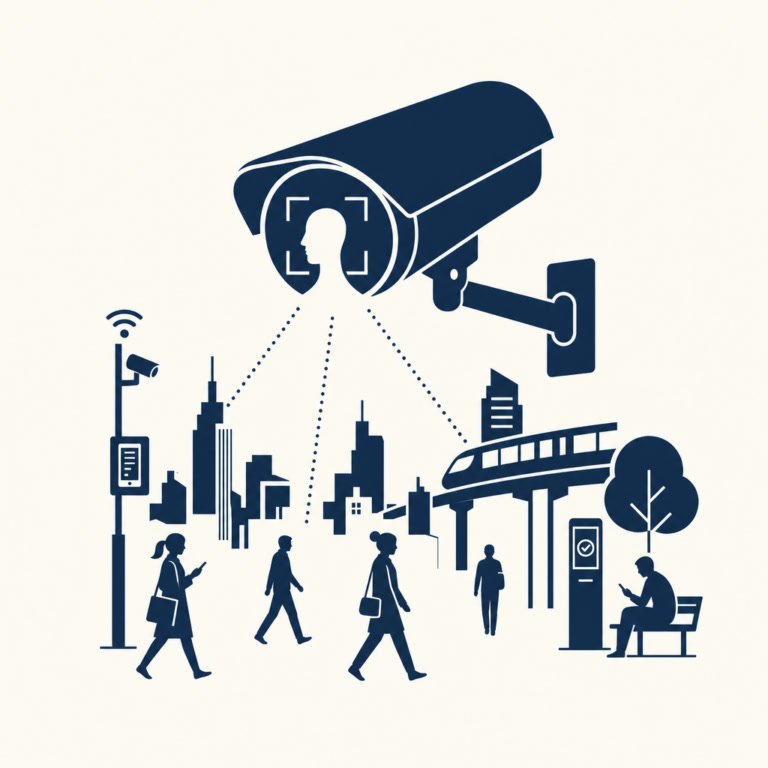


Harris County officials pulled a no-bid contract for controversial facial recognition technology from the commissioners’ agenda on Thursday 19 November. The item, an agreement with Clearview AI, had been scheduled for discussion that day. The Harris County Sheriff’s Office said it was removed because it was not ready for consideration, and would not say whether it would return at a later date.
Clearview AI searches billions of publicly available images online for potential facial matches. The company describes itself as the world’s largest facial recognition network, and its website says its database holds more than 100 billion facial images collected from public web sources, including social media and mugshot websites. Investigators upload an image, such as one taken from surveillance video, and search for matches that could help identify the person pictured.
According to the commissioners’ agenda before the item was removed, the proposed agreement was intended to help reduce violent crime across the county and assist investigators with cases that have no leads. The facial recognition proposal arrived during a heated local debate over surveillance technology, above all the Flock cameras used to identify vehicles. Flock’s system reads licence plates; Clearview’s technology searches for people.
Facial recognition matches are not proof, professor says
A possible match is not proof of identity, said Dorothy Jiang, a University of Houston professor and co-director of its Human-Centered AI Institute. “A match is not a proof. It’s more like a good guess,” Jiang said. “So the problem is when people treat that guess like a fingerprint; that’s how, you know, some people end up in handcuffs.”
A lawsuit from another state shows what can go wrong. Angela Lipps, a grandmother from Tennessee, was wrongly identified during a North Dakota police investigation that used Clearview AI’s facial recognition system. She was accused of bank theft crimes in 2025 and spent six months in jail for crimes she did not commit. “I’ve never been to North Dakota. I don’t know anyone from North Dakota,” Lipps told the ABC affiliate WDAY in a March interview.
Clearview AI says its facial recognition results are meant to serve as investigative leads, not definitive identifications, and investigators must provide a case number before each search. Chris Bronk, a University of Houston professor who specialises in cybersecurity, said the technology could help law enforcement but raised questions about surveillance and individual rights. “I think Americans are kind of waking up to this issue of surveillance and asking good questions about it and trying to figure out what the balance is between the needs of law enforcement and public safety versus individual liberties,” Bronk said.
Facial recognition contract had been due for a vote
Community Impact reported on 16 November that county commissioners would consider the AI facial recognition contract alongside funding to complete Hurricane Harvey recovery projects. The facial recognition item was the only one of the two to be pulled. For now the proposed agreement remains on hold, with no announced timeline for reconsideration.
The county has spent months arguing over surveillance tools. Commissioners renewed the county’s contract with Flock Group in May for automated licence plate readers and sound detection technology, at a cost of about 868,975 dollars through 5 June 2027, on a 4 to 0 vote with County Judge Lina Hidalgo abstaining. Governor Greg Abbott halted state funding for Flock cameras in August, and Precinct 4 Commissioner Lesley Briones switched off every Flock camera on precinct property in October.
The debate over the Flock cameras has run for months. In September, residents filled a commissioners court meeting to call for the contract to end, and County Judge Lina Hidalgo asked for a full report on how many readers exist, where they sit, what the county has spent and who can search the data. Three sheriff’s deputies had their Flock access suspended while the department looked into questionable use of the technology.
Voters nearby have already had their say on the cameras. In League City, just under 54 percent of ballots cast on 3 November favoured removing the police department’s 55 Flock cameras, and city crews covered more than 50 of them with bags two days later. The county’s facial recognition proposal now waits for a decision on whether it comes back, and in what form.