
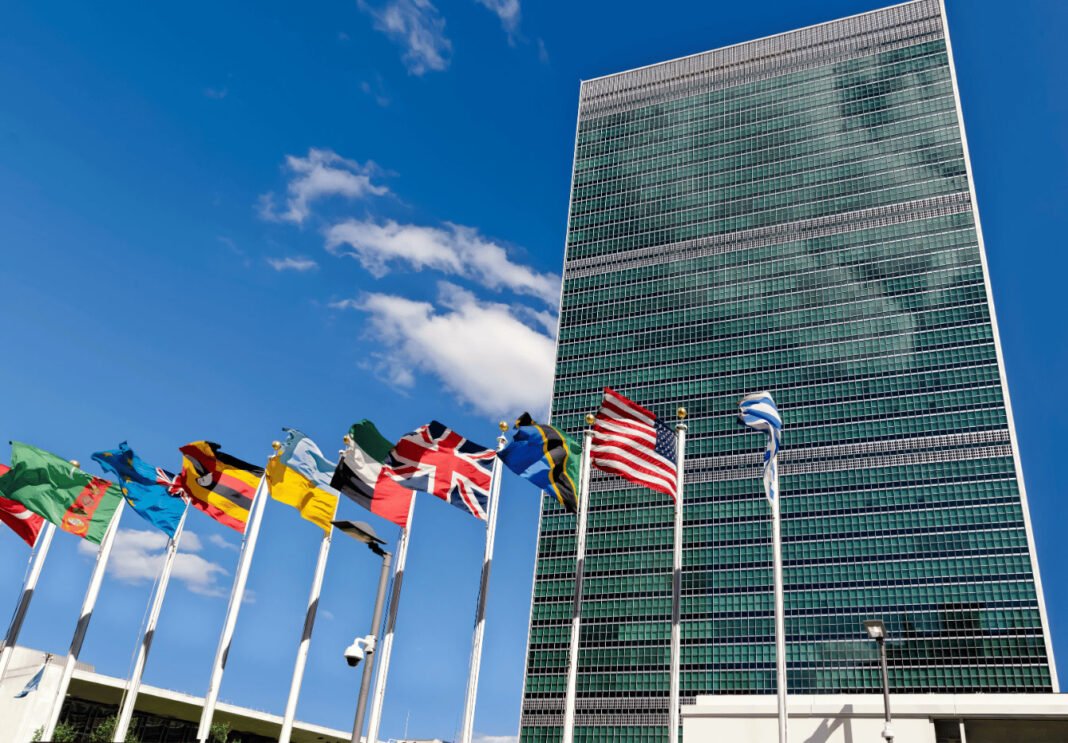


The United Nations could soon have no leader. With under two months left in Antonio Guterres’s term as secretary-general, the Security Council has held eight rounds of secret ballots without agreeing on a successor, and officials are drafting contingency plans for a vacancy without precedent.
Guterres steps down on 31 December, after two five-year terms, and the next secretary-general is due to take office on 1 January 2027. The council is expected to hold another secret ballot this week, but its five veto-wielding members have not agreed on a candidate, and the timetable for choosing one has never been breached.
Analysts say the failure is partly the result of a long, opaque selection process built on secret ballots, and it also reflects a decline in the veto-wielding powers’ willingness to compromise. The United States administration increasingly sidelines the UN and is distracted by its own foreign entanglements, while the other permanent members guard their own interests.
Secretary-general contenders include Grynspan and Nusseibeh
The field has eight candidates, most of them from Latin America and the Caribbean, in line with the informal regional rotation. The frontrunner is Rebeca Grynspan of Costa Rica, a longtime UN insider who leads in the straw polls. If chosen, she would be the first woman to hold the post.
Lana Nusseibeh, a senior diplomat from the United Arab Emirates, entered the race late, as did Feridun Sinirlioglu of Turkiye, head of the Organization for Security and Co-operation in Europe. Nusseibeh faces pushback over accusations that the UAE has backed the paramilitary Rapid Support Forces in Sudan’s civil war. The UAE denies this.
Two prominent names have left the field. Michelle Bachelet, the former president of Chile, and Macky Sall, the former president of Senegal, both withdrew. Each leading candidate still faces at least two discourage votes from permanent members, and none has yet gathered the support needed for a recommendation.
Secretary-general selection runs on secret ballots
Candidates lobby council members for months to win their governments’ backing, then face a series of secret straw polls in which members vote “encourage”, “discourage” or “no opinion”. The results are not published but leak quickly. In colour-coded polls the permanent members vote with red ballots.
Once a frontrunner emerges, the council votes on a resolution recommending that candidate to the 193-member General Assembly. The resolution needs at least nine of the 15 votes and no veto from a permanent member. The assembly then formally appoints the secretary-general, and it has never rejected the council’s choice.
The council required six rounds to select Guterres in 2016, and this time the process started early, which makes the delay harder to explain. “What is worrying is how late in the year this is and what it means for pulling together a team,” said Shamala Kandiah Thompson, executive director of Security Council Report, a think tank that monitors the council. “Given how early all this started, we shouldn’t be here.”
Secretary-general vacancy has no precedent in the UN Charter
The UN Charter says nothing about how to handle a leadership vacancy. A secretary-general has never ended a term without a replacement in place. A September briefing by 1 for 8 Billion, a campaign for a more open selection process, mapped the possible routes, from naming an acting chief to extending a term. Each route faces hurdles, the briefing said, though leaving the UN leaderless would be “highly irresponsible”.
Russia is one of the few members to address the deadline publicly. “It is also unclear what will happen after December 31,” Kirill Logvinov, a senior Russian Foreign Ministry official, told the Tass news agency last week. The options under consideration include temporarily extending Guterres’s term or naming another official, he said.
“As far as I can tell, on January 1, if there’s no secretary-general, no one is in charge,” said Daniel Safran-Hon, a former UN official. The lights would stay on, he said, and the Security Council and General Assembly could keep meeting. But senior appointments and the budget would be out of reach. “It’s a bit like a supertanker where the captain dies: the first officer can do lots of things, but there are certain things you can’t do.”
Whoever becomes the next secretary-general will inherit a body facing wars it has struggled to influence, cuts in US contributions and declining relevance as Washington has pulled out of dozens of UN agencies. The organisation has also shed thousands of staff in a financial crisis and faces pressure to become leaner, faster and more accountable. Richard Gowan, a UN expert at the International Crisis Group, said reaching the end of the year without a secretary-general selected for 2027 “would be excruciatingly embarrassing for the veto powers”.
The UN spokesperson declined to comment on the contingency planning.