
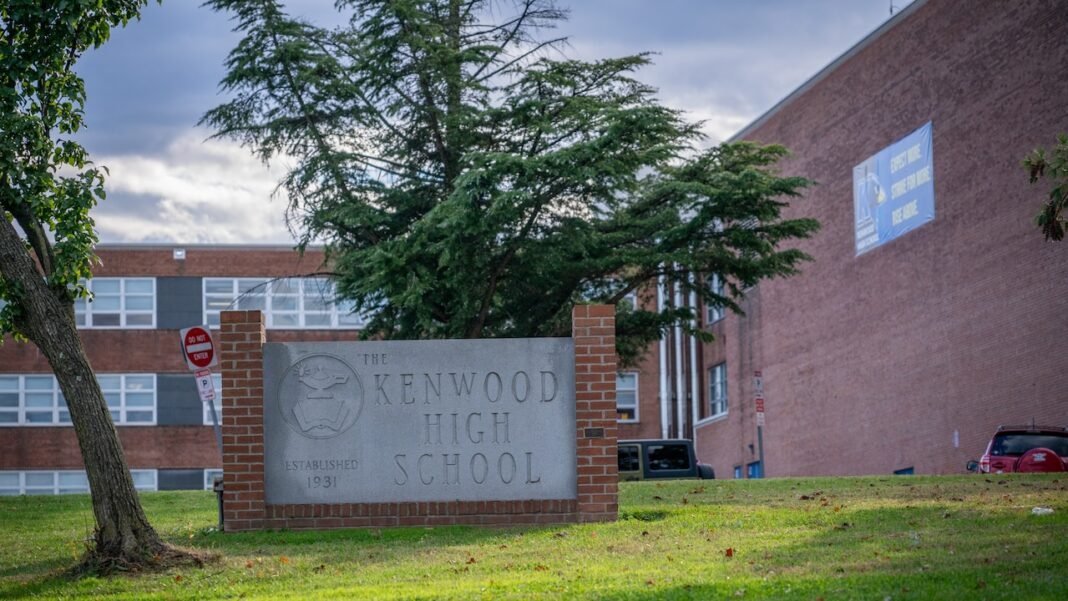


Four Maryland high school students have sued an AI gun detection company, their school district and the police, after an automated alert mistook a bag of Doritos for a gun and armed officers detained them at gunpoint. The lawsuit was filed on 17 November in the Baltimore County Circuit Court, a little more than a year after the incident at Kenwood High School in Essex. The 31-page complaint says the four teenagers were handcuffed, searched and forced to their knees by officers, even though three school officials had already recognised the alert as a mistake and cancelled it. The case raises questions about how schools use automated weapon alerts, and about who is responsible when the system gets it wrong.
How the AI gun detection alert unfolded
The incident began at about 6.30 p.m. on 20 October 2025, as the four students were talking and waiting outside the school for a ride after football practice. Taki Allen, then 16, had a bag of Cool Ranch Doritos that his coach had given him after practice. The school’s Omnilert AI gun detection system flagged the bag as a firearm with 90 percent confidence, and the alert went out at about 7.05 p.m. Three officials who received the alert recognised the mistake and cancelled it within minutes. The complaint says the school principal, Catherine Smith, never acknowledged the cancellation or took any steps to check whether the alert was still active.
More than 10 minutes after the alert was cancelled, Smith sent a screenshot of Allen holding the chip bag to the school resource officer, who forwarded it to the police department. By 7.21 p.m., six police cruisers surrounded the teenagers in response to the AI gun detection alert, and officers got out, many with guns drawn. They forced the teens to the ground, cuffed them and searched them. After officers found there was no gun, one told the students that AI is not the best, and another muttered about the cameras and the Omnilert system, according to the complaint. Corporal Michael Foehrkolb allegedly told the teens, “Hey, thanks for not running away, that would have been a real problem.”
What the students allege about AI gun detection
The students, Allen and his friends Yui-Osa Ogbeide, Devon Thompson Jr and Keith Winfield III, who are all now 18, allege violations of their Fourth Amendment and Maryland constitutional rights, along with false arrest, negligence and gross negligence. The lawsuit names Omnilert, Baltimore County Public Schools, the school board, the police department, individual officers, the principal and Eric Knox, the board’s executive director of school safety. The students are represented by the Lawyers’ Committee for Civil Rights Under Law, along with Willkie Farr and Gallagher and the Engel Law Group. Freya Jamison, an associate counsel with the Lawyers’ Committee, said there has been no public apology from the principal to the teenagers or their families, and that Smith remains at the school.
The complaint cites a finding by the Maryland Office of the Inspector General for Education that more than 99 percent of AI gun detection alerts in Baltimore County Public Schools were false positives that required no police response. It also notes that the AI gun detection system was patented in 2022, barely a year before it was deployed in Baltimore County schools, which were among its first deployments. Omnilert spokesperson Blake Mitchell said in an email that the company cannot comment on lawsuits, and Baltimore County police and school officials also declined to comment on pending litigation. The complaint further notes that the system failed to detect a shooter’s gun at Antioch High School in Nashville in January 2025, when two students died, including the shooter, and another was shot in the school cafeteria.
The other account of the AI gun detection alert
The inspector general’s office has given a different account of what the AI gun detection system saw that evening. Richard Henry, the Maryland inspector general for education, said in December on WBAL radio that the alert came from the student’s hand movement rather than the snack packaging. Henry said the incident happened in the evening, in low light, with the student holding the bag next to his hip and his fingers in an unusual position. A report by the inspector general in November 2025 found that school staff and a police representative reviewed the alert shortly after it was generated and determined it was not a credible threat. The report also said the AI gun detection system did not specifically identify a potato chip bag as a gun, and it could not substantiate claims that the system was ineffective, inefficient or biased. Allen is still at Kenwood High School, while the other three graduated earlier this year and plan to visit the school on breaks from college.
Web story: Students Sue After AI Mistook Doritos Bag for a Gun