
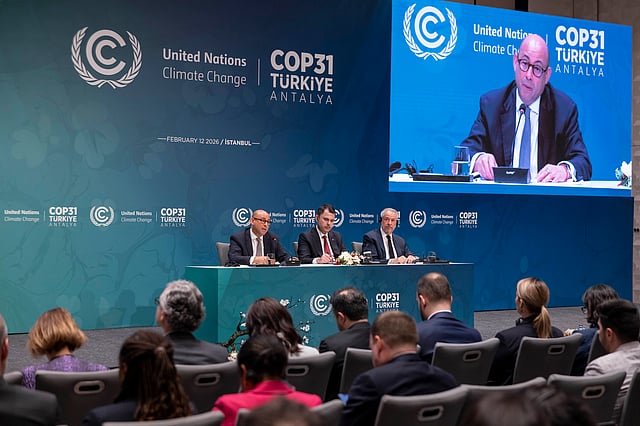


The COP31 climate deal was in deadlock in Antalya on Saturday 21 November after talks ran through the night without agreement, the BBC reported. Negotiators from nearly 200 nations were unable to settle two questions: whether the final text says anything about fossil fuels, and how much money goes to countries facing the worst effects of warming. A new draft, possibly the final one, was expected on Saturday.
COP31 climate deal loses fossil fuel language
An earlier draft circulated in the week called for a faster phase-out of fossil fuels. A shorter version released on Thursday stripped out all mentions of coal, oil and gas. On Friday, a group of countries led by France and Panama pushed back against the pared-down text. Ministers from island states and European nations including Spain, France, Belgium, Sweden and Finland pressed for a commitment to move away from fossil fuels to be put back into the text. Producers led by Saudi Arabia had pushed for the language to be removed. The COP31 climate deal had become a test of whether a climate summit could name the fuels driving warming.
Panama’s environment minister, Juan Carlos Navarro, said: “It is not acceptable to have a COP or a cover document that does not even mention fossil fuels, and we simply will not put up with it.” France’s minister of ecological transition, Monique Barbut, criticised the draft’s references to carbon capture, use and storage, the technology that traps emissions as they are released and stores them underground, saying it gives countries a licence to keep burning oil and gas. Tuvalu’s climate minister, Maina Talia, said: “That is a red line for us. We are talking about the root cause of all of this.”
The COP31 climate deal remained stuck as the two sides held their positions. Chris Bowen, Australia’s climate change and energy minister, who is leading the negotiations, argued that the summit was about putting plans into practice rather than making new promises. Wopke Hoekstra, the European Union climate commissioner, told reporters there was no compromise yet on fossil fuels and carbon capture. He had warned on Saturday: “It is better to have no deal than to have a bad deal.”
COP31 climate deal and the money gap
The COP31 climate deal also left the money question open. Earlier versions of the text included an agreement to raise funding for adaptation, the work of preparing for floods, droughts and rising seas, to 120 billion dollars a year by 2035. That figure was removed from the draft. Developing nations fought to get it back. Its chair, Ghana’s environment minister Zanetor Agyeman Rawlings, said African countries did not come to the summit to beg, but to claim what was rightfully theirs.
Europe’s response was to argue that money already pledged should be used first. Turkey and Australia, the summit’s co-hosts, pitched electrification as a way forward. The draft proposed raising electricity’s share of global final energy demand to 35 percent by 2035, by replacing technologies that burn fossil fuels directly, such as diesel cars and gas heating, with electric alternatives.
One compromise under discussion would keep fossil fuels out of the text in exchange for Saudi Arabia and other oil-producing states signing up to the electrification pledge. For the first time at a COP, the agreement, officially called the Antalya Accords, acknowledges that the goal of keeping global warming below 1.5 degrees Celsius has been missed. The COP31 climate deal would then leave the central question, when the world stops burning oil, gas and coal, unanswered.
What happens next at COP31
A revised draft released early on Sunday acknowledged the commitment made at COP28 in Dubai in 2023, when countries agreed to transition away from fossil fuels in energy systems. It did not restore an explicit fossil fuel phase-out commitment. COP31 President Murat Kurum, Turkey’s environment minister, told delegates that a third and final text would be sent to them for review. The COP31 climate deal was still without agreement as delegates prepared for another long night.
Other disputes also remained open. Delegations also disagreed over the timetable for the next assessment by the Intergovernmental Panel on Climate Change. The United States, the world’s largest historical greenhouse gas emitter, was absent from the talks for the second year in a row, Reuters reported, after President Donald Trump ended cooperation on climate. If the COP31 climate deal failed, the summit could end without the agreement it came to produce.
Negotiators were expected to resume formal discussions at 9 a.m. on Sunday local time. The COP31 climate deal was still open as the summit entered its third day of overtime.