
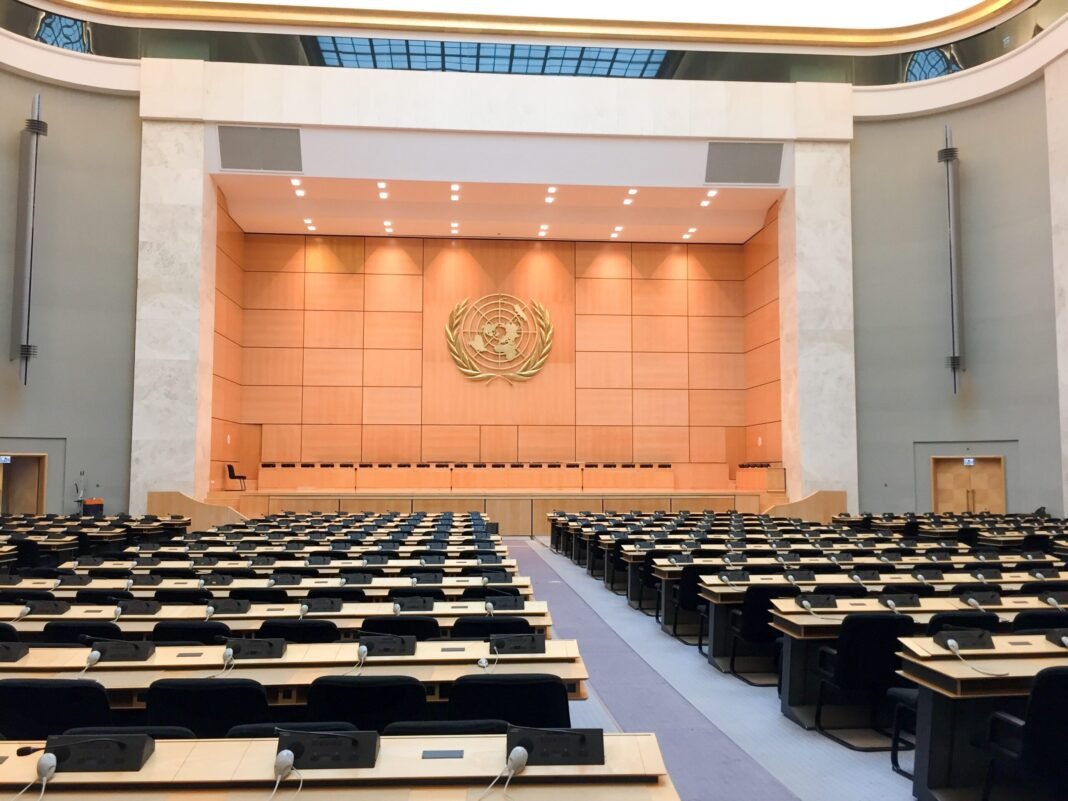


Diplomats meeting at the United Nations in Geneva have agreed to start discussing options to regulate lethal autonomous weapons, often called killer robots, after a week of negotiations that ran until the small hours of Saturday morning. The compromise gives countries two years to suggest regulations that could be legally binding, but could also be optional. For many humanitarian organisations and many countries, the deal falls far short of what they had hoped for.
Killer robots and the two-year compromise
The killer robots talks had been billed as a chance to set firm rules, and the outcome was a softer agreement to extend discussions for two more years. The talks ended at 4:30 a.m. on Saturday morning, when negotiators emerged from the room to announce the compromise: no to a deal within a year, and maybe to legally binding rules, or maybe not. Scores of countries ended the week-long conference by agreeing to “elaborate” a possible accord on lethal autonomous weapons systems by 2028. They did not commit to the binding rules sought by U.N. Secretary-General Antonio Guterres, many countries and activists.
Before the negotiations began, the International Committee of the Red Cross, the guardian of the Geneva Conventions, said it was urgent for legally binding rules to be drafted within a year. The ICRC immediately said it regretted the move and renewed its appeal for a binding treaty. The killer robots at issue are weapons that can use artificial intelligence to make life-and-death decisions. Although most U.N. member states agree there should be some controls over autonomous weapons, the compromise means that, for the next two years at least, those weapons will remain unregulated.
Killer robots and the states that resisted rules
Some of the world’s most powerful countries, among them the United States, Russia and Israel, had already indicated their reluctance to agree to binding regulations. On day one, Russia delayed proceedings by objecting to the meeting’s agenda. Then the United States proposed a five-year window to discuss nonbinding, optional guidelines for autonomous weapons.
Before the meeting, seven countries proposed launching negotiations on a rulebook that could prevent or limit the ability of machines to kill without human control or accountability. The countries were Austria, Belgium, Ireland, Mexico, New Zealand, Panama and Brazil. The killer robots proposal had the backing of the seven countries, but it did not survive the week. Ambassador Frederico Meyer of Brazil said: “Technology is moving faster than diplomacy. Diplomats are very slow.”
Izumi Nakamitsu, the U.N. high representative for disarmament affairs, hailed a “significant achievement” but acknowledged a “glass half full or half empty” outcome, citing Guterres’s hopes for a legally binding deal this year. Guterres, who leaves office at the end of the year, had set a 2026 deadline for launching negotiations toward an agreement on autonomous weapons systems. Nakamitsu called for countries to begin work as early as Monday and to start thinking about how to get as strong as possible an instrument to prohibit and regulate lethal autonomous weapons systems. The killer robots debate will now continue under the new two-year mandate.
What the Geneva deal leaves open
The killer robots campaigners were among the sharpest critics of the outcome. Activists accused military powers like Russia and the United States of blocking stronger language. Stop Killer Robots lamented a “watered-down mandate”. Beatrice Fihn, founder of the international law advocacy group Lex International, said the decision amounted to “pushing the can down the road for two more years”. Max Tegmark, a machine learning specialist at the Massachusetts Institute of Technology and founder of the Future of Life Institute, said: “States have agreed it is sufficient to just talk about the issue, for the 14th year, while these weapons enable atrocities.”
The killer robots talks were held under the Convention on Certain Conventional Weapons, ratified by 128 countries. Decisions under the convention are made by consensus, which means any single country can thwart an agreement. That rule meant any deal was likely to be based on the lowest common denominator. The outcome showed the difficulty of achieving concrete results in diplomacy amid global conflicts and major military powers jockeying for dominance.
Nakamitsu said countries should begin work as early as Monday on the strongest possible instrument to prohibit and regulate the weapons. The two-year timetable runs to 2028, when the possible accord is due to be elaborated. Until then, the weapons remain without binding international rules. The killer robots question remains open, with two years of discussion ahead and no binding rules in place.