
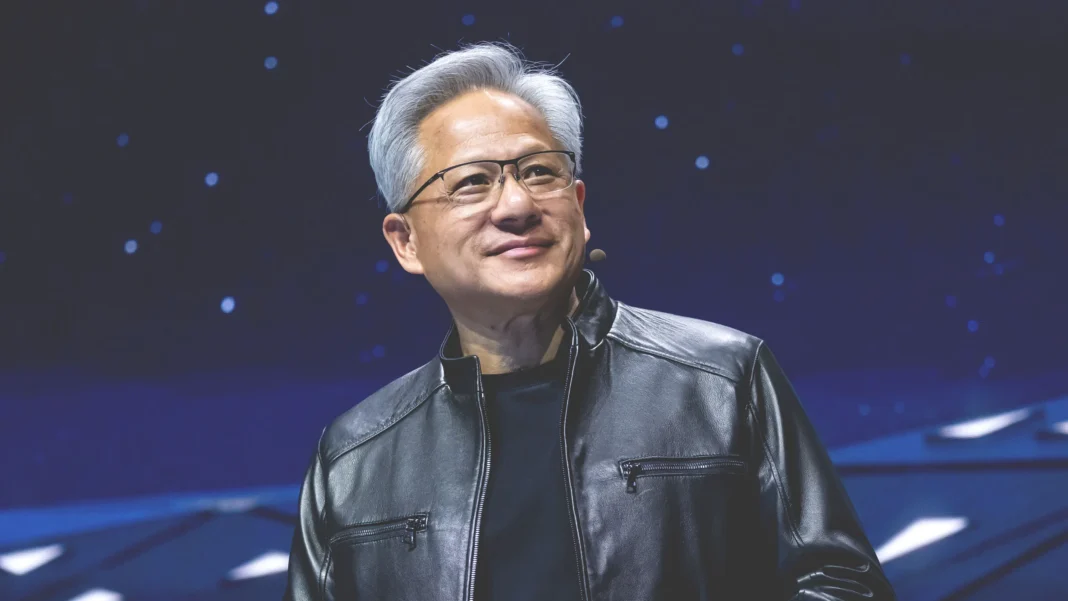


The Nvidia board announced the decision on Monday, November 23, restoring Huang as chief executive, president and a member of the board. The reversal came less than two weeks after the company said Huang had resigned, and it followed a steep fall in the share price that erased about $1.5 trillion in market value since the scandal around Huang broke on November 8.
The Nvidia board voted unanimously to bring Huang back. Finance chief Colette Kress, who had served as interim chief executive after Huang stepped down, stays on as chief financial officer. The company said Huang returns to all three roles he held before his resignation.
How the Nvidia board reversed course
Huang resigned on Thursday, November 12, effective immediately. The company gave no reason at the time. Kress took over as interim chief executive, and Harvey C. Jones was named the first chair in the company's history. The board said it would search inside and outside the company for a successor to the man who had run Nvidia since its founding in 1993.
Only last week, Jones said on the company's earnings call that the board had unanimously accepted Huang's voluntary resignation and did not intend to reinstate him. The position changed over the weekend. President Donald Trump called for Huang's reinstatement on Sunday, November 22, and said he had spoken to Huang that day. The board voted the next morning, before the market opened.
Trump told CNBC on Monday that he had personally called the board and helped arrange the return. In a post on Truth Social, he said the board had made "the correct and proper decision to return Jensen Huang to the position of CEO."
What the Nvidia board said about the decision
The Nvidia board said it reached the decision after "a series of discussions and meetings with Mr. Huang, after which the Board was satisfied with respect to Mr. Huang's candor and ability to lead NVIDIA." It also said it had received input from "senior levels of the United States government" and was confident that Huang posed no national security risk.
The resignation followed reports of multiple extramarital affairs, including one with a woman who US officials feared could be working with Chinese intelligence and another with a direct subordinate. The reports also linked Huang to an executive at Megaspeed, a Singapore cloud computing company that the Justice Department is investigating over possible violations of export controls on advanced chips. Huang acknowledged an extramarital affair. Nvidia has described the matter as reporting that Huang was the target of a foreign intelligence effort.
The Nvidia board said it had set up a committee to investigate whether foreign intelligence efforts targeted Huang, and it is searching for a new chief compliance officer. An independent board inquiry into Huang's conduct is still under way, alongside state and federal investigations into Nvidia.
The market reaction
Investors welcomed the news. Nvidia shares rose more than 30 percent on Monday, adding close to $1 trillion in market value in a single session. The Nasdaq rose 6.8 percent, according to the Guardian.
The rally came on top of strong trading results. Nvidia reported fiscal third quarter revenue of $115.8 billion, up 103 percent from a year earlier, with data centre sales up 110 percent. The figures were released with the company's earnings report last week, days before the board changed its mind.
The Nvidia board's reversal showed how closely the company's value is tied to its founder. Huang once said he had built Nvidia in such a way that only he could run it. The share price moved as if investors agreed, losing $1.5 trillion in market value since the scandal erupted on November 8 and recovering a large part of it in a day.
What the Nvidia board still has to answer
Corporate governance specialists were far less pleased than investors. Jeffrey Sonnenfeld, senior associate dean for leadership studies at the Yale School of Management, said: "The board should resign. Every member. This is a complete failure of corporate governance."
Bill George, the former chief executive of medical device company Medtronic, said the board had failed by placing Huang above corporate governance principles. Before Huang stepped down, Nvidia had no board chair, no succession plan and only a weak system for overseeing its chief executive. Sonnenfeld said the lack of a succession plan had left the board almost entirely at Huang's mercy.
The Nvidia board brought Huang back before the investigation it had ordered was finished. Directors reached their conclusion about his candor ahead of the investigators they had appointed, and the Nvidia board says that work will run to completion with Huang's cooperation. Huang is still due to testify before Congress, and the SEC investigation of Nvidia continues.