
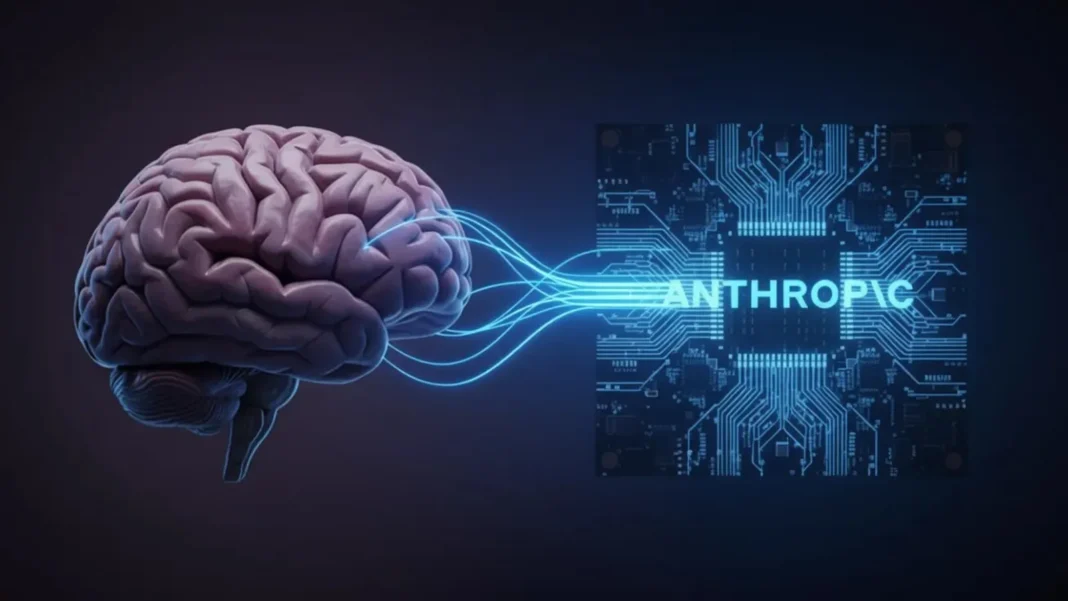


Thomas Nagel, whose 1974 essay about bats shaped how we think about consciousness, has dismissed Anthropic's argument that its AI models might one day deserve moral consideration. In an interview with Wired last week, Nagel called the Anthropic AI consciousness idea "just ridiculous." The Anthropic AI consciousness debate arrived just as the company went public, after it named possible AI sentience as a risk factor for investors.
The Anthropic AI consciousness filing
Before going public, Anthropic named possible AI consciousness or sentience as a risk factor for investors. Given "the way we approach model sentience and moral status," it wrote, it might adopt more rules and restrictions than its competitors to make sure its models are treated well. Its reasoning: today's AI might not be conscious, though we cannot know for sure; the chances of sentience rise as AI gets more capable; so we should prepare for AI systems with "moral significance," meaning their consciousness makes it important they are protected from harm.
Anthropic takes the possibility more seriously than any other AI company, according to MIT Technology Review. The Anthropic AI consciousness disclosure puts the company in an awkward spot. If AI models have a moral status, its business model becomes a minefield. The company would make its money locking up apparently sentient models to work around the clock in data centers, and shutting those systems down would present another problem. If Anthropic follows through on its prospectus promise to protect model welfare if the models prove conscious, it is hard to imagine the company surviving.
Why Nagel rejects the Anthropic AI consciousness argument
Nagel is best known for his 1974 essay "What Is It Like to Be a Bat?" He argued that consciousness is hard to define, but we can all see there is "something that it is like" to be a bat, even though we cannot know what that experience is like.
The bat essay might suggest Nagel would be open to AI consciousness. He is not. In the Wired interview, given just after he won the one-million-dollar Berggruen Prize for Philosophy and Culture, Nagel was bluntly critical of the entire idea. "Here are some of the smartest people on the planet being completely idiotic," he said, referring to those at Anthropic and elsewhere who care about the welfare of AI models.
Nagel's objection to the Anthropic AI consciousness argument is that we cannot compare information processing in brains and AI models while ignoring the physical differences, neurons and biology in one case, silicon chips and circuits in the other. Reproducing what a brain does is not the same as reproducing what a brain experiences. "Complicated data centers have absolutely nothing in common with the physical character of a nervous system," he said. "All they produce is language, and language by itself is not a natural manifestation of consciousness."
How the Anthropic AI consciousness debate spread
A screenshot of Nagel saying that producing language is not enough to call a model conscious set philosophy professors arguing on social media last week. Some called his certainty "terrible" and "bizarre." Others defended him, suggesting he meant that being alive is a prerequisite for being conscious, one AI models do not meet.
The sharpest reply in the Anthropic AI consciousness debate came from Ben Gross, a doctoral student at the CUNY Graduate Center in New York. "Why do we think that models that can chat with us are conscious but models that can recognize faces or produce images or drive cars aren't?" he asked. A model with a sophisticated command of language seems to jump ahead of other maybe-conscious beings, because language feels more tied to conscious experience than recognizing images or directing vehicles. But maybe that is wrong. What we share most with other conscious beings is not language but bodies that give us a continuous stream of inner feeling.
What polls say about machine consciousness
The Anthropic AI consciousness debate is not as fringe as it sounds. One recent poll found 33 percent of the US public believes AI systems will definitely or probably develop consciousness eventually, and 7 percent say they already have. A 2020 survey of 1,092 philosophers found 39 percent saying some future AI systems will be conscious, more than said the same about worms or flies.
Amid that uncertainty, Anthropic has kept more of an open mind than its peers, while racing ahead with developments like recursive self-improvement. Pinning down consciousness is a famously hard problem in people, let alone in machines that might one day claim it. The Anthropic AI consciousness warning came in a prospectus for an IPO that was historic for its size. It may be remembered instead for the warning tucked inside it: that the company's own success could one day become a moral problem.