
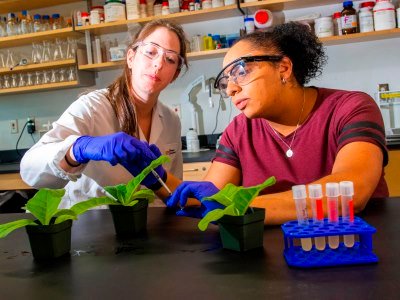


Researchers in Copenhagen have mapped the full recipe plants use to make Taxol, one of the most widely used cancer drugs, and grown it in tobacco plants at levels close to those found in nature. The Taxol tobacco plants were built by giving them more than 20 genes from the yew tree, the drug's original source, and the work was published in Nature Chemical Biology.
Taxol, also known as paclitaxel, is used to treat breast cancer, ovarian cancer and lung cancer. It was first isolated from the bark of the Pacific yew tree, but the tree grows slowly and the drug occurs in only small amounts. Making the medicine today depends on a long process that extracts related compounds from plants and changes them through a series of complex chemical reactions.
Taxol has been in clinical use for decades, and demand for it remains high because it is used against several common cancers. Researchers have spent years trying to work out the full set of steps plants use to build it. Between the late 1990s and 2006, scientists identified 12 enzymes in the pathway, but the complete sequence stayed out of reach until now. The findings were published on 23 November in Nature Chemical Biology, in a paper by Liang, Fan, Koutsaviti and colleagues.
How the Taxol tobacco plants were built
The team, led by senior author Sotirios Kampranis of the University of Copenhagen's Department of Plant and Environmental Sciences, tested candidate genes from the yew tree and introduced them into Nicotiana benthamiana, a tobacco species that grows quickly and is widely used in research. Feiyan Liang was the lead author of the study.
The researchers introduced more than 20 yew tree genes into the Taxol tobacco plants to show the entire process of Taxol production step by step. They tested each proposed step in the plants and isolated several intermediate chemicals to check their structures and their place in the rebuilt pathway.
Taxol tobacco plants match yew bark levels
The Taxol tobacco plants produced Taxol at levels comparable to those found naturally in yew tree bark. The team then used targeted engineering to raise the amount of paclitaxel in the plants by more than 500-fold, from 0.104 to 61.05 micrograms per gram of dried plant material.
"We have tested numerous hypotheses to uncover the complete biological pathway for producing Taxol from start to finish," Kampranis said. "We now have a blueprint, essentially a recipe, that can be used to produce Taxol in plants, yeast or other systems."
Why the recipe matters
Current production relies on yew cell cultures or semi-synthesis from plant-derived starting materials, and it is expensive, inefficient and unsustainable, according to the journal's summary of the work. A cheaper and more reliable way to make the drug could help more patients reach a treatment that is already in wide use. If the Taxol tobacco plants can be scaled up, the drug could become cheaper to make.
The Taxol tobacco plants work as a platform because they provide the same cellular environment as the yew tree but grow much faster and are easier to engineer, the researchers said. The plant can grow over two metres in two months, which gives researchers a fast system to test and improve.
What still stands in the way
Large-scale production is not ready yet. For the Taxol tobacco plants to be used in greenhouses at scale, the yew tree genes will need to become a stable part of the plant's own genetic makeup, so the genes do not have to be introduced every time. The authors also note that more research is needed on how pathway intermediates move between cell compartments.
The team also points to other possible production methods. "Now that we have the crucial blueprint for biosynthetic Taxol production, there is potential to produce it in many different ways. We also see fermented yeast cells as a promising solution," Kampranis said. The study does not show that Taxol tobacco plants have already lowered prices or changed how hospitals obtain the drug.