
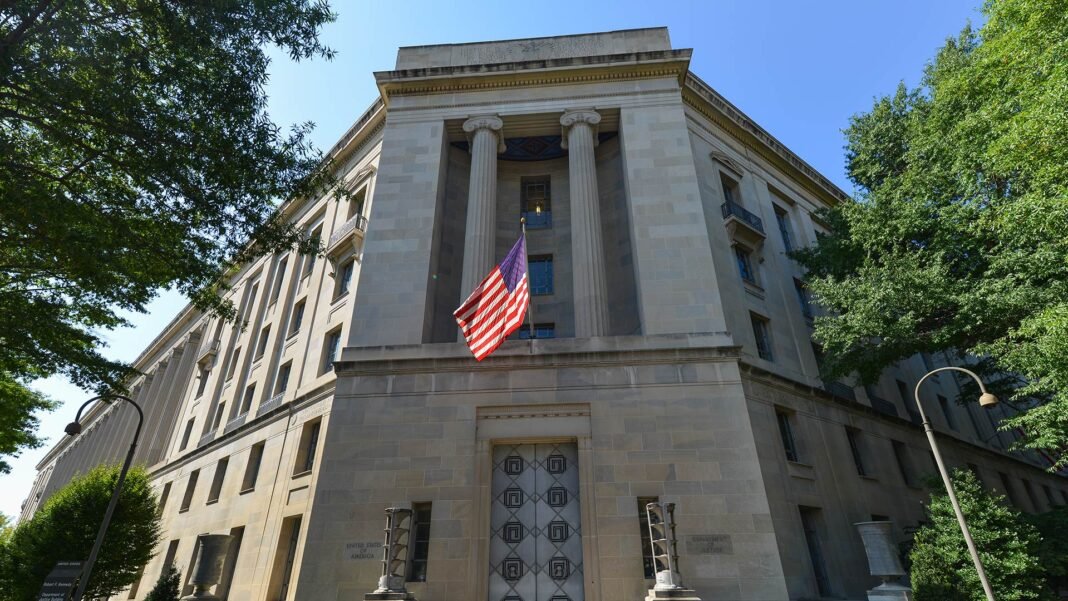


The U.S. Justice Department is asking two Minnesota judges to step aside from separate cases, arguing that interviews the judges gave to the New York Times about the Trump administration’s immigration crackdown called their impartiality into question.
Associate Attorney General Stanley Woodward filed the recusal motions on Tuesday against the Minnesota judges, U.S. District Judges Patrick Schiltz and John Tunheim. The filings came about a month after the Trump administration lodged a judicial misconduct complaint against the two Minnesota judges over the same newspaper interviews.
“Impartiality is imperative to ensuring public trust in our Nation’s judiciary,” the department said in a post on X announcing the motions.
The judges spoke to the Times for an article published Sept. 17 about the flood of cases that reached their court last winter during “Operation Metro Surge,” an immigration enforcement push that led to hundreds of arrests in Minnesota. In the article, Schiltz, an appointee of Republican President George W. Bush, explained why he had issued a sharp order in January taking U.S. Immigration and Customs Enforcement to task for violating nearly 100 court orders during the surge. He said what happened in his court “created a grave threat to the rule of law.”
Woodward cited that remark and other statements from the interviews in arguing that Schiltz had engaged in “a partisan critique of the Trump Administration’s immigration enforcement.”
The department asked Schiltz to recuse himself from a case it filed in May seeking to denaturalize Salah Osman Ahmed, a man who pleaded guilty in 2009 to providing material support to terrorists by supporting the militant group al Shabaab.
“A judge who has publicly taken sides on the political issue of immigration enforcement cannot then preside over a case concerning one of the Justice Department’s key immigration initiatives: pursuing the largest denaturalization effort in Department history to restore trust and integrity in US citizenship,” Woodward wrote.
A hearing before Schiltz on the recusal motion is scheduled for Nov. 23. The filing is the latest escalation between the Justice Department and the Minnesota judges, who were named in a judicial misconduct complaint about a month ago.
Why the DOJ says the Minnesota judges must step aside
Woodward made a similar request for Tunheim, an appointee of Democratic President Bill Clinton, to recuse himself from a criminal case charging a South African woman with voting illegally and making a false claim of citizenship in order to vote.
The motion cited Tunheim’s statement to the newspaper that authorities during the surge “weren’t arresting, in my view, people who were dangerous criminals on the street.”
“That is not the law (or even about the law),” Woodward wrote. “But the law prohibits voting illegally. It also compels recusal when a judge’s partiality might reasonably be questioned.”
The two cases are pending in the U.S. District Court for the District of Minnesota: U.S. v. Ahmed, No. 26-cv-02536, and U.S. v. Weihmann, 26-cr-175.
What the Minnesota judges told the Times
Schiltz was the district’s chief judge during the immigration surge. In his January order, he rebuked U.S. Immigration and Customs Enforcement for violating nearly 100 court orders as judges dealt with a wave of cases brought by people who said they were being unlawfully detained.
Tunheim, in his interview, gave his own account of the enforcement operation, saying the people being arrested did not look to him like dangerous criminals on the street. The department’s misconduct complaint, filed about a month before the recusal motions, was based on the same interviews.
Rebecca Parks, a spokesperson for the district court, declined to comment, saying the judges could not comment on matters pending in the court. In a statement last month, Parks told Reuters that the judges had acted “well within the ethical rules that apply to federal judges in speaking to the New York Times.”
Minnesota judges await rulings on the recusal motions
The department’s argument is that the Minnesota judges’ public remarks about the immigration surge make their impartiality open to reasonable doubt, and that they should not rule on cases tied to the administration’s immigration agenda after speaking publicly about enforcement.
For the two Minnesota judges, the next date on the calendar is Nov. 23, when Schiltz is set to hear the motion seeking his removal from the denaturalization case. The department wants both Minnesota judges off the two cases, and each motion argues their remarks gave the public reason to doubt their impartiality.