
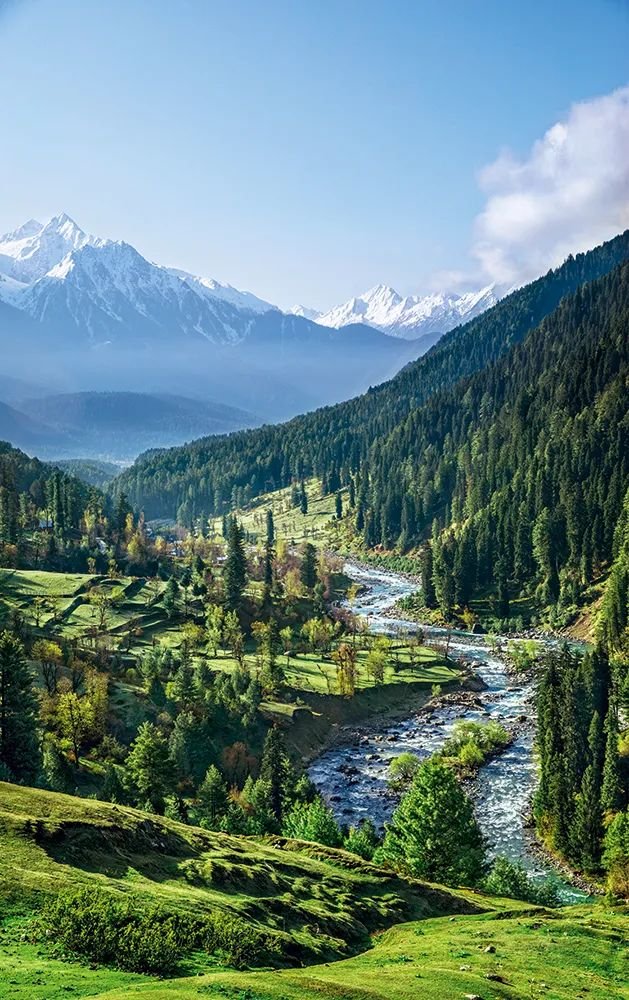


Kashmir cinema veterans have criticised Bollywood for reducing Jammu and Kashmir to a narrow set of images, and they have called for a local film industry that tells its own stories. The criticism was voiced at a seminar organised by the Kashmir Music Club, where filmmakers and actors said mainstream Hindi films show the region through scenic beauty, skullcaps and weapons hidden under traditional dress, while ignoring the lives people lead there. The Times of India reported the seminar on November 15.
Kashmir cinema and the AK-47 and skullcap image
The phrase at the centre of the debate was AK-47 and skullcap, used by the speakers to sum up the image they say Bollywood repeats. Actor Umar Imtiyaz and filmmaker Ayash Arif were among those who called for challenging the tired portrayals and building local stories that speak to regional concerns while reaching a wider audience. They said Kashmiri filmmakers need room to make films that reflect daily life, rather than serving as background for stories written elsewhere.
Kashmir cinema also faces limits on where its work can be seen. Cinematographer Shafqat Habib said local filmmakers need to carve out a distinct identity for Kashmiri cinema, moving beyond the limited openings offered by state-run broadcasters. Filmmakers Kapil Matoo and Mir Sarwar urged local artists to use their talent, drop the habit of seeing themselves as victims, and build a self-reliant industry. Their point was that waiting for outside producers to tell Kashmiri stories has not worked.
Why the film policy draws criticism
The speakers at the Kashmir cinema seminar also raised concerns about the Jammu and Kashmir government’s film policy. They said the policy works more as a tool to promote tourism than as support for local production. It draws outside filmmakers with subsidies and a streamlined process for shooting permission, while local filmmakers see little help in building their own projects. The criticism is that the policy brings crews to the Valley to shoot, but leaves little behind for the people who live there.
The call for a stronger Kashmir cinema is part of a wider argument about who gets to tell a place’s story. Kashmiri veterans said Bollywood films often start from conflict and stay there, so audiences come away with a picture of the region that is built from guns and fear. They want films that show work, family, humour and ordinary days alongside the harder parts of life in the region. That shift, they said, can only come from filmmakers who live there and know the place first hand.
Kashmir cinema looks for a way forward
The seminar did not name a single film or maker as the cause of the problem. Instead, the speakers pointed to a pattern across many productions, in which Kashmir appears as a backdrop for action or romance, and local people appear as figures in someone else’s story. They said a stronger local industry would give Kashmiri writers, directors and actors a chance to set the terms of how the region is shown on screen.
The seminar brought together actors, filmmakers and a cinematographer, and the discussion ranged from the images Bollywood uses to the policy that shapes where films are shot. The speakers said local makers often work with limited distribution, which makes it hard for Kashmir cinema to reach audiences outside the Valley. The gap is part of the problem, they said, since audiences then see Kashmir only through films made elsewhere. A stronger local industry, they said, would need training, funding and screens, as well as a policy that treats local production as more than an afterthought. Kashmir cinema, in their view, can only grow if its makers get the same support that visiting crews already receive.
The Kashmir Music Club seminar ended with the speakers urging local artists to take the lead in building that industry. They said the work starts with writing and shooting stories for Kashmir cinema, and with pressing the government to shape the film policy around local production as well as visiting shoots. The discussion showed that the demand covers fairer portrayals and the means to make films in Kashmir itself.