
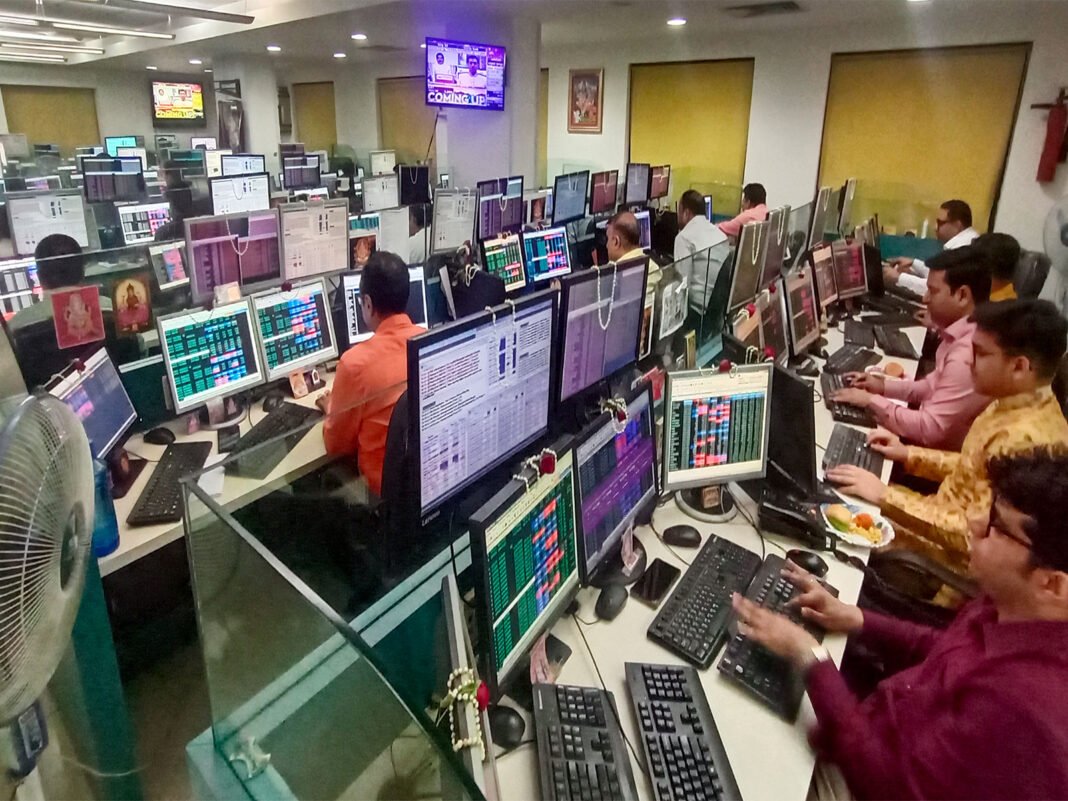


The Indian stock market rebound gathered pace in the first half of November as foreign investors returned to Indian shares in large numbers after months of selling. Foreign portfolio investors bought equities worth Rs 79,301 crore between 1 and 13 November, a figure that puts the month on course for the strongest inflow on record. The buying came after overseas funds sold Indian shares worth about Rs 2.95 lakh crore in the first ten months of 2026.
The scale of the turn is clear in the weekly numbers. In the week ended 13 November, foreign investors bought shares worth about Rs 33,340 crore, extending their buying streak to three straight weeks after a ten-week selling phase. Domestic institutions moved the other way in the same period, selling shares worth about Rs 24,190 crore for a second week in a row. The Indian stock market rebound has been driven from abroad, while local institutions booked profits.
Foreign inflows drive the Indian stock market rebound
The Indian stock market rebound began with a shift in global money flows. The Democratic Party’s wins in the United States midterm elections raised the prospect of tighter regulation of artificial intelligence companies, and investors began to question the heavy spending on data centres. Money moved out of crowded technology stocks in South Korea and Taiwan and into markets with less exposure to that trade. India, with few artificial intelligence hardware makers in its main indexes, was one of the main beneficiaries.
The single biggest day came on 5 November, when foreign investors bought a net Rs 15,000 crore of Indian shares, about $1.6 billion, the largest one-day purchase in nearly six years, according to provisional exchange data. The Sensex jumped 2,009 points that day, its best single-day gain in seven months, and closed the week at 81,028.02. The rupee also steadied, trading at Rs 93.89 to the dollar on Friday after touching a record low of 96.96 in May.
Oil helped the Indian stock market rebound too. Brent crude averaged $124 a barrel in October and fell below $90 on 10 November, cutting India’s import bill and easing pressure on inflation and the rupee. India imports most of its crude, so a lower oil price feeds through to company costs, the currency and the outlook for interest rates. Foreign funds had sold Indian shares in every month this year when Brent averaged above $95, and bought in months when it stayed below $90, a pattern that held again in November.
Short covering adds to the rally
Short covering gave the Indian stock market rebound a second push. Traders who had bet on further falls in frontline large-cap stocks, above all banks, rushed to close those positions as prices rose, and the buying fed on itself. The Nifty rose for seven straight sessions to close at 25,030 on Friday, 13 November, while foreign investors put about Rs 46,000 crore into Indian equities during the week, including Rs 13,750 crore on Friday alone.
Earnings gave the buying a firmer base. Nifty 50 companies recorded earnings growth of about 15 percent for 2026-27, according to Geojit Investments, and second-quarter growth came in near 24 percent, the strongest in 12 quarters. That combination of foreign money, cheaper oil and improving profits explains why the Indian stock market rebound has lasted longer than earlier bursts of buying this year, which faded within days.
What could slow the Indian stock market rebound
The risks have not gone away. Brent crude climbed back towards $100 on Friday, and a fresh rise in oil would restore the pressure on the import bill and the rupee. Foreign investors have pulled back from Indian shares before after short bursts of buying, and they remained net short in derivatives even as they bought in the cash market. Continued selling by domestic institutions would also restrain the Indian stock market rebound, since local funds have been taking profits while overseas funds buy.
Valuations are another watchpoint. The Nifty traded at 18.4 times one-year forward earnings, according to Jefferies, modest against its own history but still high enough that weak earnings could dent sentiment. Citi expects the Nifty to reach 28,000 by December 2027, a forecast that rests on earnings growth holding up. For now, the Indian stock market rebound continues as the market opens on Monday with foreign buying still running, oil below $100 and the November inflow total already close to a record.