


Market bulls in India face two tests this week: inflation at home and the risk of a fresh escalation with Iran. The question, put to strategists at Jefferies and HSBC in a Business Standard report, is whether either threat is strong enough to stop a rally that has carried Indian shares to their best run of the year. The answer from Jefferies, at least, is that the rally has room to run, provided the Iran talks do not break down.
Christopher Wood, strategist at Jefferies, wrote in his Greed and Fear report dated 12 November that India is emerging as a beneficiary of the shift away from artificial intelligence stocks. He pointed to renewed foreign buying, an economic recovery and signs of stronger private investment, alongside valuations he described as comparatively modest. Foreign investors bought a net $7.2 billion of Indian equities over the three weeks covered by the report, and market bulls have taken that as a sign the rally has backing.
Jefferies sees India gaining as market bulls look past AI
Wood’s argument rests on doubts about returns from artificial intelligence spending. Jefferies research showed the consensus forecast for median 2027 return on invested capital among four major United States cloud companies had fallen to 16.8 percent from 21.7 percent at the start of the year, while their capital spending is projected to rise. Wood maintained his view that the artificial intelligence capital spending cycle may have peaked, a judgment market bulls in India have welcomed.
That doubt has pushed portfolio managers towards markets outside the technology trade, and market bulls in India have been among the main beneficiaries. The Nifty traded at 18.4 times one-year forward earnings, while the Nifty MidCap 100 traded at 23.1 times, levels Wood described as modest against the market’s own history. Rising share supply remains a restraint on the rally, he added, since new issuance absorbs some of the money flowing in.
Inflation tests the market bulls at home
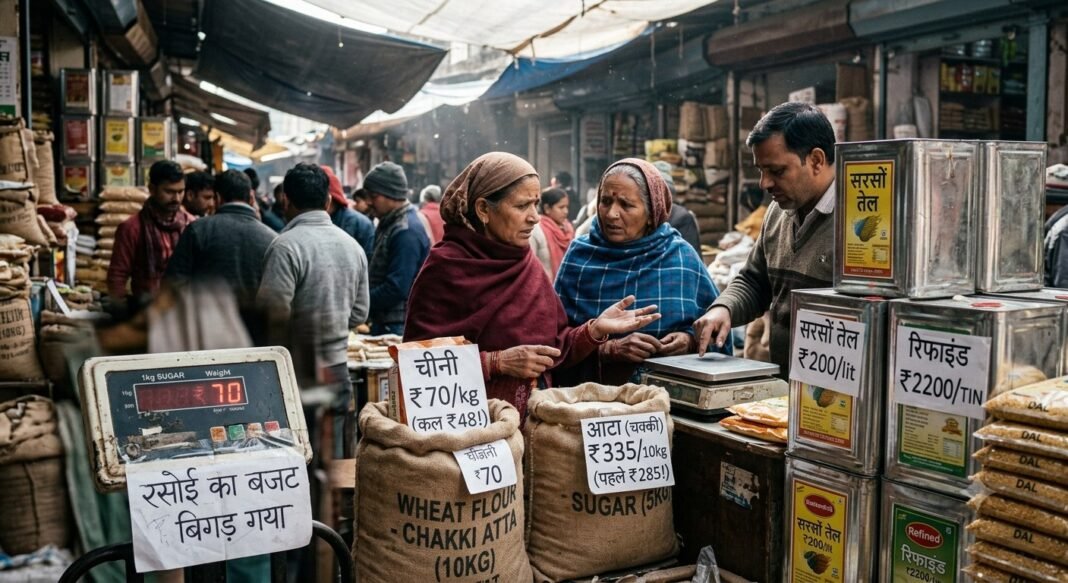
The domestic test is inflation. October retail inflation reached 6.09 percent, above the Reserve Bank of India’s upper tolerance limit of 6 percent, the first breach of that limit in two years. Economists now expect the central bank to raise its policy rate next month, and the reading contributed to a fall in shares on Friday, 13 November, that snapped a three-day rally. Wholesale inflation data due on Monday, 16 November, is expected at about 12.1 percent year on year, against 11.39 percent in September.
Higher rates would raise borrowing costs for companies and households and reduce the present value of future earnings, which is why the inflation numbers matter to market bulls. In the United States, October consumer prices rose 0.4 percent on the month, with core prices up 0.3 percent, and markets have priced in a Federal Reserve rate rise in December. The minutes of the Fed’s October meeting, due on Wednesday, will show how many officials leaned towards a rise.
Iran remains the risk for market bulls
The larger risk, in Wood’s view, is a fresh escalation involving Iran, which he called the biggest risk to Indian equities. Brent crude has fallen 21 percent from its peak of $118 a barrel on 30 October, a decline he read as growing confidence that the United States would avoid further escalation. He put the odds of avoiding renewed escalation at roughly 55 to 45, a close call, and said he would keep energy holdings across his portfolios as protection.
A resolution without further violence could renew the outperformance of equities outside the United States, Wood wrote, with Europe set to benefit in particular from lower energy prices. Since the conflict began at the end of February, MSCI Europe had underperformed MSCI USA by 11 percent, but it has outperformed by 7.2 percent since 8 October. For market bulls in India, the same logic applies: cheaper oil cuts the import bill, steadies the rupee and eases inflation pressure.
For now, the market bulls have the flow of money on their side. Foreign investors have bought $8.5 billion of Indian equities in November, putting the month on course for the strongest inflow in six years, and the MSCI India index has risen 11 percent from its October low. Whether the rally holds will depend on the inflation data due on Monday and on whether the Iran talks hold through the week.