
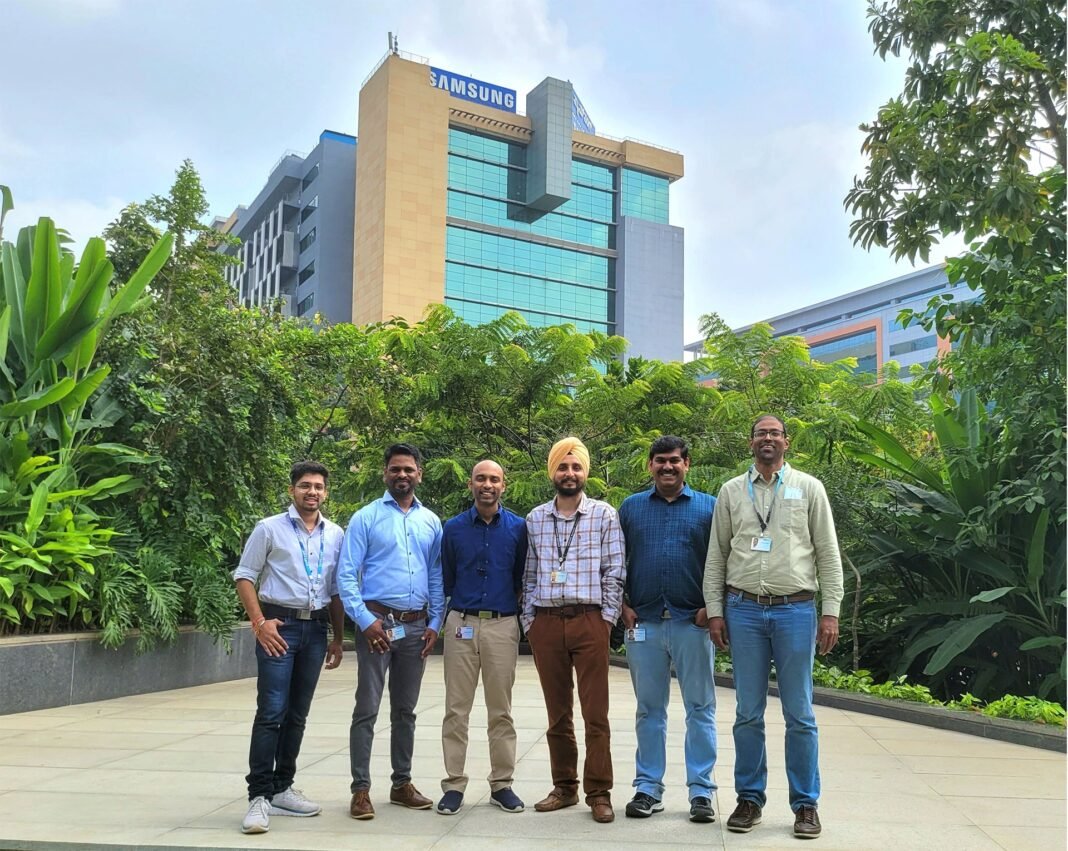


Samsung leaders say India is shaping the future of technology, from AI-native 6G to connected living, with the country’s users and researchers playing a growing part in deciding what comes next. The view came out of a conversation among five of the company’s leaders, published by Samsung Newsroom India on 17 November.
The future of technology may be less about adding more capabilities and more about making technology work quietly around people. That was a central idea in the discussion, which brought together Mohan Rao Goli, Corporate Vice President and Managing Director of Samsung R&D Institute India-Bengaluru; KY Roo, Managing Director of Samsung R&D Institute India-Noida; Demian Hyun, Managing Director of Samsung R&D Institute India-Delhi; Yuran Kim, Managing Director of Samsung Design Delhi; and SP Chun, Corporate Vice President of Samsung South West Asia.
Their discussion ranged from 6G research and artificial intelligence to product quality, design and the role of young innovators. The company has had a presence in India for three decades, and Chun said it now builds in India for the world.
Samsung research focuses on three areas
For Goli, the company’s research in Bengaluru is focused on three areas: intelligent platforms, intelligence at the edge and intelligent networks. Edge intelligence brings processing closer to the user, he said, helping balance performance, latency, power and privacy.
The next challenge, Goli said, is to define what 6G can enable. “The time has come for the people to define what 6G will look like,” Goli said. “So, it will be like AI-native connectivity will be provided to the people.”
The case for investing in a new generation of networks must rest on what it makes possible for users, he said. 4G helped create new app ecosystems and smartphone experiences, while 5G enabled faster broadband and services, and provides the connectivity backbone for people using generative AI tools.
The research work in India sits alongside product development. Roo said development starts with understanding users’ needs and how they will experience a product. Battery performance, responsiveness and camera quality are among the factors that make a practical difference, he said.
“Quality and the user experience point of view” should remain central as solutions scale, Roo said. He urged young innovators not to let technical limitations stop them from focusing on what people need, adding that mentors and faculty can help with technical challenges.
Connected living moves from commands to intent
That user-first approach also shapes the company’s vision for connected living. Hyun described AI as moving from a command-and-control model towards one based on context and intent: people express what they want, while technology coordinates tasks in the background.
“We’re moving from commands to intent. You won’t need to tell every device what to do. We understand what you want, anticipate your needs, and make your devices work for you,” Hyun said.
He described AI for living as a companion that understands users and helps devices work together. In the home, he said, agentic AI could automate tasks for people balancing childcare, cooking and laundry. “India is one of the best places where we can test our technology and devices,” he said.
For Kim, that future does not mean interfaces will disappear, but it changes what designers need to pay attention to. The focus, she said, will move beyond the screen to human behaviour and the moments when AI should act, or stay out of the way.
“I don’t think the interface will disappear entirely, but our focus as designers will shift from designing around the technology to designing around human experience,” Kim said. “Ultimately, we are designing the relationship between people and the intelligence around them.”
Samsung looks to young innovators in smaller cities
The leaders also pointed to India’s diversity as a source of ideas that can travel. Roo said products developed in response to Indian customers’ needs can be tested locally and expanded globally when users respond well to them.
Chun connected that ambition to the company’s three-decade presence in India. “We started by building for India from the beginning. And today, we are building in India for the world,” he said.
A platform for young innovators is one way the company aims to support that future. More than half of this year’s applicants to Samsung Solve for Tomorrow came from tier-two and tier-three cities, Chun said. The programme invites young people to develop solutions to real-world challenges, and four final grants totalling Rs 2 crore will support winners as they incubate their ideas into businesses or start-ups with FITT-IIT Delhi.
The applications, Chun said, show how local challenges can lead to broader innovation. “It is our responsibility to make sure that geography doesn’t decide whether that idea gets a chance.”