
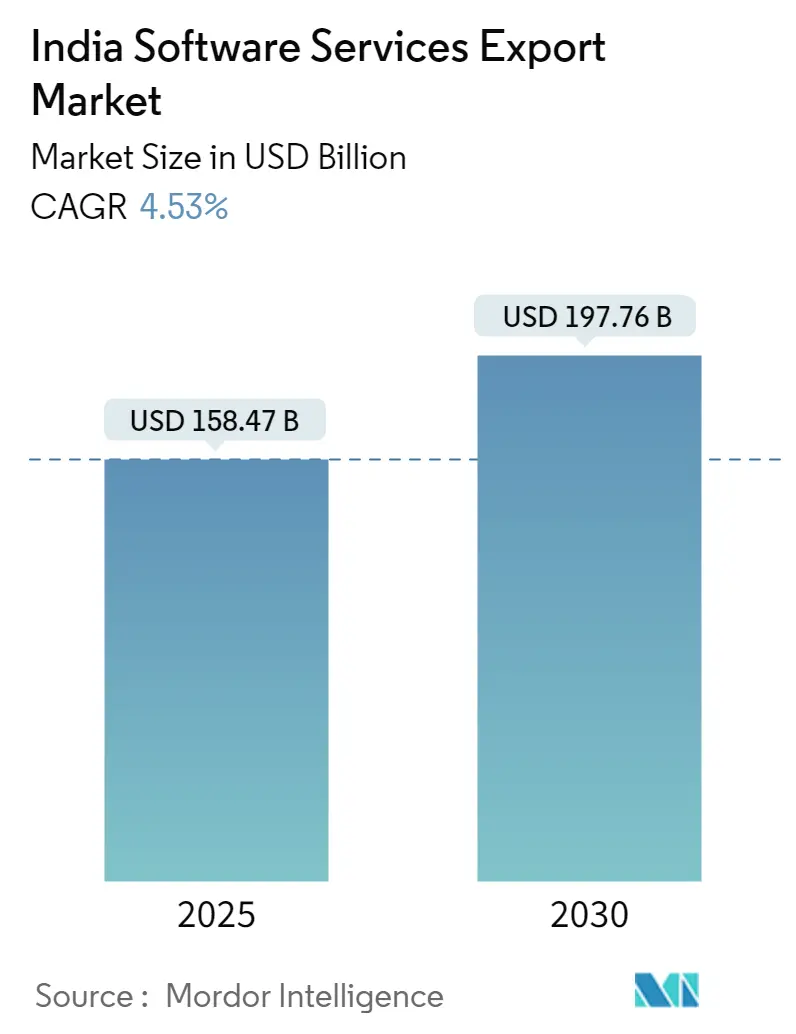


Software services exports from India rose 8.2 per cent to $221.4 billion in 2025-26, according to the Reserve Bank of India, as global demand for technology work held up even while the country’s largest IT firms grew more slowly. The RBI’s annual survey of computer software and information technology-enabled services put the total at $239.3 billion once sales through overseas affiliates were included, up 9.5 per cent on the year before.
Software services exports kept growing even as the mix shifted. Computer services accounted for more than two-thirds of the total, with their share rising to 69.3 per cent from 67.4 per cent a year earlier. IT services were worth $147 billion, while software product development slipped marginally to $6.4 billion. IT-enabled services were worth $68 billion, up from $66.6 billion, with business process outsourcing at $56 billion and engineering services at $12 billion.
Software services exports led by IT services
The United States remained the largest buyer, taking 54 per cent of exports, with Europe buying 31.8 per cent. That concentration gives changes in how American companies buy technology services particular weight in India. The RBI contacted 7,569 software exporters for the survey and 2,363 replied, covering about 89 per cent of estimated exports. Private limited companies accounted for 60.8 per cent of exports and public limited companies for 36.9 per cent. The RBI estimates that 91.7 per cent of software services exports were delivered off-site in 2025-26, from India rather than at client offices.
Why the boom has not lifted IT shares
Software services exports are still growing, but the firms that once captured most of that work now share it with the capability centres their own clients built. HSBC analysts linked the sector’s weak growth in the 2024 and 2025 fiscal years partly to business lost to global capability centres, the in-house technology units that multinationals built in India to do technology work themselves. India hosted 2,117 such centres employing about 2.36 million people in the 2025-26 fiscal year. The Nifty IT index was the only sector index to fall in the week to 13 November, down 3.7 per cent, even as the broader market rose on foreign buying.
Software services exports face the GCC shift
The large vendors have responded by buying the capability centres themselves. TCS agreed on 1 October to take over US retailer Best Buy’s Indian capability centre and rebuild it as an AI-focused hub, and the purchase closed on 15 October. The deal covers a Bengaluru centre of about 600 people and a five-year mandate worth an estimated Rs 2,000 crore. Wipro completed its purchase of Mindsprint, the IT and digital arm of Singapore agribusiness group Olam, in May for $375 million, with more than 3,200 staff moving across and an eight-year contract expected to be worth more than $1 billion. HCLTech said in July it would take over Guardian India, the capability centre of US insurer Guardian Life, moving nearly 2,000 employees into a dedicated unit under a seven-year agreement. TCS is also in early talks to absorb part of Bosch’s Indian technology arm and up to 3,000 staff, Mint reported on 18 November, and Bosch’s board is expected to take up the question in December.
Each of these deals ties the purchase to a multi-year services contract, so the software services exports that once flowed through the capability centre now flow through the vendor instead.
What software services exports need next
Arvind Krishna, chairman and chief executive of IBM, said in an interview with Business Standard on 16 November that he expected companies to move fewer technology workers across borders as immigration rules tighten. IBM has doubled entry-level hiring in India in 2026 compared with 2025, and has ended US visa and green card sponsorship for most roles in its consulting division. Indian IT companies have spent years preparing for that shift by hiring locally and doing more work from India. The software services exports boom has not stopped the competition for that work from getting sharper.
The open question is whether the vendors can turn services contracts into products and platforms of their own. Software services exports will keep rising while global firms buy technology work from India, and the next survey will show how much of that work the listed vendors managed to keep.