
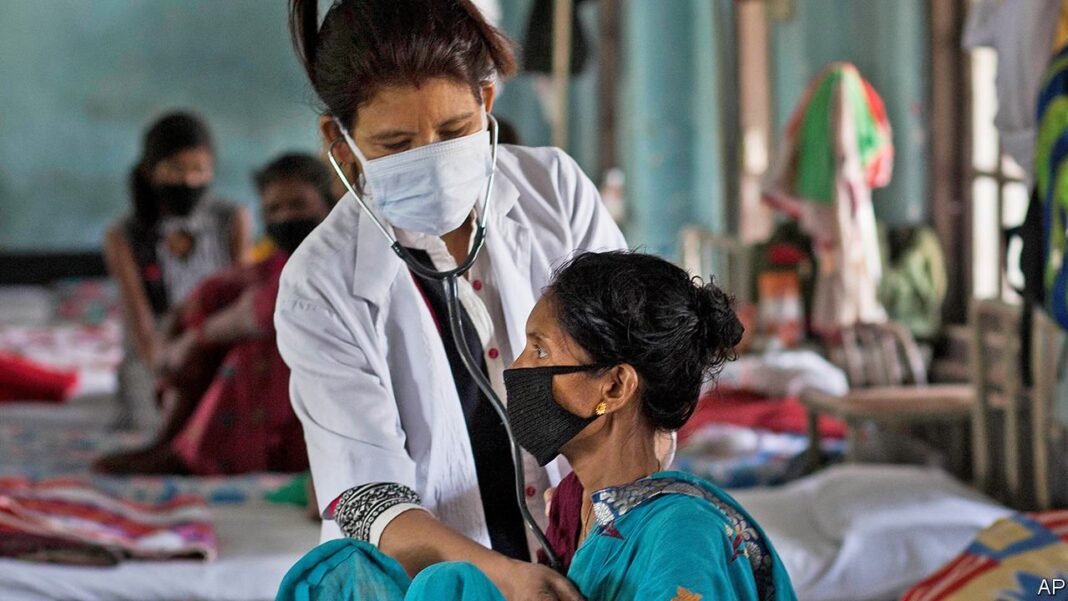


TB deaths in India have fallen 38 percent since 2015, according to the World Health Organization’s Global Tuberculosis Report 2026, released on 12 November 2026. The fall in TB deaths in India is larger than the global decline of 35 percent over the same period. India’s estimated tuberculosis mortality rate fell from 28 per lakh of population in 2015 to 18 per lakh in 2025, and the country also recorded a 94 percent treatment success rate among patients with drug-susceptible tuberculosis.
The report is the World Health Organization’s annual account of the tuberculosis epidemic and the response to it. India carries a large share of the global tuberculosis burden, so a change in the Indian figures moves the world total. The 38 percent fall in mortality since 2015 covers a decade in which the national programme changed how cases are found, how quickly treatment starts, and how patients are supported while they take it.
TB deaths down as cases are found earlier
Progress is credited to the National TB Elimination Programme, known as NTEP, and the fall in TB deaths is linked to its work on finding cases early and starting treatment fast. Its work includes proactive case finding, AI-enabled X-rays, rapid molecular diagnostics, prompt treatment, differentiated care and nutritional support. Two parts of the support are the Ni-kshay Poshan Yojana, which gives nutritional help to patients, and Ni-kshay Mitra, which brings in community support for people on treatment. The programme treats finding cases early as the first step, because a patient found late is harder to cure and more likely to pass the infection on.
The campaign under the programme, TB Mukt Bharat Abhiyaan, ran an intensive screening drive between 7 December 2024 and 8 November 2026. In that period more than 25 crore people were brought under screening, more than 11 crore chest X-rays were done and more than 3 crore NAAT molecular tests were carried out. The drive identified 48.64 lakh new tuberculosis cases, including 14.97 lakh asymptomatic cases, people who had the disease without obvious signs and who would otherwise have gone undetected.
How the TB deaths figures were reached
The estimates behind the fall in TB deaths draw on the Registrar General of India’s Sample Registration System, on community-based verbal autopsy assessments and on programme data from the Ni-kshay portal. The Sample Registration System records deaths across the country, and the verbal autopsy assessments use interviews with families to establish the cause of a death where no hospital record exists. The Ni-kshay portal holds the programme’s own records of patients diagnosed and treated.
The ICMR-National Institute for Research in Tuberculosis conducted a nationally representative tuberculosis prevalence survey in 2025. Its results have been shared with the World Health Organization and are under technical discussion. The survey gives an independent check on how much tuberculosis is present in the population and how the figures from routine reporting compare with the true level of disease.
A decade of change, and a state model that worked
For comparison, the Global Tuberculosis Report 2025 recorded a 21 percent fall in tuberculosis incidence in India, from 237 to 187 per lakh between 2015 and 2024, and a 25 percent fall in mortality over the same period. Treatment coverage rose from 53 percent in 2015 to 92 percent in 2024. The new report extends that record by a year and shows the fall in TB deaths reaching 38 percent since 2015, against a global decline of 35 percent.
Tamil Nadu’s TN-KET differentiated care model cut TB deaths, with tuberculosis death rates down by 38 to 56 percent between April 2022 and December 2025. The model sorts patients by risk and gives closer attention to those most likely to die, including people with severe disease or other health problems. The result in one state shows what the national programme is trying to repeat across the country, and the 94 percent treatment success rate for drug-susceptible tuberculosis in the new report is the figure the programme will now try to hold. The report puts the fall in TB deaths since 2015 at 38 percent in India, against 35 percent worldwide, and the programme must now hold the gains it has made.