
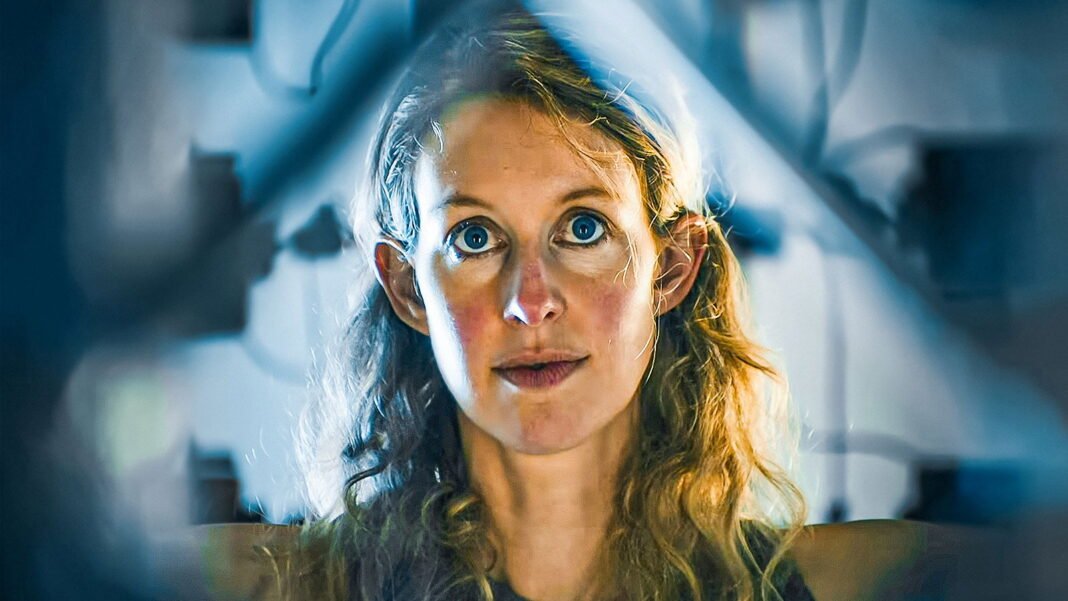


You Can See Everything passed $100 million at the worldwide box office, a rare result for a documentary. The A24 film, co-directed by Lance Oppenheim and Nathan Fielder, took $90.9 million in North America and about $8 million overseas to reach the mark. The film follows Theranos founder Elizabeth Holmes and her partner Billy Evans in the 34 days before Holmes began an 11-year prison sentence for defrauding investors.
You Can See Everything box office run
You Can See Everything opened in the United States on October 16 in just eight cinemas, then expanded to a peak of 3,243 theatres. It took $15.6 million in its first weekend and $19.5 million in its second, a rise that is unusual for a film in wide release. By its fifth weekend it was playing in 1,845 theatres and had taken $89 million in North America. The international rollout began later, with Australia and New Zealand opening to $2.5 million and the United Kingdom and Ireland opening on November 20 across 600 cinemas, the widest release ever for a non-concert documentary.
The $100 million total puts You Can See Everything second among non-concert documentaries in the United States, behind Fahrenheit 9/11 at $119.1 million. It is the 10th highest-grossing documentary of all time worldwide, according to Box Office Mojo. The film cost a reported $7 million to make, which makes its run one of the most profitable in A24’s history. A24 is campaigning for the film to be considered for Best Picture, a category no documentary has ever been nominated in.
How You Can See Everything was made
Fielder spent time inside the rented beach house where Holmes and Evans lived before her sentence began, and he appears on camera as a participant in the film. The three-hour documentary, which runs 2 hours and 54 minutes, mixes long takes of daily life with staged scenes, a choice that has drawn praise from critics and questions about where the line sits between record and performance. It has a 97 percent score on Rotten Tomatoes, with a 95 percent audience score, and a 97 average on Metacritic.
The film’s subject gave it a ready audience. Holmes founded Theranos, a blood-testing company, and was convicted of fraud after the company’s claims about its technology fell apart. Her rise and fall had already been dramatised in the Hulu series The Dropout, with Amanda Seyfried in the lead role. You Can See Everything takes a different route, staying close to Holmes and Evans as the sentence approaches, and letting the scenes speak for themselves.
You Can See Everything release plans
You Can See Everything arrives on video on demand and digital platforms on November 24, according to When to Stream, though A24 has not confirmed the date. More territories open in the weeks ahead, with Mexico, Brazil and Argentina due on November 26 and 27, and Germany, Austria and Switzerland on December 3 and 4. The film is also expected to reach HBO Max in February or March 2027 under A24’s output deal. The Directors Guild of America has ruled the directors ineligible for its top theatrical prize, a decision that has added to the discussion around the film.
The staggered release shaped the box office story. The film earned nearly all of its money in North America before it opened anywhere else, and the overseas total is still small. The United Kingdom and Ireland release, which began on November 20, took $1.2 million on its first day including Thursday previews. More openings follow through December and into 2027, with France due on December 30 and Japan on March 12.
The film’s run is not over. You Can See Everything still has most of its international markets to open, and its domestic total keeps climbing. The $100 million mark puts a three-hour documentary about a fraud case in company with the biggest nonfiction films ever made, and the film did it on a $7 million budget. Its success came without a wide international release, and the film’s next markets will decide how far past $100 million it goes.