
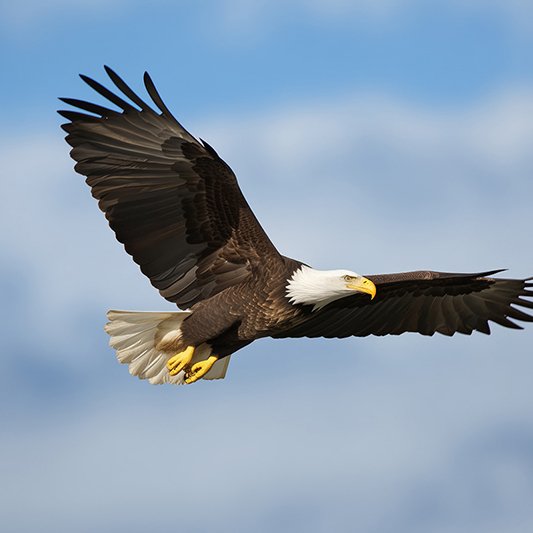


Bird flu has been confirmed as the cause of death for Jackie, the beloved bald eagle of California’s Big Bear Valley whose life was watched by millions on a live nest webcam. Wildlife officials announced Oct. 14 that a necropsy identified Highly Pathogenic Avian Influenza, or HPAI, as the primary underlying cause of her decline. In an uncommon presentation of the virus, the infection caused a severe stomach ulcer that led to persistent internal bleeding, anemia, and a deadly bacterial infection.
Bird Flu Caused Uncommon Stomach Injury in Jackie
The necropsy was performed by veterinary pathologists at the San Diego Zoo Wildlife Alliance, and the findings were released by the California Department of Fish and Wildlife. “Jackie’s necropsy confirmed Highly Pathogenic Avian Influenza as the primary underlying cause of her decline,” said Steve Kubiski, the alliance’s director of disease investigations. He described an unusual form of the virus in which the infection produced a severe ulcer in the stomach that led to ongoing blood loss and ultimately a dangerous bacterial sepsis.
The investigation also ruled out several other possible culprits. Additional testing found traces of rat poison in Jackie’s system, but investigators determined it was not the primary cause of her death. Tests likewise ruled out West Nile virus and heavy metal poisoning as contributing factors. Officials said the findings showed Jackie was suffering from multiple severe and interconnected disease processes that had been developing over time and ultimately led to her decline.
Jackie’s illness had confounded veterinarians throughout the summer. After showing signs of sickness, she was taken into care and spent weeks in intensive treatment at a wildlife rehabilitation center, where efforts to save her included hospitalization and a blood transfusion. She died in August. Because of the confirmed bird flu diagnosis, her remains were cremated under federal HPAI biosecurity protocols to prevent any further spread of the virus.
Bird flu has spread widely through wild and domestic bird populations in recent years, and raptors face particular exposure because they hunt infected prey. The virus has also caused costly outbreaks in U.S. poultry flocks and dairy herds, prompting ongoing bird flu surveillance by wildlife and agricultural agencies. In Jackie’s case, the unusual stomach presentation meant the bird flu diagnosis was difficult to reach while she was alive, and officials said documenting the case will help veterinarians recognize similar infections sooner.
Bird Flu Death Leaves a Gap in Big Bear’s Eagle Nest
Jackie was roughly 14 years old and had become one of the most watched wild animals in America. She nested with her longtime mate, Shadow, in front of a live-streaming camera operated by the Friends of Big Bear Valley, and millions of viewers around the world followed the pair through nesting seasons, egg-laying, and the raising of eaglets. The nonprofit group, which maintains the camera, said the pair drew viewers from around the world across multiple nesting seasons. Her hometown of Big Bear Lake had become practically synonymous with the iconic bird.
Wildlife officials said Shadow remains in Big Bear Valley and there is no evidence that he or the eaglets are sick. Officials added that continued surveillance of bird flu in wild birds remains essential as the virus keeps circulating. That detail matters because avian influenza spreads readily among birds, and officials have been monitoring the nest area for any sign of further infection. The case adds to understanding of how raptors are exposed to bird flu through infected prey, and officials said the findings will help improve the treatment and protection of other bald eagles and wildlife.
The loss closes a chapter for the devoted online community that tracked Jackie’s life, but researchers say the detailed necropsy gives the episode lasting scientific value. The unusual stomach presentation of the virus had made Jackie’s case difficult to diagnose while she was alive, and documenting it may help veterinarians recognize and treat similar cases sooner. For now, the camera at Big Bear continues to watch over Shadow, and the valley’s most famous nest stands as a reminder of both the fragility of wildlife and the reach of a virus that continues to move through bird populations.