
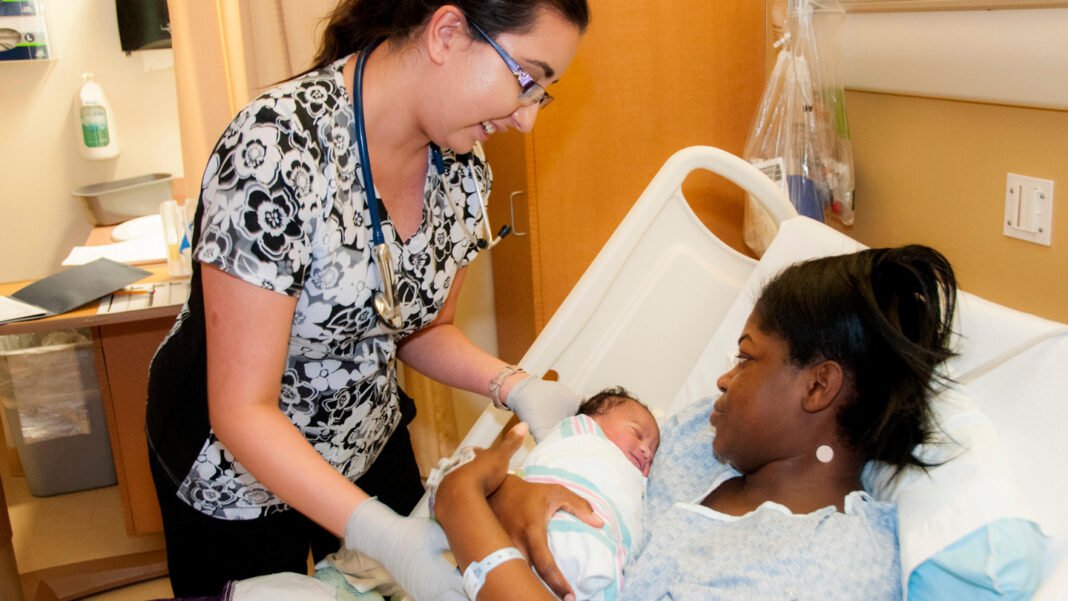


Hepatitis B vaccine policy for newborns is under new scrutiny after a modelling study found that ending the practice of immunising all babies at birth could sharply increase chronic infections and put more than half of Americans at risk of the disease by age 20.
The study, published on Monday and reported by The New York Times, was led by Amir Mohareb, an infectious diseases physician at Massachusetts General Hospital and Harvard Medical School. He and his colleagues modelled the potential impact of changing hepatitis B vaccination policy on the estimated 3.6 million infants born in the United States in a single year.
Hepatitis B is a highly contagious virus that can lead to cirrhosis, liver failure and liver cancer. For decades, American doctors have administered the first dose of the vaccine to all babies within 24 hours of birth, and within 12 hours to infants whose mother is known to be infected.
That universal birth dose is now contested. Last December, a panel of advisers chosen by Health Secretary Robert F. Kennedy Jr recommended that parents should decide whether, or when, infants should receive the shot if they were born to mothers who test negative for hepatitis B. In those cases, the group said, parents should decide no earlier than two months of age.
In January, Kennedy proposed a new childhood vaccination schedule in which the vaccine would be offered under a shared clinical decision-making approach, after consultation with a health care provider. In March, a federal judge temporarily blocked the implementation of both recommendations, restoring the universal birth dose as the official guideline from the Centers for Disease Control and Prevention. The lawsuit continues.
What the hepatitis B vaccine modelling found
The new modelling puts numbers on what the policy shift could cost. Under a scenario in which 75 per cent of infants still received a delayed first dose, lifetime chronic infections would rise by about 19 per cent. With 50 per cent uptake, the increase would be 83 per cent, and under a worst-case scenario of 26 per cent uptake, chronic infections would surge by 225 per cent.
The researchers warn that even modest yearly increases in early-life infections could accumulate into thousands more chronic cases, with higher lifetime risks of cirrhosis and liver cancer for affected children and increased health care spending.
The dispute rests on trade-offs between the decades-old universal birth-dose policy, established in 1991, which prevents perinatal and household transmission, and the Kennedy administration’s view that infants of test-negative mothers face lower risk and do not need immediate protection.
Kennedy and his associates have argued that hepatitis B is primarily a sexually transmitted disease and that babies do not need the protection unless their mothers are infected. But the virus can be spread by people who do not know they have it, as well as by household objects used by an infected person.
The hepatitis B vaccine policy fight behind the numbers
The December 2025 recommendation has been legally challenged by 15 states and remains temporarily blocked by a federal judge. Professional groups including the American Academy of Pediatrics still endorse universal birth dosing, and the final ruling may yet defer hepatitis B vaccination to two months of age or later.
The study adds quantitative evidence that could influence the federal injunction and the eventual federal policy on newborn vaccination. Public health researchers say population uptake drives the outcomes, and that even well-designed shared decision-making programmes tend to reduce coverage.
Kennedy has separately launched other vaccine initiatives that have drawn criticism. His funding of a proposed hepatitis B trial in Guinea-Bissau, which would assign half of newborn subjects to go without the birth dose to investigate broader health claims, has been condemned by the World Health Organization and by ethicists as unjustified.
That context has made the domestic policy fight unusually bitter. The board overseeing the National Institutes of Health research hospital voted unanimously to support a statement accusing Kennedy of undermining trust in science, after the secretary opened a new clinic to study vaccine injuries.
For now, the universal birth dose remains the official guideline. But with litigation unresolved and a final ruling pending, the new modelling gives parents, clinicians and courts a stark projection of what is at stake. Ending universal vaccination for newborns, the researchers conclude, could leave a significant share of young Americans exposed to a preventable cause of liver disease.